
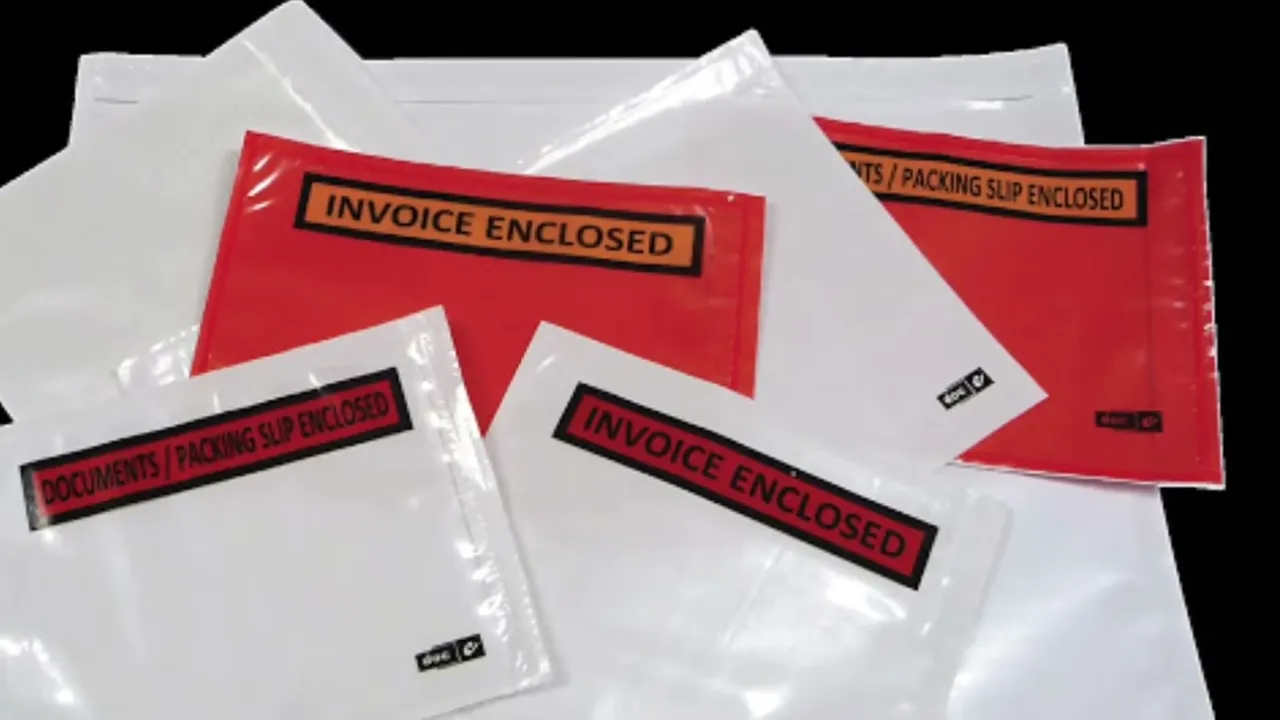
Back-Loading and Overlap-Flap Packing List Pouches Explained
Most buyers know packing list pouches by where they open: the top, the side, or sometimes the back. Back-loading and overlap-flap pouches sit at the security end of that range.
They fill a little slower. In return you get a sealed pocket that keeps out rain, dust and curious hands for the whole trip, whether the parcel spends 2 days in a van or 6 weeks in a container.
We have made document pouches in Jaipur since 1997 and shipped them to 20+ countries, and I have seen both styles save a shipment and waste money. Below is how each one works, how they compare with top and side loading, and when I think they are worth the extra seconds.
What is a back-loading packing list envelope?
A back-loading packing list envelope opens on the rear face, the side that sticks to the parcel, instead of an outer edge. You load the document through that rear opening and then press the pouch onto the carton. Once it is down, the opening is sealed against the box itself.
That is the whole point.
With a top or side loading pouch, the opening stays on an exposed edge after application. With a back load packing slip envelope, the opening disappears against the carton. The paperwork is locked between the film and the box, which is why this style is chosen for tamper resistance and full weather sealing.
What is an overlap-flap document pouch?
An overlap-flap document pouch has an extra tongue of film that folds over the opening before you apply it. The flap overlaps the body of the pouch, covers the slit, and adds a second barrier on top of the adhesive seal.
The flap does 2 jobs.
- It keeps driving rain, dust and moisture away from the opening, so the document stays dry even on parcels that sit outdoors for a while.
- It shows interference, because the flap has to be lifted to reach the paper and a lifted flap is easy to see.
Overlap flaps are used on both back-loading and front-loading pouches, wherever a plain sealed edge is not quite enough.
How do these differ from top-loading and side-loading? {#opening-types}
All packing list envelope opening types come down to one question: which face or edge gives you access to the document? Top and side loading open on an exposed outer edge. Back-loading opens on the hidden rear face. An overlap flap adds a cover over whichever opening is used.
| Feature | Top / Side loading | Back-loading | Overlap-flap |
|---|---|---|---|
| Opening location | Exposed outer edge | Rear face (against parcel) | Covered by a folding flap |
| Access after applying | Easy, edge stays open | Sealed against the carton | Sealed under the flap |
| Tamper resistance | Moderate | High | High |
| Weather sealing | Good once pressed down | Very good (opening hidden) | Best (extra flap barrier) |
| Filling speed | Fast | Moderate | Moderate |
| Front face for print | Shared with opening | Clean front, opening on rear | Clean, flap on reverse |
They are all still self-adhesive document-enclosed pouches. The difference is access and protection, not the basic job of keeping paperwork on the parcel.
How do back-loading and overlap-flap pouches keep out rain?
They seal better because the opening is never left exposed. On a back-loading pouch the insertion point bonds flat against the carton, so there is no outer edge for water to creep into. On an overlap-flap pouch the folded tongue puts a second layer of film over the opening.
The film is the same weather-resistant material we use across the range. What changes is the shape of the opening.
I find this easiest to explain with a picture.
Think of it like a monsoon raincoat with the zip on the inside. The cloth is the same, but the weak point is no longer facing the rain. If you want more on the films and adhesives, our notes on waterproofing and on how the adhesive works are linked from the products page.
Can they run on automatic applicators?
Some lines can run them, but check first. Top-loading is still the standard for fast label-over-label lines, because the open edge feeds cleanly and seals the same way every time. Back-loading and overlap-flap pouches have a hidden opening and, with the flap, an extra fold, and both change how the pouch feeds and closes.
In practice these pouches are usually handled in 1 of 2 ways.
- They are filled at a packing station first, then pressed onto the parcel by hand or with a simple applicator.
- They run on equipment set up for that construction, after the machine supplier has confirmed the feed, fold and seal steps.
If you plan to put one of these formats on an automatic line, share the pouch size and your line type with your applicator supplier and with us. We would rather match the construction to the machine before the first order than after it.
When are back-loading or overlap-flap pouches worth it?
Choose them when security and weather protection matter more than filling speed. That is my honest test. If nobody would care whether the slip got wet or went missing, you are paying for protection you do not need.
We see 4 cases where they clearly earn their place.
- High-value or sensitive shipments, where documents must not be removed or changed in transit.
- Export and customs sets that have to arrive intact for inspection.
- Wet handling, such as yard storage, monsoon routes, cold rooms or wash-down areas.
- Parcels that need a clean printed front. Back-loading keeps the opening on the reverse, which leaves the whole face free for a “Packing List Enclosed” legend or your own branding through custom print.
Stay with top or side loading when you need fast, repeated access and high line speeds. We compare those two in top-loading vs side-loading packing list envelopes.
Which one should I pick?
Here is the quick version I would give a buyer on a call.
- For maximum tamper resistance, pick back-loading.
- For rain and wet handling, pick an overlap flap.
- For a clean printed front face, pick back-loading.
- For speed and applicator throughput above everything, pick top-loading instead.
- For high-value export sets, pick back-loading, often with an overlap flap as well.
We make clear and printed pouches in all of these constructions, in standard and custom sizes, at our factory in Jaipur. I am happy to tell you when a plain top-loader will do, because it usually costs less.
That advice is free.
Not sure which opening suits your parcels? Send us your document size, volumes and shipping conditions, and we will suggest a construction and send samples to try.
Frequently asked questions
What is a back-loading packing list envelope?
It is a pouch that opens on the rear face, the side that sticks to the parcel, instead of an outer edge. Once you press it onto the carton, the opening is sealed against the box. Nobody can take the document out without cutting the pouch or peeling it off.
What is an overlap-flap document pouch?
It has an extra tongue of film that folds over the opening before the pouch goes on. That flap covers the slit and adds a second barrier against rain, dust and tampering. You find it on both back-loading and front-loading pouches.
How is back-loading different from top-loading and side-loading?
The difference is where the opening ends up after application. On top and side loading it stays on an open outer edge. On back-loading it is hidden against the carton, so you gain security and lose easy access.
Are back-loading packing list pouches tamper-resistant?
Yes, and that is the main reason people buy them. The opening sits against the carton, so the paper cannot be slipped out cleanly. Any attempt means cutting, tearing or lifting the whole pouch, which is easy to spot.
When should I use a back-loading envelope instead of top-loading?
Use it when security, rain or a clean printed front matter more than speed. High-value parcels, export sets that must not be changed in transit and parcels stored outdoors are the usual cases. For fast lines and automation, top-loading is still the better pick.
Can back-loading and overlap-flap pouches run on automatic applicators?
Some can, but check with your applicator supplier first. The hidden opening and the extra fold change how the pouch feeds and seals. Many users fill these pouches at a station before applying them.
Are these pouches available clear or printed?
Both are available. Clear film suits barcode and address scanning. Printed versions carry 'Packing List Enclosed' or 'Invoice Enclosed', and back-loading keeps the front face clean for that print because the opening is on the reverse.
Sourcing these in volume?
We make packing list envelopes in Jaipur for importers and distributors. Factory-direct, private label welcome.