
Clear vs Printed Packing List Envelopes: Which to Choose?
Clear and printed packing list envelopes do the same basic job. Both hold shipping documents on the outside of a carton. The difference is what the pouch itself says to the person holding the box.
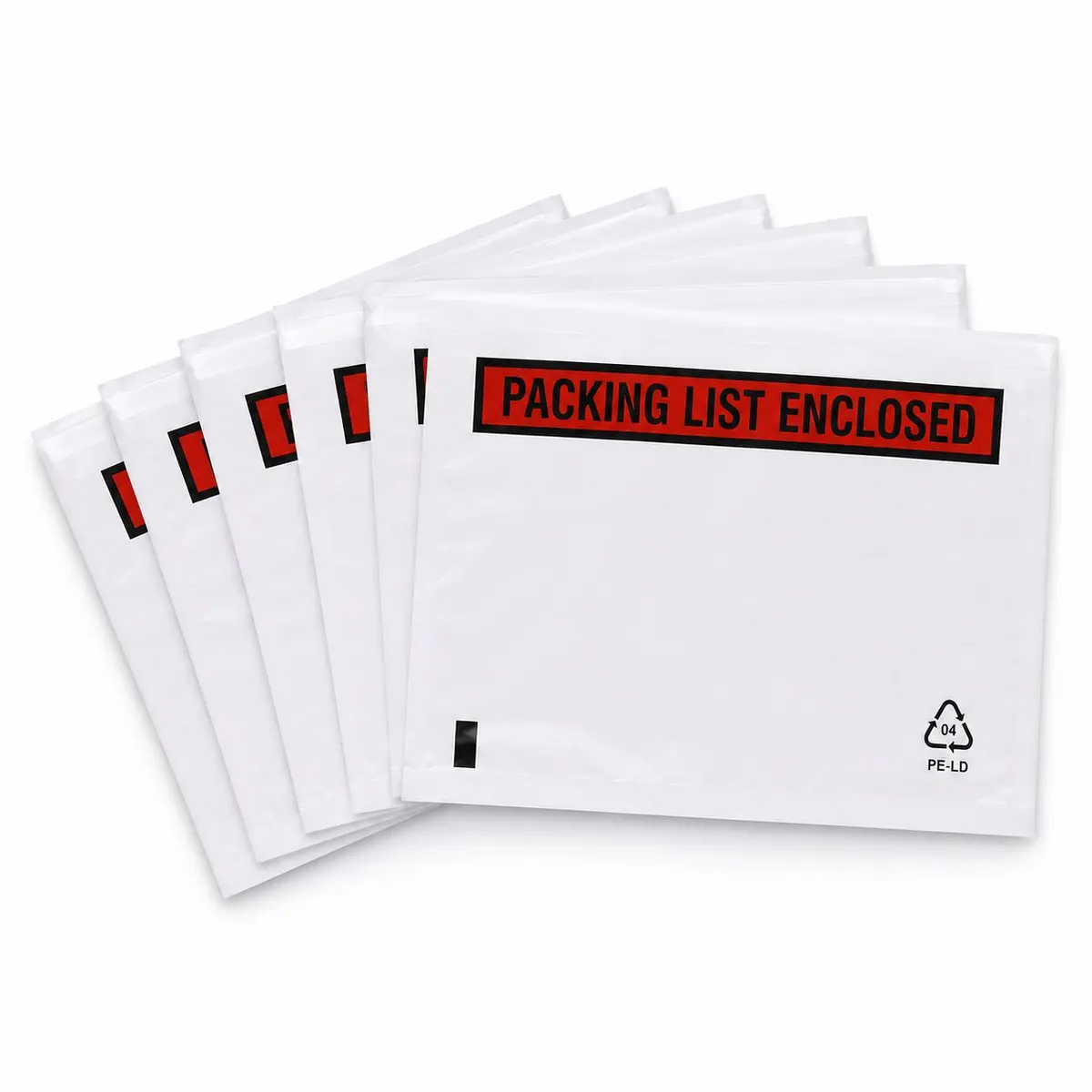
A clear (unprinted) envelope keeps everything inside visible. A printed envelope carries a “Packing List Enclosed” or “Documents Enclosed” legend that flags the paperwork from a distance. We make both in Jaipur, and I will be straight about where each one wins.
What is the difference between clear and printed packing list envelopes?
Clear envelopes have no print at all. Printed envelopes add a legend, usually on an orange or yellow band. Both use the same self-adhesive backing and the same film, so strength and weather resistance are about equal.
So the choice is about signal and visibility.
I say this because many buyers assume the printed one is tougher. It is not. We use the same film for both.
- With a clear pouch, the whole face is a window. Barcodes, addresses, invoices and certificates stay readable.
- With a printed pouch, the legend (and often a coloured background) tells anyone who picks up the box that documents are attached.
If you want the background on the wording, see what “packing list enclosed” actually means.
When do clear packing list envelopes win?
Clear wins whenever someone has to read the paper without opening anything. In that case a window beats a printed band every time.
Clear pouches suit these jobs best:
- Address and label pouches. Slip the shipping label inside and the pouch becomes the label, with the barcode still scannable.
- Customs documents. An officer can read the invoice, packing list and certificate of origin on sight. An A4 pouch takes multi-page sets without folding.
- Pick-and-pack and returns. Staff scan or read the slip through the film, so receiving moves faster.
- A clean look. There is no coloured band fighting with your own carton print.
Now the downside, and I think it gets ignored too often. A clear pouch gives you no privacy. If the paperwork shows prices or customer data, everyone in the chain can read it.
When do printed “Documents Enclosed” pouches win?
Printed wins when you want the carton to announce that papers are attached. The legend is a built-in instruction, so documents are found and used, not missed.
Printed pouches suit these jobs best:
- Signalling to handlers and customs. A bold orange band is recognised in most warehouses, whatever language the staff speak.
- High-volume shipping. Every carton looks the same, and receivers read that as care.
- Less lost paperwork. People are much less likely to bin a pouch that says “documents” on it.
- Privacy. A full-face print hides the contents completely.
There are two main printed layouts, and choosing between them is its own small decision.
| Style | What it looks like | Best for |
|---|---|---|
| Full-face | Legend and colour across the whole pouch, contents hidden | Confidential invoices, pricing, uniform look |
| Panel-face | Legend in a top strip, rest is a clear window | Quick document ID while staying mostly visible |
Clear vs printed: side-by-side comparison
Most operations end up using both. Clear for label and customs pouches, printed for documents that must be flagged to handlers.
| Factor | Clear (plain) | Printed (“Documents Enclosed”) |
|---|---|---|
| Document visibility | Full, everything readable | Partial (panel) or hidden (full-face) |
| Customs and handler signal | Relies on the document showing | Strong and instant |
| Confidentiality | None | High with full-face |
| Look | Clean, minimal | Uniform, deliberate |
| Barcode or label use | Excellent, scan through the film | Limited unless there is a panel window |
| Best fit | Labels, customs, pick-and-pack | High-volume shipping, sensitive papers |
Both styles share the same films and formats. You can see the range on the products page, and the basics of the category are in what packing list envelopes are.
How do I decide for my own shipments?
Ask one question first.
Does someone need to read the paper without opening the pouch?
If yes, go clear. If you only need to flag that documents exist, or hide what they say, go printed. A rough guide:
- Shipping label inside the pouch: clear.
- International freight with customs papers: clear, or panel-face if you also want a visible legend.
- Invoices with prices on them: printed full-face.
- High carton volumes where a uniform look matters: printed.
- You need both the signal and the readability: panel-face.
What most buyers get wrong is picking one style for everything. I would rather you keep two items on the shelf, because a printed pouch over a shipping label is useless and a clear pouch over a price list is a small leak. The extra SKU costs very little.
If you want your own name or instructions on the band, we can do that through custom print. We supply both styles in side, back and top loading, in sizes like 4.5 × 5.5, 6 × 9, DL and A4, and we export them to 20+ countries.
Not sure which mix fits your line? Send us your volumes and document sizes, and we will suggest a clear, printed or custom setup and send samples to try.
Frequently asked questions
What is the difference between clear and printed packing list envelopes?
The only real difference is the print. A clear envelope is fully transparent, so everything inside stays visible. A printed one carries a 'Packing List Enclosed' or 'Documents Enclosed' legend, usually on an orange or yellow band, that tells people there is paperwork inside.
Are clear packing list envelopes better for customs?
Often, yes. An officer can read the commercial invoice or certificate of origin through a clear face without breaking the pouch, which can save time at the border. The papers still need to lie flat and face outward.
What does a printed 'Packing List Enclosed' envelope do?
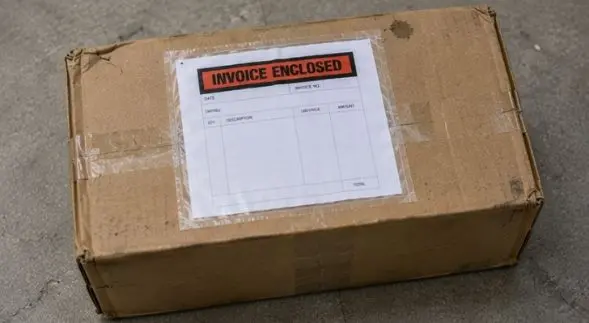
It works as a written instruction on the carton. Warehouse staff, couriers and customs see at a glance that documents are attached, so the paperwork gets found and used instead of being thrown out with the packaging.
What is the difference between full-face and panel-face printed envelopes?
Full-face prints the legend and colour over the whole pouch and hides the contents. Panel-face prints the legend in a strip at the top and leaves the rest as a clear window, so you get the signal and can still read part of the document.
When should I choose a clear packing list envelope over a printed one?
Go clear when someone must read the paper without opening the pouch. That covers address pouches used as the shipping label, customs papers and pick-and-pack slips scanned through the film. Go printed when the carton needs to announce 'documents inside' or hide what they say.
Can I get packing list envelopes printed with my own branding?
Yes. Beyond the standard wording, pouches can carry your company name, logo or handling instructions. Send us your artwork and volumes for a quote.
Are clear and printed envelopes available in the same sizes?
Generally, yes. Both come in common formats such as 4.5 × 5.5, 6 × 9, DL and A4, with side, back or top loading. Pick the format for your documents first, then decide on print.
Sourcing these in volume?
We make packing list envelopes in Jaipur for importers and distributors. Factory-direct, private label welcome.