
Bilingual Packing List Envelopes: EN/FR, EN/ES Legends
Bilingual packing list envelopes print two languages on one pouch, like Packing List Enclosed / Liste de colisage incluse, for Canada, the US and EU lanes.
Read →The blog
Straight answers on document pouches, shipping documents and getting parcels out of the door faster. Written by the team that makes the pouches.
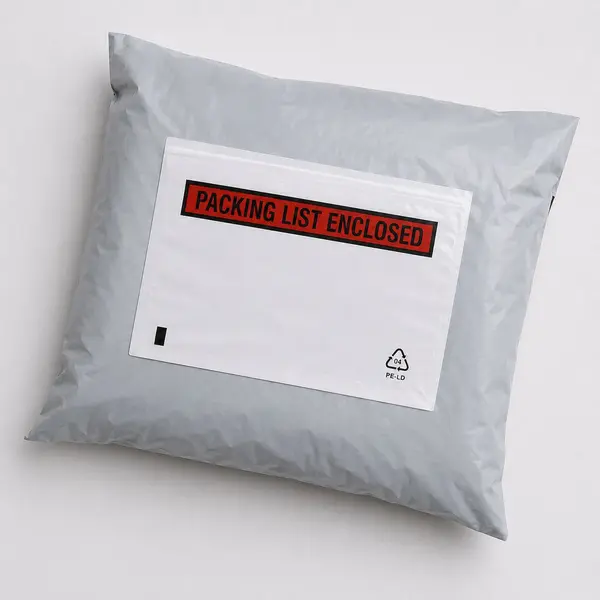
Packing list envelopes are self-adhesive pouches that carry the invoice and packing slip outside a parcel. How they work, when you need one, and which to buy.
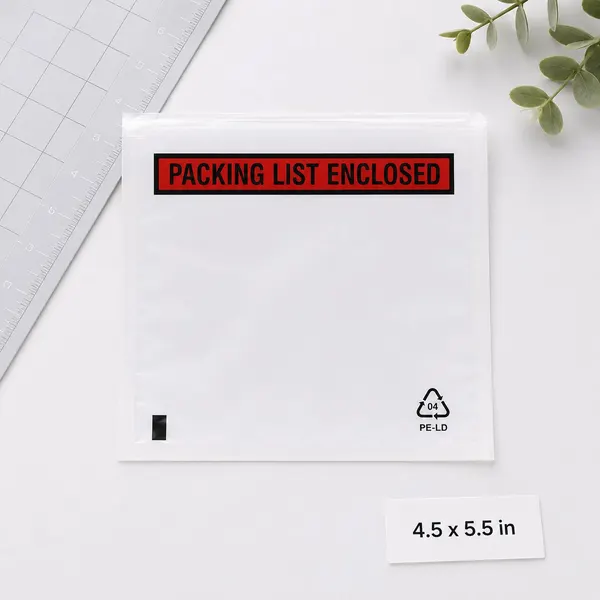
Packing list envelope sizes from A7 to A4, plus inch sizes like 4.5 x 5.5, 6 x 9 and 5.5 x 10, and a simple rule for choosing the right pouch for your invoices.
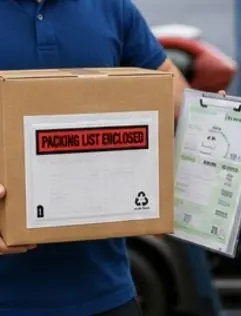
How to choose packing list envelopes in 5 steps: size, loading format, clear or printed face, adhesive and material. With a decision table for each shipment.
Bilingual packing list envelopes print two languages on one pouch, like Packing List Enclosed / Liste de colisage incluse, for Canada, the US and EU lanes.
Read →Certificate of compliance enclosed envelopes carry CoC and CoA paperwork on the carton, so QC teams and customs read the lot details without opening it.
Read →C5, C4 and DIN lang packing list envelope sizes in mm, with A7 to A4, and a clear rule for which document fold fits which document pouch size.
Read →Buste portadocumenti in Italy and sobres portadocumentos in Spain are document pouches printed Documenti di accompagnamento or CONTIENE DOCUMENTACIÓN.
Read →Export documents enclosed envelopes carry the invoice, packing list and origin certificate outside, so customs reads the clearance set without opening the box.
Read →Labelopes are New Zealand's name for packing slip enclosed envelopes. Here is what they are, the standard 155 x 115 mm size and the printed legend.
Read →Lieferscheintaschen are self-adhesive delivery note pouches for German shipments. Here are the common legends, DIN sizes and paper options we print.
Read →Penalty charge notice envelopes for UK councils and car parks: the yellow and black PCN wallet, sizes, weatherproof film and custom printed wording.
Read →A pochette porte-documents printed Documents ci-inclus tells French and Belgian handlers the papers are inside, so invoices ride safely on the carton.
Read →SDS enclosed envelopes carry the safety data sheet on the outside of a chemical shipment in high-visibility print. Here is what they are and how to spec them.
Read →The new EU Customs Code applies from 21 September 2027. What changes for importers, what stays the same on your invoices, and the data hub dates to 2034.
Read →The EU now charges €3 duty and a €2 handling fee per item on low-value parcels. How customs counts an item, and what your packing list must show in 2027.
Read →FedEx has announced a $25 paper document fee from 18 January 2027. What it means for paper invoices in pouches, and which papers still go on the box.
Read →Are packing list envelopes packaging under the EU PPWR? Yes. The 12 February 2027 marking rule, the late sorting label and 35% recycled content from 2030.
Read →The US de minimis exemption ends by law on 1 July 2027 and is already suspended. The invoice data, entry types and pouch set-up every US parcel needs now.
Read →When are zip-lock packing list envelopes worth the extra cost over a sealed pouch? An honest guide from a maker, plus what to put on the order.
Read →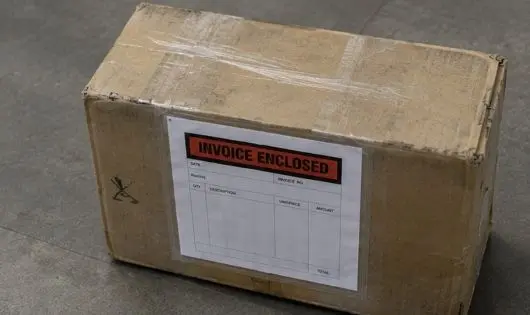
Packing list vs packing slip vs invoice in plain words: who reads each one, what 'Invoice Enclosed' means, and which goes in the export pouch.
Read →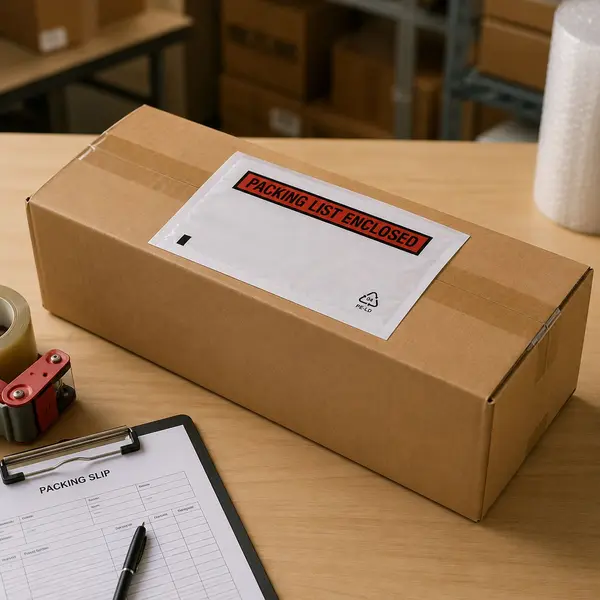
Lost paperwork is a hidden cost in every warehouse. Here is how document enclosed pouches reduce shipping errors, speed up customs and cut support tickets.
Read → Packing list envelope sizes from A7 to A4, plus inch sizes like 4.5 x 5.5, 6 x 9 and 5.5 x 10, and a simple rule for choosing the right pouch for your invoices.
Read → Packing list envelopes are self-adhesive pouches that carry the invoice and packing slip outside a parcel. How they work, when you need one, and which to buy.
Read →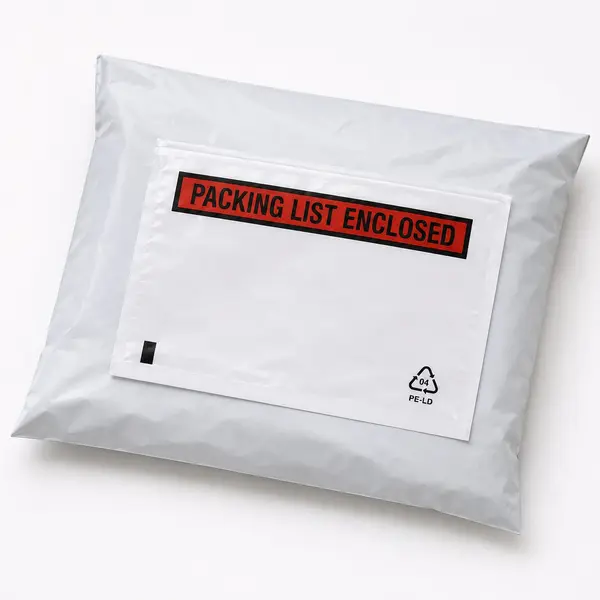
Where to buy packing list envelopes: office-supply shops, distributors, carriers, marketplaces or a manufacturer, compared on price, MOQ and print.
Read →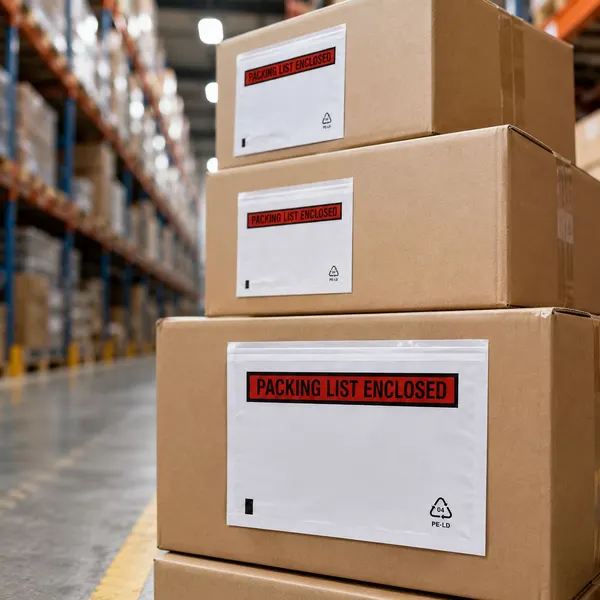
Top-loading vs side-loading packing list envelopes: which edge opens, which suits machines or hand filling, and why the clear adhesive top-loading style leads.
Read →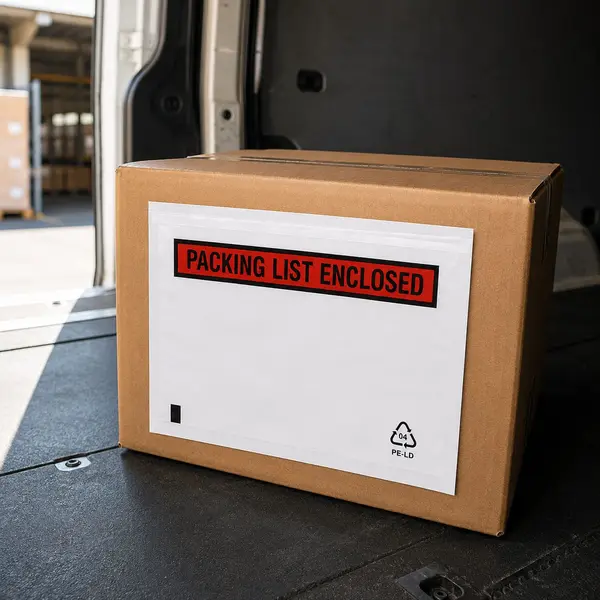
Most buyers do not need resealable packing list envelopes. A plain guide to when re-openable clear pouches pay off: returns, inspections and changing paperwork.
Read →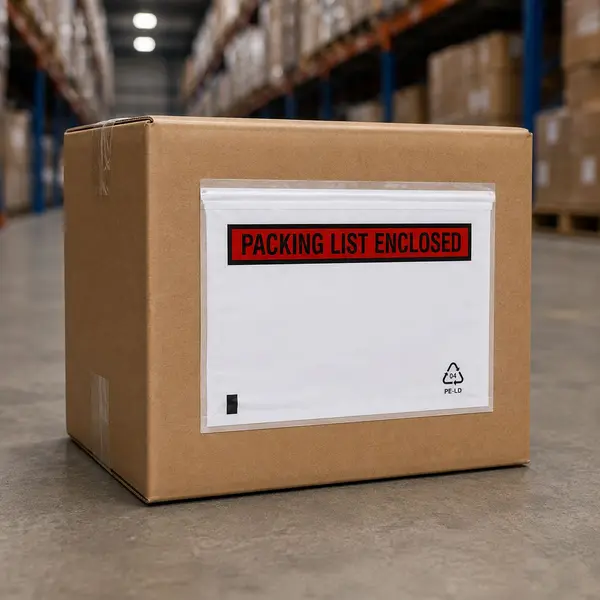
Is a packing slip pouch the same as a packing list envelope? Yes, both name the same adhesive document pocket. Here is why the names differ and what to compare.
Read →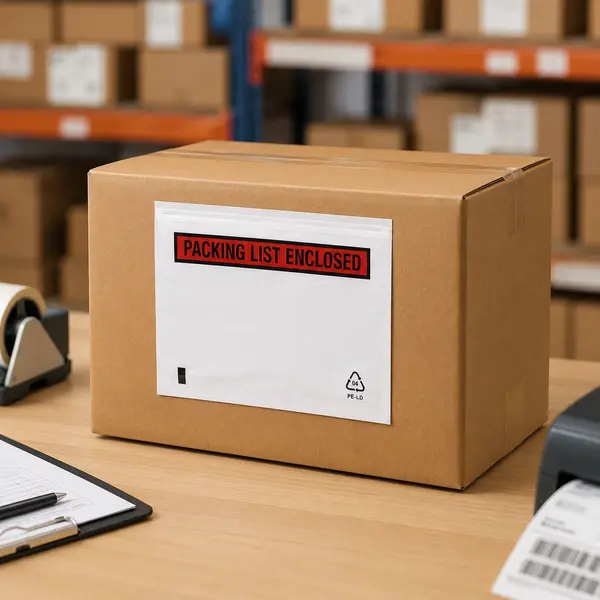
'Packing list enclosed' means the shipping papers sit in a pouch on the outside of the box. What it means, invoice enclosed too, and clear vs printed.
Read →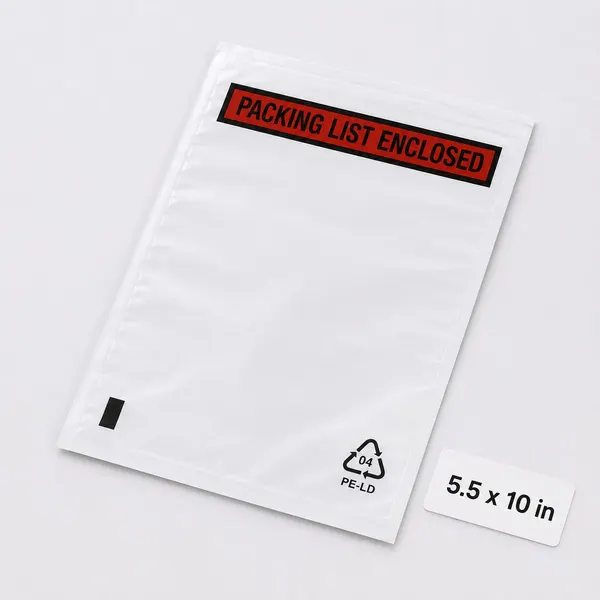
Small packing list envelopes (A7, A6, 4.5 x 5.5) for poly mailers and apparel bags: which size fits, what slips they hold, and how to make them stick to film.
Read →
Documents enclosed wallets, doculopes and invoice enclosed envelopes are one self-adhesive shipping pouch. Here is what they are, the sizes and the local names.
Read → 5.5 x 10 packing list envelopes suit long itemised lists, multi-line invoices and slim cartons. Here is when to pick them over A5 or 6x9, and what to check.
Read →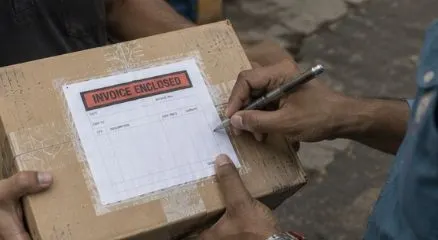
What you can print on custom packing list envelopes, when custom beats stock, how MOQs and proofs work, and what to send a manufacturer for a real quote.
Read →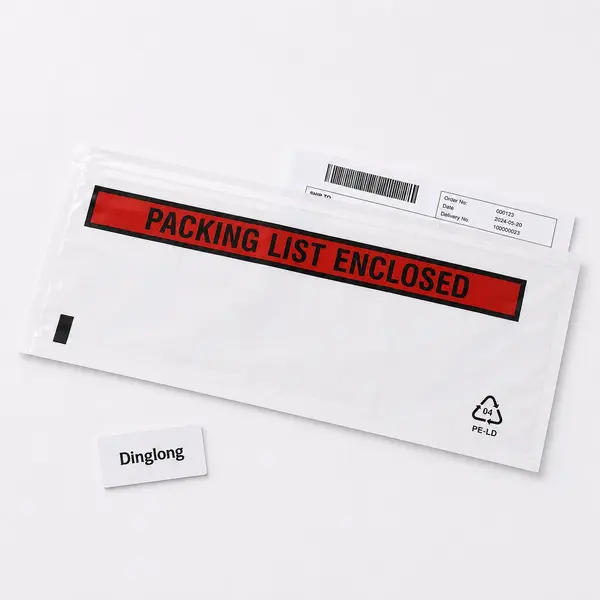
What 6 x 9 packing list envelopes are used for, which slips fit flat, and when to pick a clear face or a printed panel over a smaller pouch size.
Read →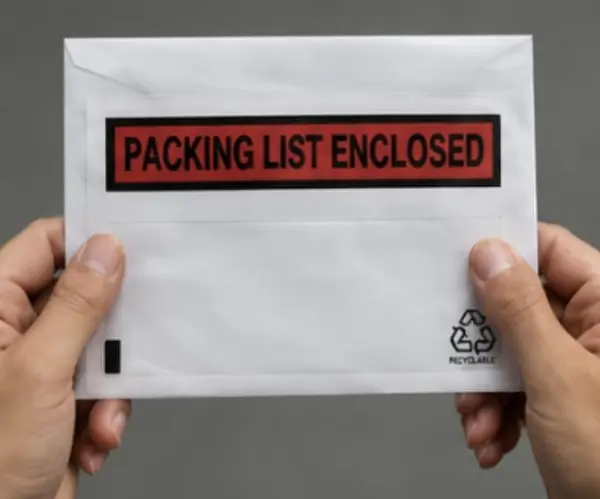
DL vs A5 packing list envelopes for ecommerce: which one fits a tri-folded A4 invoice, which suits polybags, and how footprint, readability and cost compare.
Read →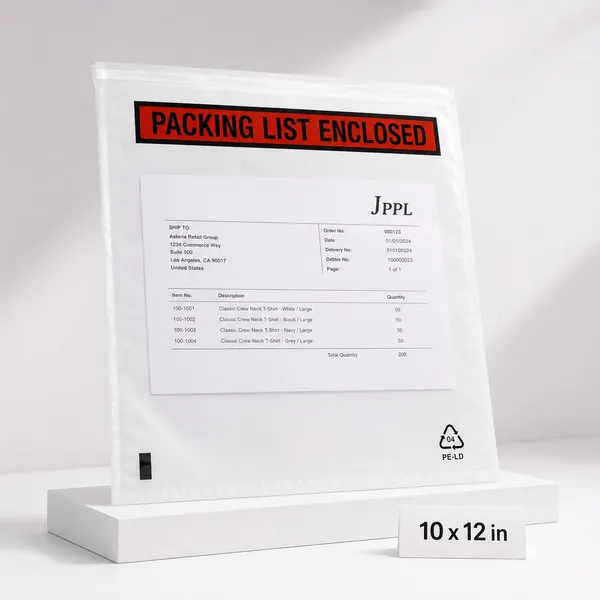
The right packing list envelope for customs documents is an A4 pouch. It keeps the invoice, packing list and certificate of origin flat and easy to read.
Read →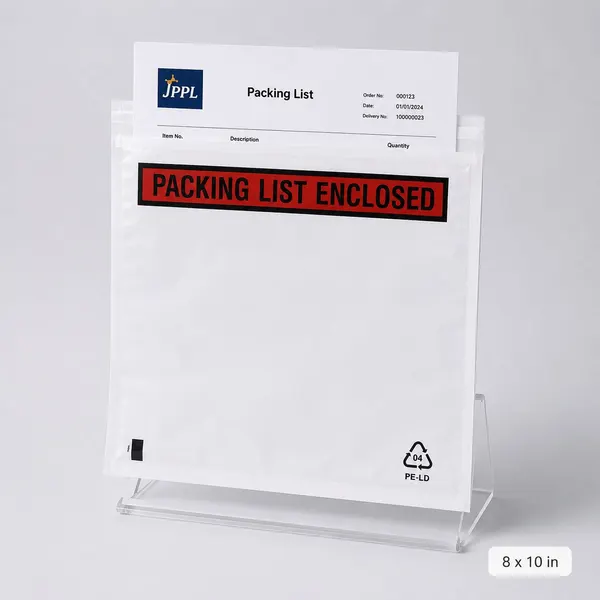
The best size packing slip envelope is the one that fits your slip as you fold it. Compare DL, A5, A4 and 4.5 x 5.5 pouches for ecommerce and B2B orders here.
Read → 4.5 x 5.5 vs A6 packing list envelopes: two near-equal small sizes. Here is how they differ, when each name is used, and how to order the right one.
Read →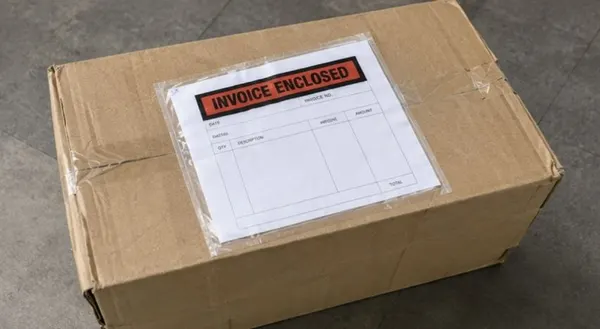
The right packing list envelope size for an A4 invoice: an A4 pouch keeps it flat, A5 takes one fold, DL takes a fold in three. Sizing table and trade-offs.
Read → Packing list envelope anatomy explained simply: the clear window, printed legend, adhesive back, release liner and opening, and what each part does for you.
Read →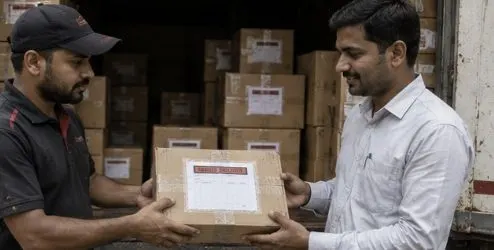
Are packing list envelopes waterproof? They are water-resistant. The poly film and sealed edges beat rain and humidity, but they are not made for submersion.
Read →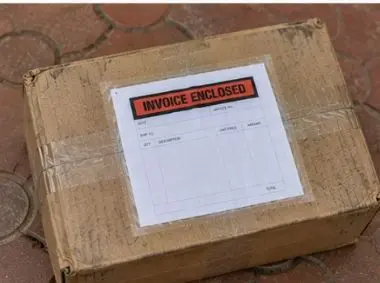
How a self adhesive packing list envelope sticks: the pressure-sensitive backing, the peel-off liner, hot-melt vs acrylic, good surfaces and the cold limit.
Read →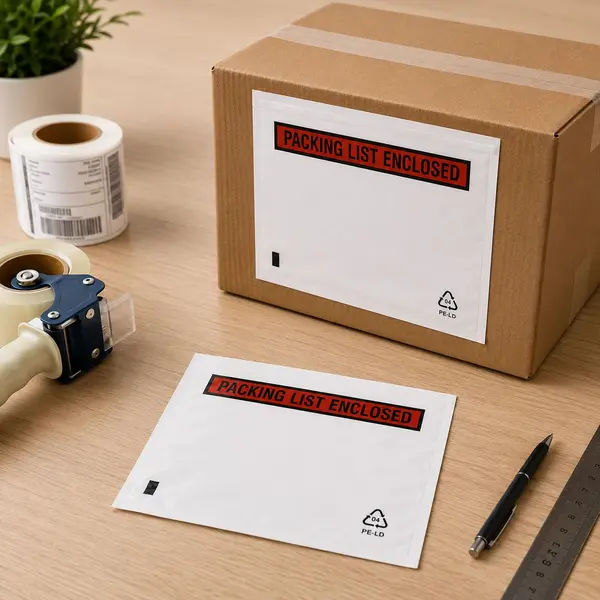
What are packing list envelopes made of? Mostly polyethylene film with a pressure-sensitive adhesive, plus paper and glassine. Film, gauge and recycling.
Read →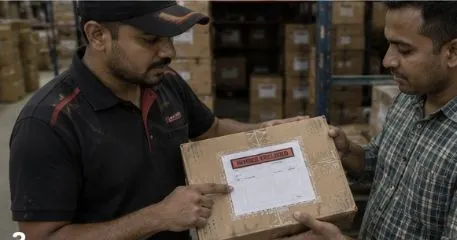
How a back loading packing list envelope and an overlap-flap pouch differ from top and side load, how they keep out rain, and when they are worth the slow fill.
Read →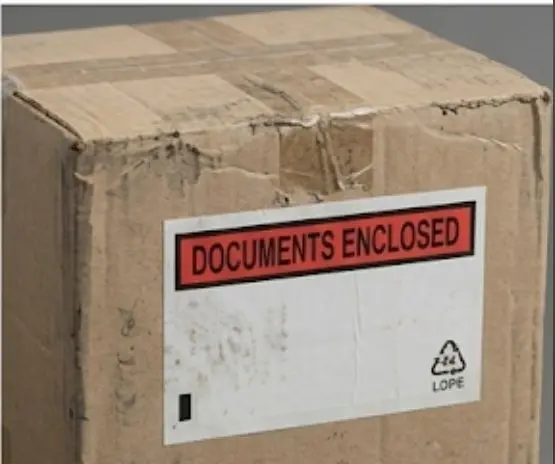
Recyclable packing list envelopes and biodegradable document enclosed wallets explained for B2B buyers: what each eco claim means, EU PPWR, and how to choose.
Read →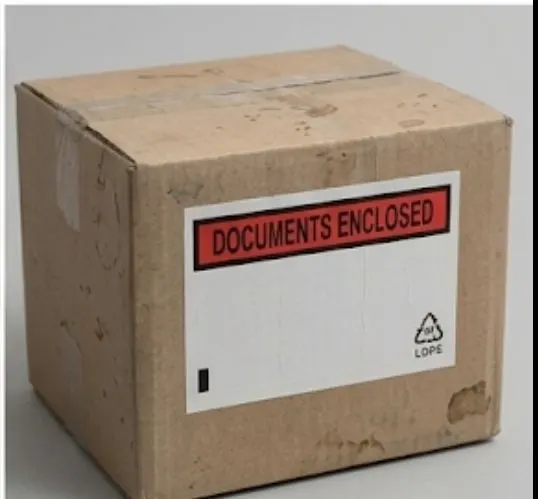
Paper vs plastic packing list envelopes compared on water resistance, strength, recycling and cost, with a plain guide to which pouch suits which shipping lane.
Read →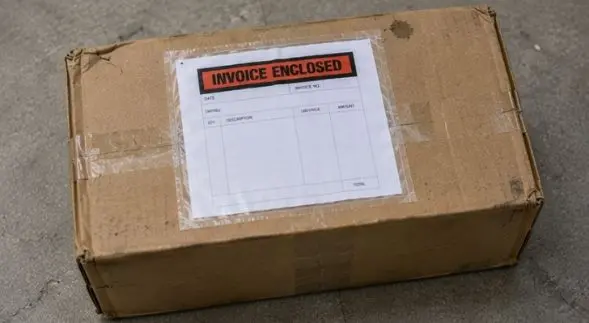
Clear vs printed packing list envelopes: clear shows the papers, printed tells handlers they are there. Here is when each one wins and when to use both.
Read →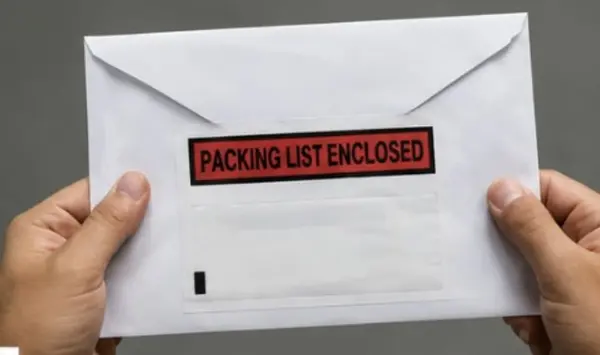
Panel-face vs full-face clear packing list envelopes: a printed strip or a fully clear window, and how each one affects reading, scanning, branding and cost.
Read →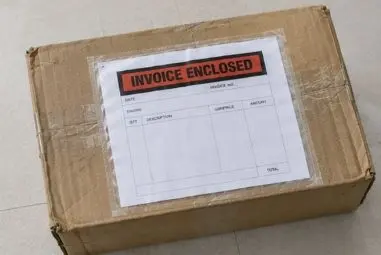
The Documents Enclosed legend and its cousins (Invoice, Packing List, Export Documents Enclosed) explained: what each means and when to use it.
Read →
Coloured packing list envelopes get spotted and sorted faster on a busy dock. Clear ones keep the document readable. Here is when each one is the right pick.
Read →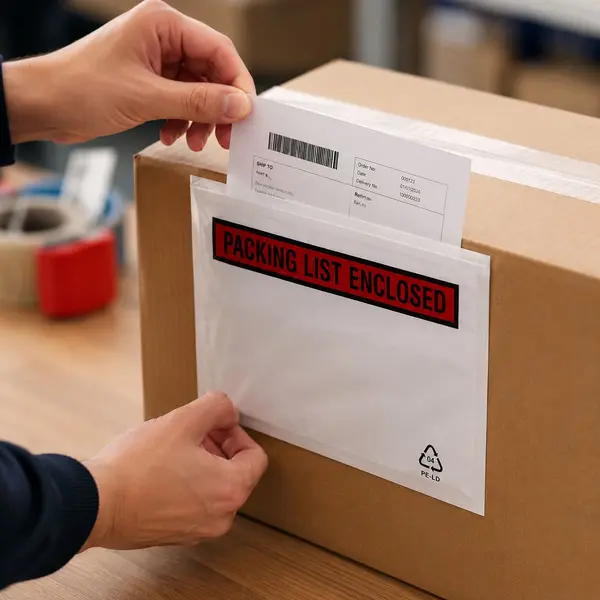
When does a tamper evident document pouch beat a standard packing list envelope? A plain guide to security pouches for pharma, high-value and customs papers.
Read →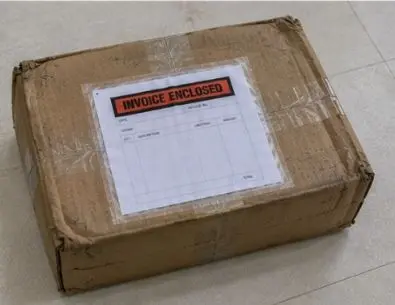
High-tack vs standard adhesive on packing list envelopes: when you need extra grip on rough, cold or plastic surfaces, the residue catch, and how to choose.
Read →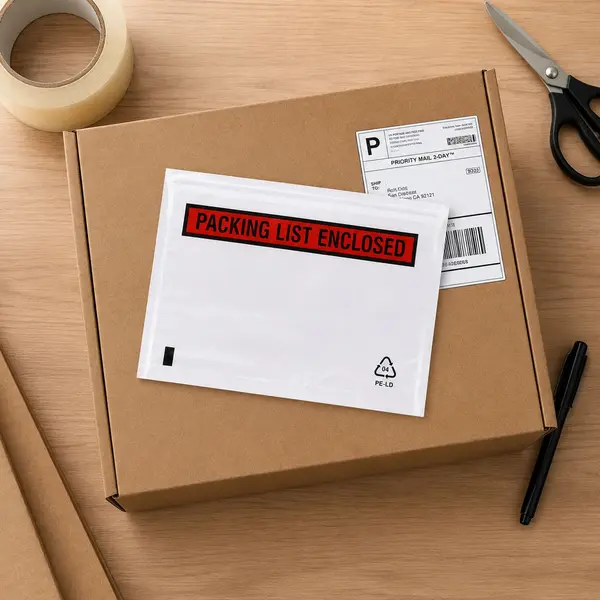
A multi language packing list envelope prints Lieferschein, Packing List and Liste de colisage on one pouch, so handlers in every country find the papers fast.
Read →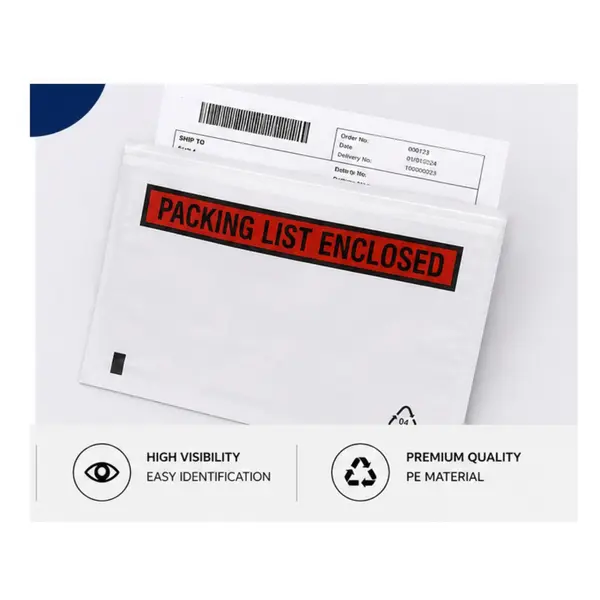
Packing list envelopes for ecommerce carry the slip, invoice and returns details outside the parcel, and cut WISMO calls, returns hassle and mis-ships.
Read →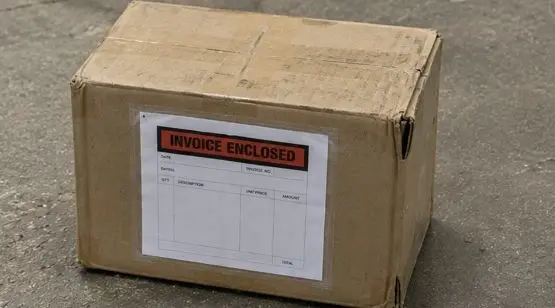
Packing list envelopes for 3PL and fulfilment centres: how to standardise sizes across clients and sites, run applicator lines, cut errors and brand pouches.
Read →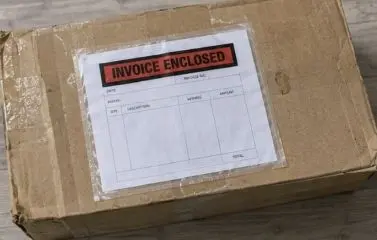
How exporters use packing list envelopes for export to keep the invoice, packing list and COO readable for customs, with the right legend and film for the trip.
Read →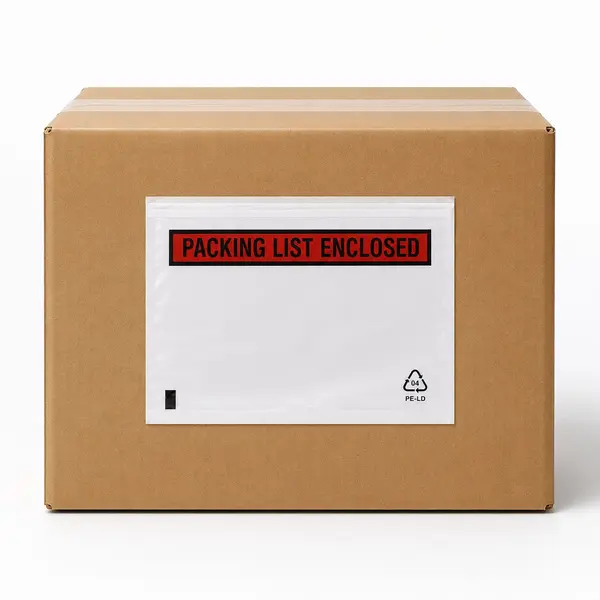
Choosing packing list envelopes for pharmaceutical and medical shipments: keeping documents intact and readable, cold-chain adhesion and tamper-evident options.
Read →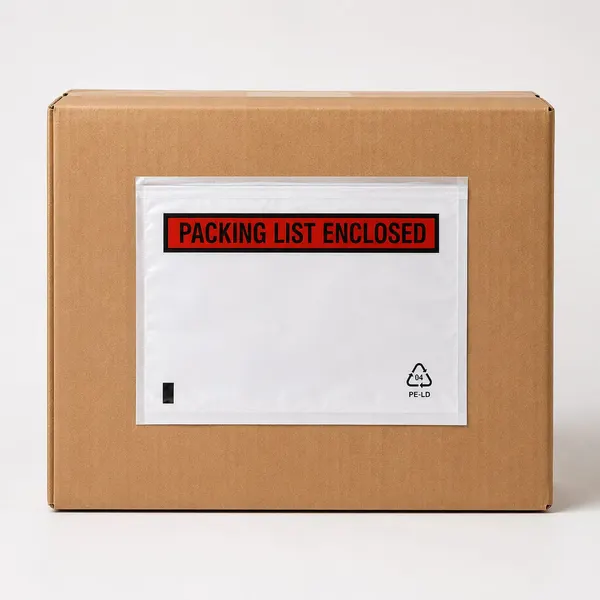
Packing list envelopes for the food industry: how to keep delivery notes dry and scannable through cold-store condensation, freezer cold and fast FMCG lines.
Read →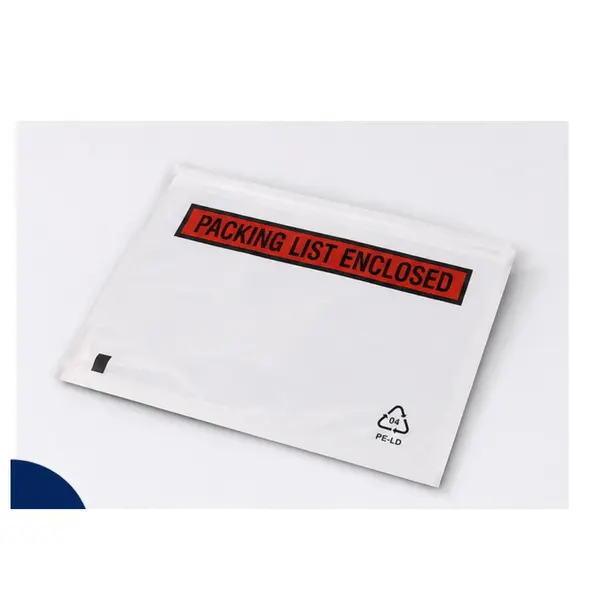
Packing list envelopes for automotive parts: how to stick them to oily or dusty cartons, carry kanban and ASN paperwork on totes, and survive JIT transit.
Read →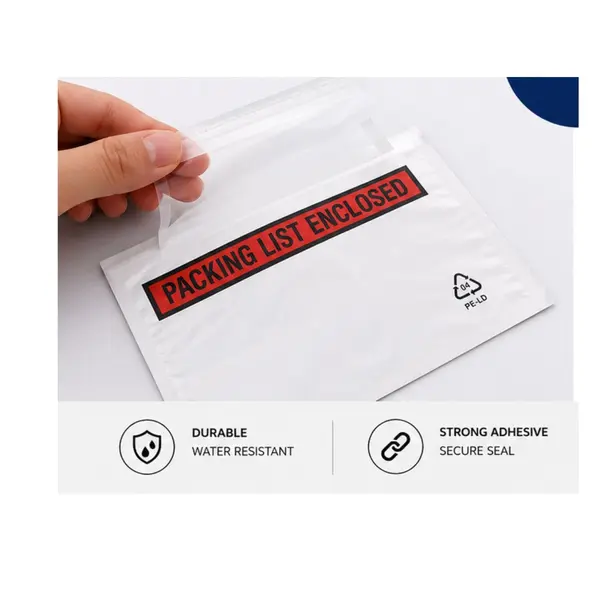
Packing list envelopes for electronics keep export papers readable on the carton, carry serial numbers and sit outside the ESD-safe packing. Here is the setup.
Read →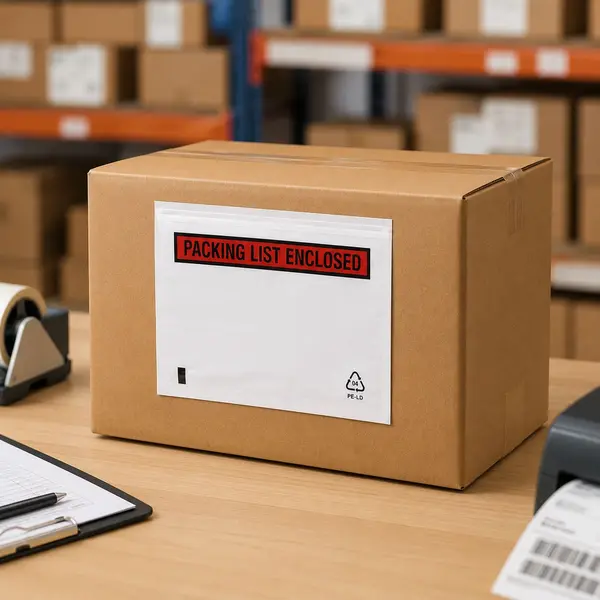
Packing list envelopes for pallet and furniture freight: A4 and A5 pouches that hold long delivery notes and stay stuck on stretch wrap in rough LTL transit.
Read →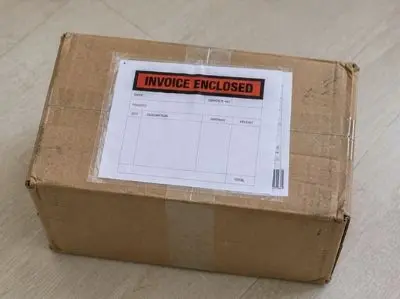
How packing list envelopes for apparel hold slips and return labels on poly mailers, which size fits a clothing bag, and how they make returns easier.
Read →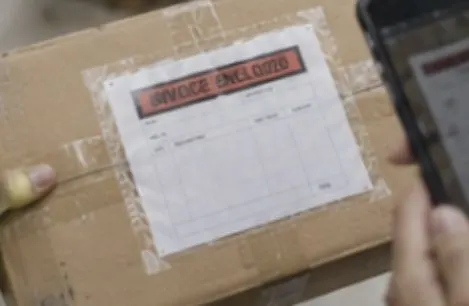
How wholesalers use packing list envelopes in distribution to carry delivery notes, POD sign-off and PO numbers, and why one consistent pouch spec matters.
Read →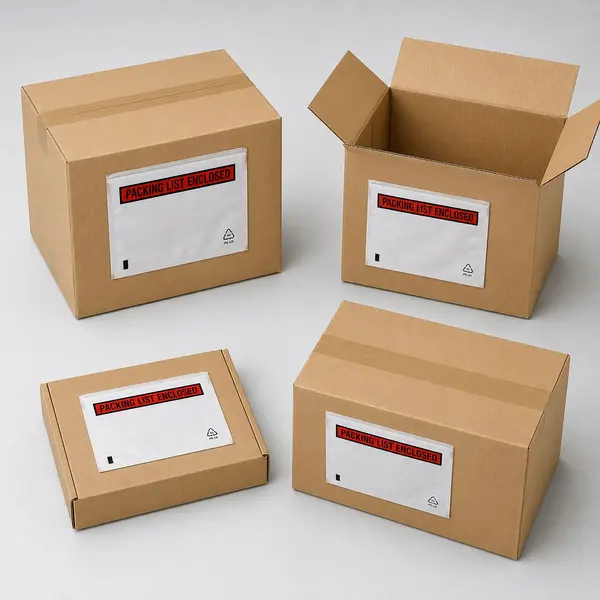
What documents to enclose in a domestic shipment: the packing slip, a delivery note for B2B, a returns label, and what belongs in a pouch outside the box.
Read →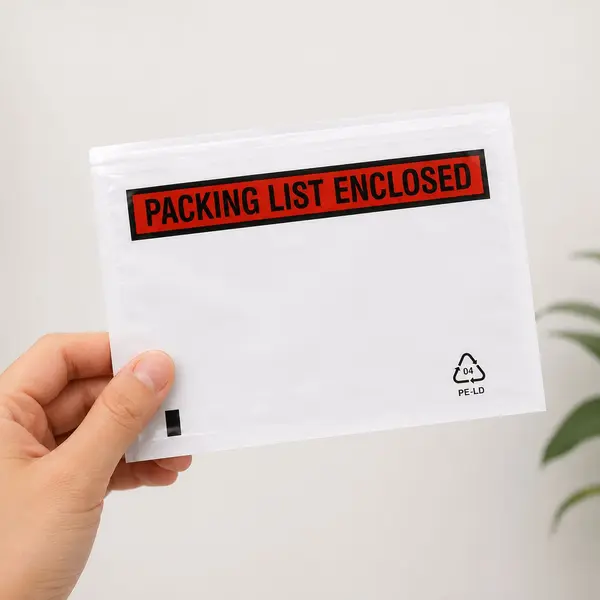
Documents to enclose on an international shipment: which ones customs needs, which go inside the box, and which belong in an 'Invoice Enclosed' pouch outside.
Read →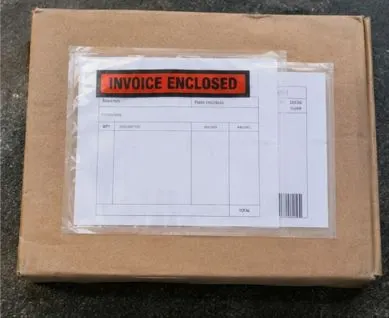
What a commercial invoice in shipping is, what it must carry, how it differs from a packing list, and why it travels in a visible 'Invoice Enclosed' pouch.
Read →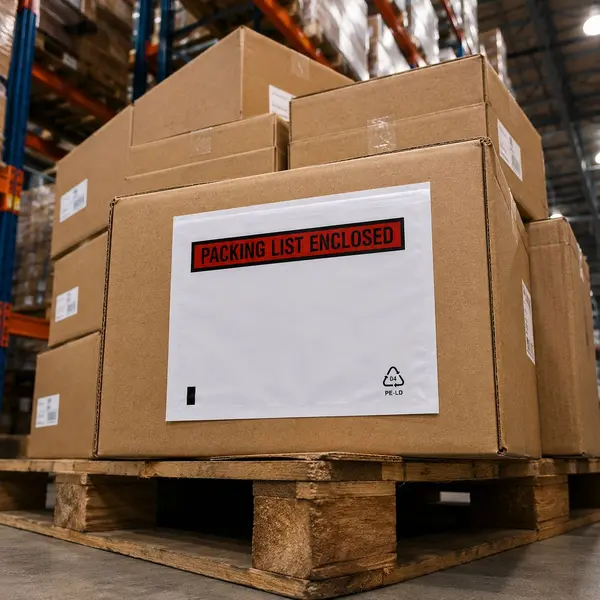
A certificate of origin states where your goods were made. Here is when shipping needs one, preferential vs non-preferential types, and who issues it.
Read →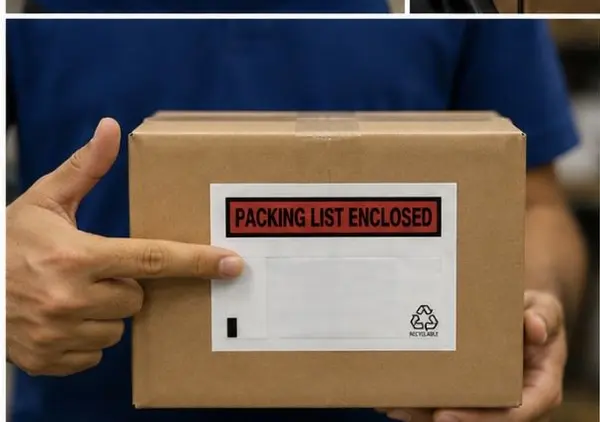
What a delivery note and proof of delivery (POD) are, how they differ from a packing list or invoice, and why a POD jacket pouch helps at handover.
Read →
What goes in a returns slip, an RMA slip and a return label pouch, where each document belongs, and how resealable formats make reverse logistics easier.
Read →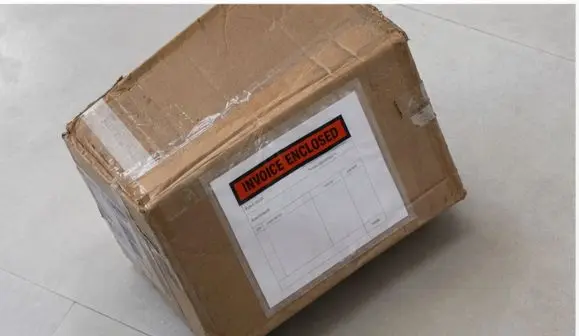
Should the invoice go on the outside of the parcel? For exports yes, in an Invoice Enclosed pouch. For domestic orders keep the priced invoice inside.
Read →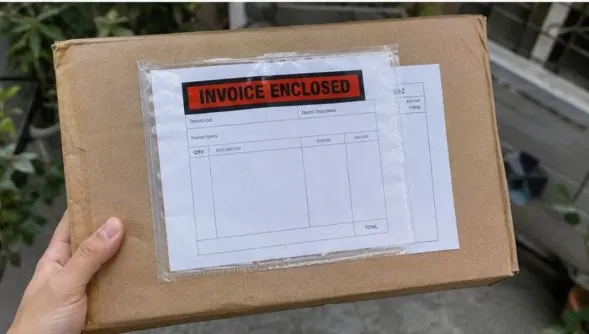
How a GST invoice or VAT invoice works on a shipment: what a tax invoice is, why it travels with goods, India's e-invoice and e-way bill, and EU and UK basics.
Read →
A dangerous goods document pouch keeps the declaration and SDS visible, attached and dry, without covering a hazard label. What to look for, and where it goes.
Read →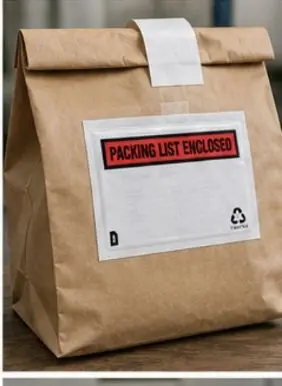
How to format a packing list that clears fast: the fields to include, a simple checklist, the mistakes behind holds, and how export and domestic lists differ.
Read →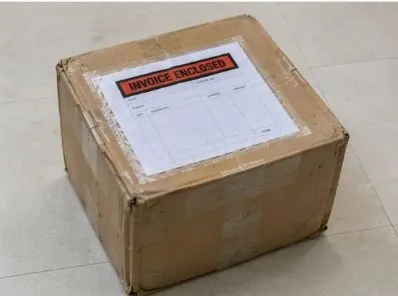
Which documents go on the outside for customs: the commercial invoice, packing list and, when needed, the certificate of origin. Here is what stays inside.
Read →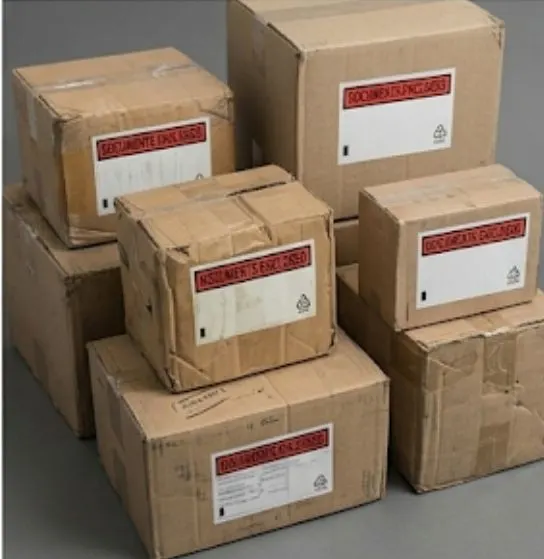
Want to avoid customs delays? Most holds come from paperwork customs cannot find or read. Here is how a visible invoice pouch and a simple checklist help.
Read → Incoterms documents explained simply: who provides the commercial invoice, packing list, certificate of origin and customs papers, from EXW to DDP, and why.
Read → An air waybill pouch keeps the AWB and house documents readable on the carton or ULD. Here is what goes inside, which size to pick and what film holds up.
Read →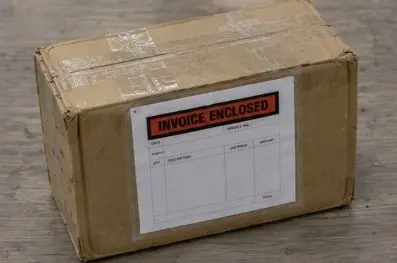
How to protect sea freight documents like the invoice and packing list on cartons in LCL, FCL and break-bulk shipments, and how to beat container rain.
Read → Cross border ecommerce customs made plain: CN22 vs CN23, the commercial invoice for small parcels, low-value thresholds, and where the documents pouch goes.
Read →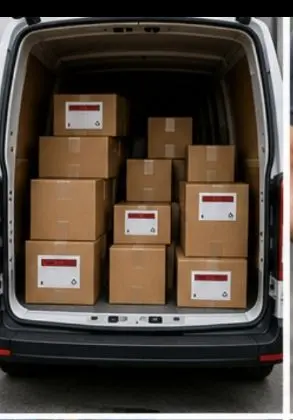
How to buy packing list envelopes in bulk: write a spec, test a sample, get a written quote, then order by carton, pallet or container to match your real usage.
Read →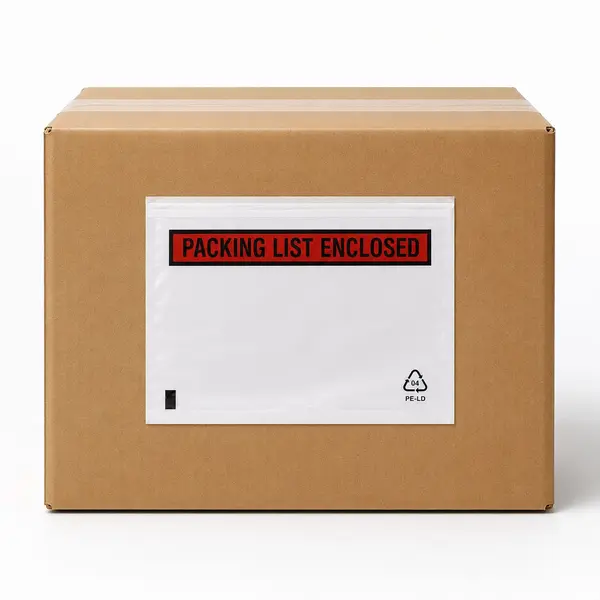
Packing list envelope MOQ explained plainly: why minimums exist, why custom print raises them, and how to plan an order that lands at a fair price per pouch.
Read →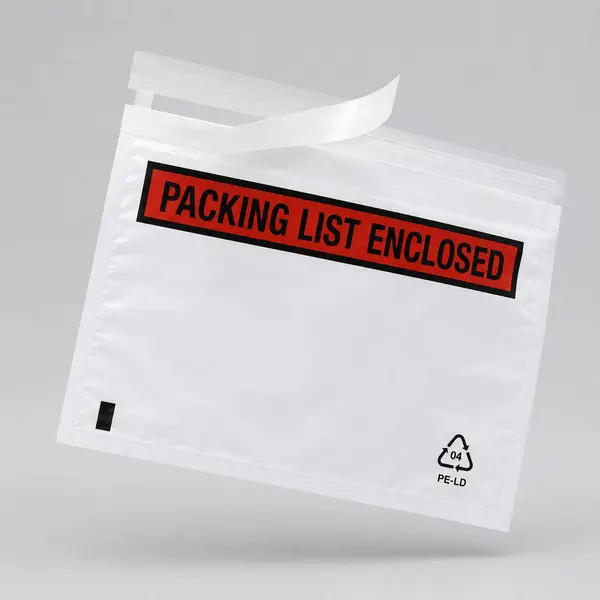
Packing list envelope manufacturer vs distributor vs retailer: how price, custom print, MOQ and lead time compare, and when buying direct from the factory pays.
Read →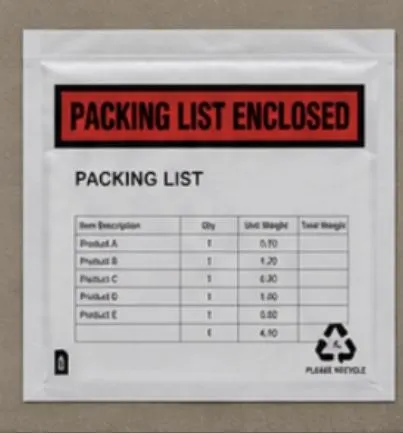
How distributors can private-label packing list envelopes: artwork files, legends, neutral packing, the OEM steps, and what to send your manufacturer first.
Read →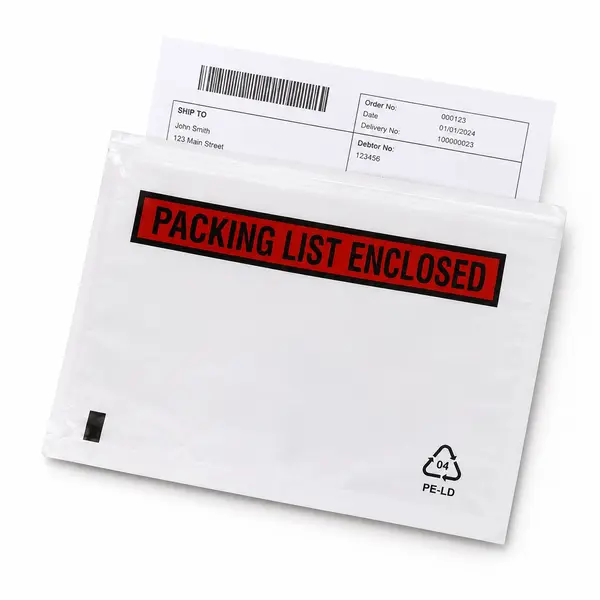
Packing list envelope cost comes down to film gauge, size, print colours, adhesive, volume and freight. Here is how each moves the price, and where not to cut.
Read →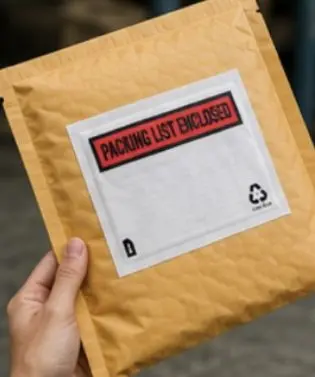
How to request a packing list envelope sample pack, what to tell the supplier, and how to test adhesion, fit, legibility and cold before a bulk order.
Read →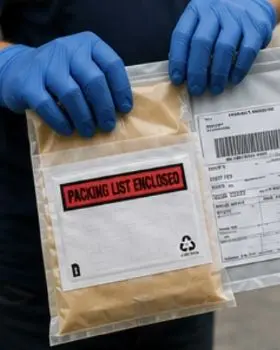
How to evaluate a packing list envelope supplier: check certificates, samples, capacity, export experience, MOQ, lead time and how quickly they answer you.
Read →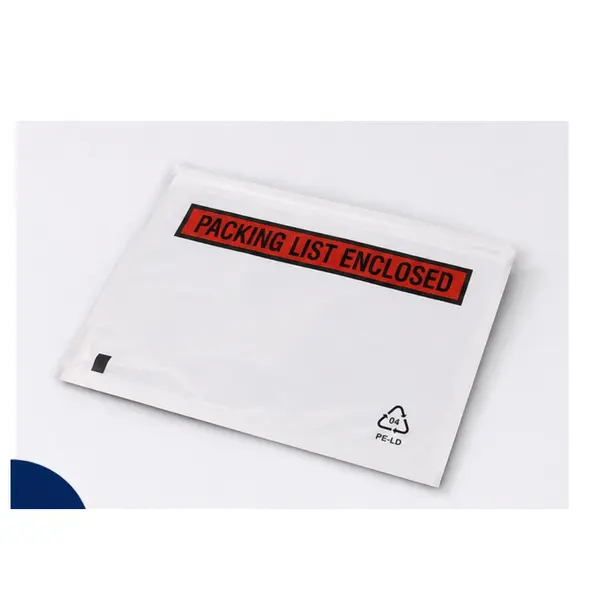
Importing packing list envelopes? Check the spec and sample, Incoterm, landed cost, lead time, MOQ and export papers before you place an overseas order.
Read →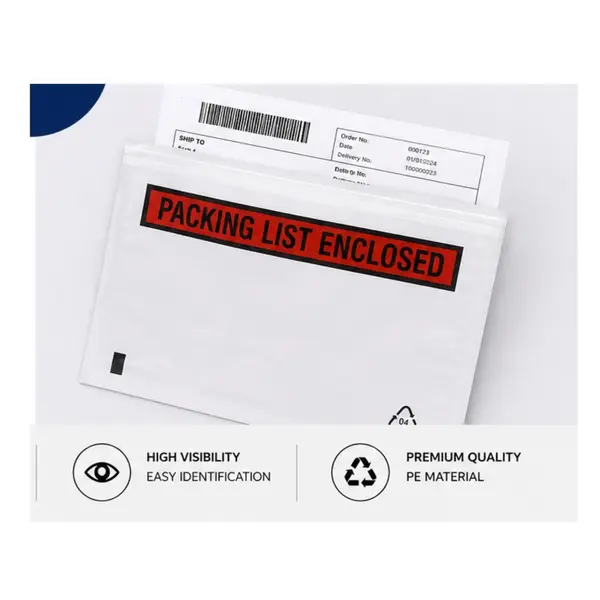
Plan your packing list envelope lead time: production plus freight, a simple reorder point, safety stock and blanket orders, so you never run out of pouches.
Read →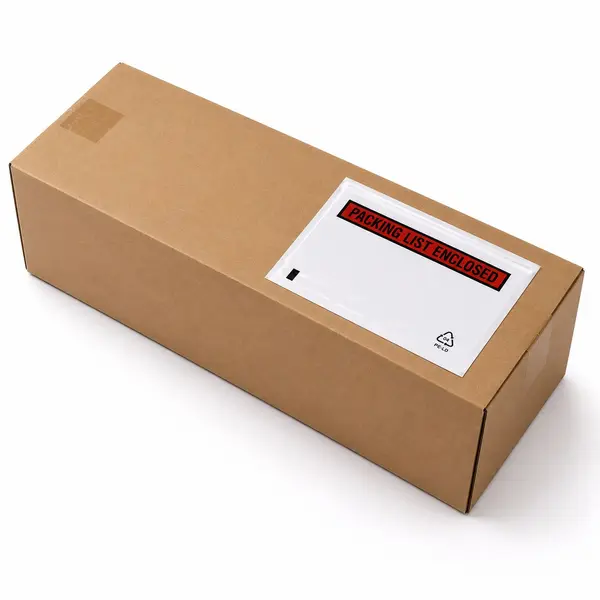
Switching packing list envelope suppliers without stalling dispatch: hold overlap stock, approve a sample, match the spec, then phase the changeover in steps.
Read →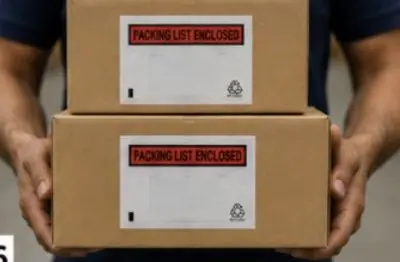
How to apply a packing list envelope so it stays on: clean and dry the carton, insert the document, peel the liner fully, place it flat and press hard.
Read →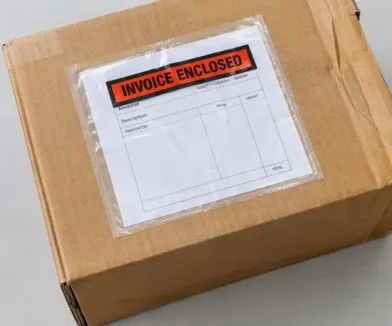
How an automatic packing list envelope applicator works, which reel-fed pouch specs run well, what speed to expect, and when a line is worth the money.
Read →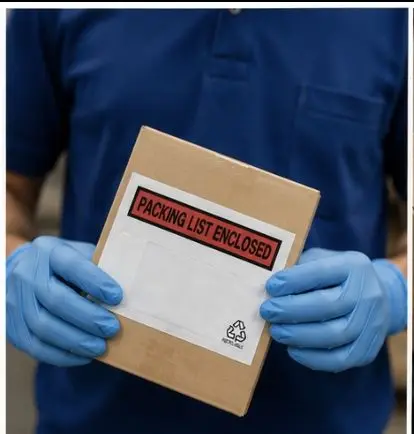
Reduce returns friction by keeping the returns slip and return label in a clear pouch with the order. Fewer support tickets, easier reuse and faster restock.
Read →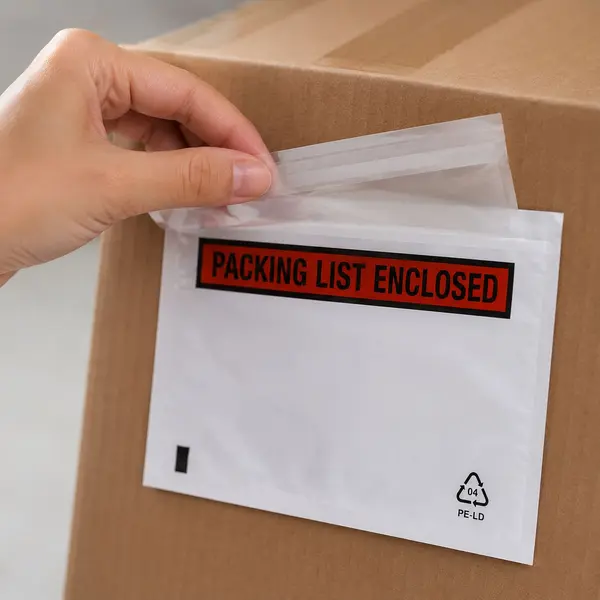
Why packing list envelope adhesive residue happens, removable vs permanent grades, and a simple way to peel pouches off cleanly for box reuse and recycling.
Read →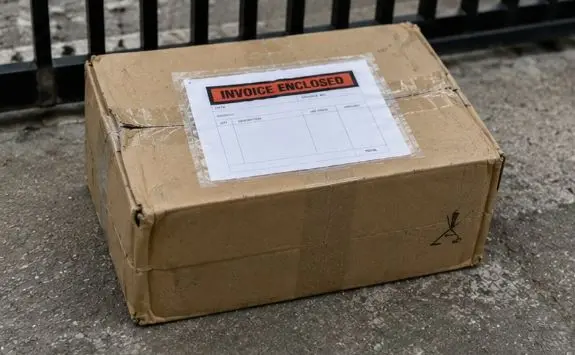
Packing list envelope shelf life depends on storage. Here is the right temperature and humidity, why the liner stays on, and how FIFO keeps the glue working.
Read →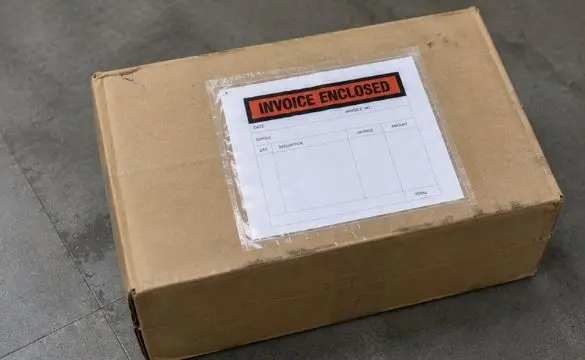
How to standardise packaging across warehouses: one written spec, one supplier, a short SKU list and central buying, for fewer errors and better pouch pricing.
Read →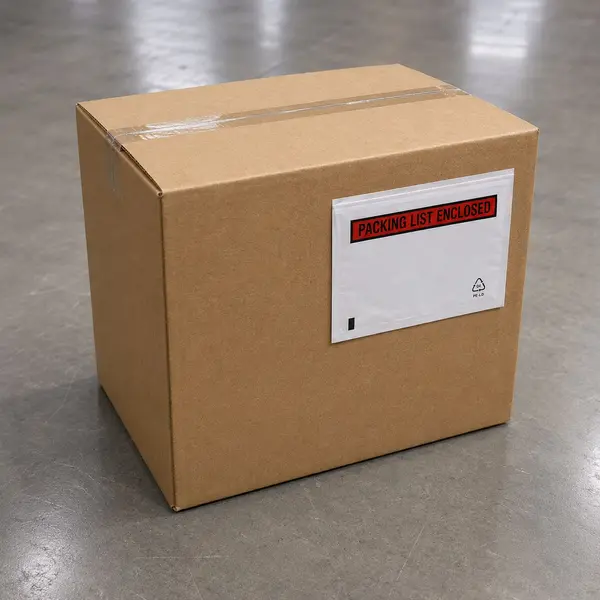
Reduce packaging waste and spend by sizing the document pouch to the document. Less film per parcel, lower unit cost and less plastic in your customer's bin.
Read → How to fit oversize and multi-page document sets in a packing list envelope: A4 or fold, page capacity, film thickness, and when a gusseted pouch is the answer.
Read →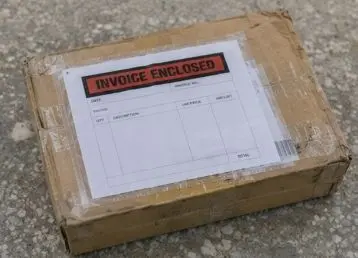
Packing station throughput rises when you remove reaches and choices: pouch placement, easy-peel liners, a dispenser, pre-printed legends and smart automation.
Read →
Are packing list envelopes recyclable? Yes, but poly pouches go to store drop-off, not kerbside, and paper ones go with cardboard. Here is how to do it right.
Read →
Plastic free document pouches and paper documents enclosed wallets: when to switch from poly, the water trade-off, kerbside recycling and EU rules.
Read →
Recycled content packing list envelope basics: what PCR film is, how it performs in a pouch, which claims to verify, and how it compares with virgin film.
Read →
What the EU PPWR means for document pouches: recyclability, recycled content and minimisation, who carries the duty, and what buyers should do now.
Read →
Practical ways to reduce plastic packaging on document pouches: paper, thinner but stronger film, recycled content, right-sizing and going paperless.
Read →
How your document pouch feeds ESG packaging metrics and Scope 3 reporting, what data to ask your supplier for, and how to make claims without greenwashing.
Read →
How to right size a document pouch and reduce packaging material: match the pouch to the document, cut film and cost, and stock just two or three sizes.
Read →
Packing list envelope won't stick? The surface is usually dusty, oily, wet or cold, or the film is waxy. Here are the causes, a diagnostic table and the fixes.
Read →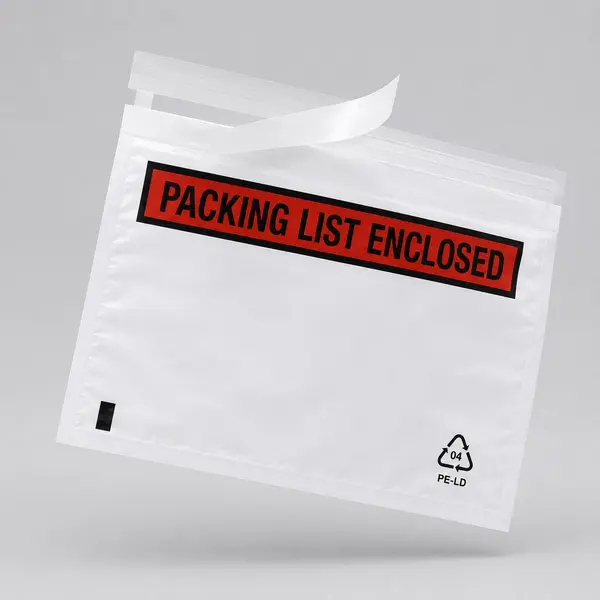
A packing list envelope peels off in transit because of edge lift, vibration, cold, seams or tape, and too little dwell time. Here is how to fix each cause.
Read →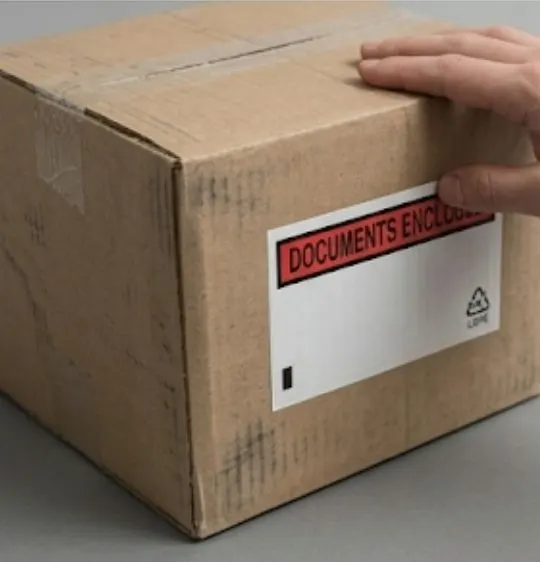
Why a packing list envelope in cold storage or a freezer lets go: stiff adhesive and condensation. How to apply it warm, and when to pick a cold-grade adhesive.
Read →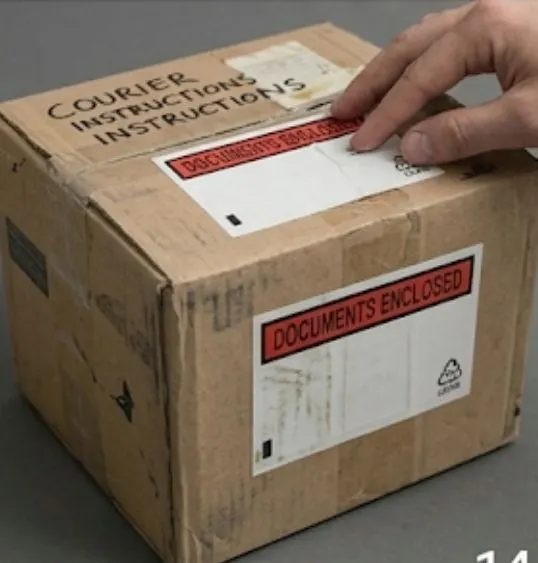
Packing list envelope humidity and heat problems explained: why the adhesive oozes or peels, how to apply on damp cartons, and which grade suits hot lanes.
Read →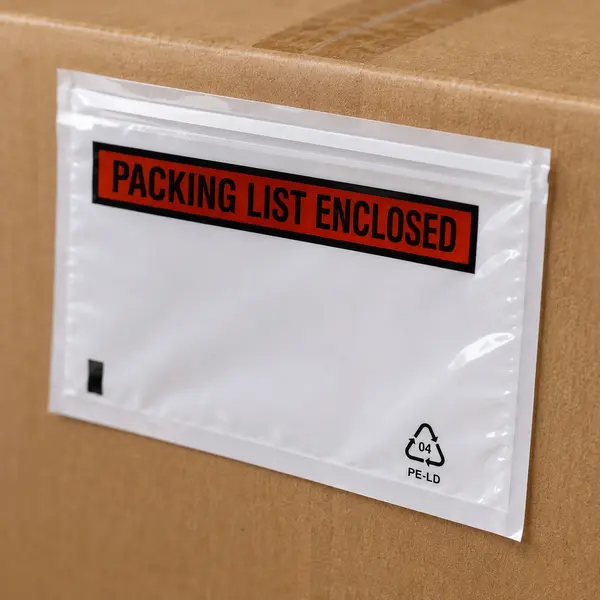
Packing list envelope tears in transit? Here is how film gauge in microns and mil decides durability, why thin pouches split, and when to step up for freight.
Read →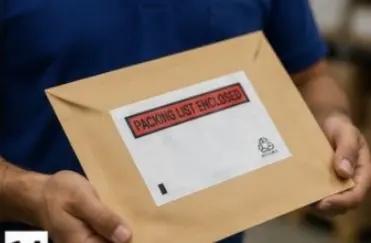
Packing list envelope condensation, scanner glare or faint print can make documents unreadable. Here is how to tell which one you have and how to fix it.
Read →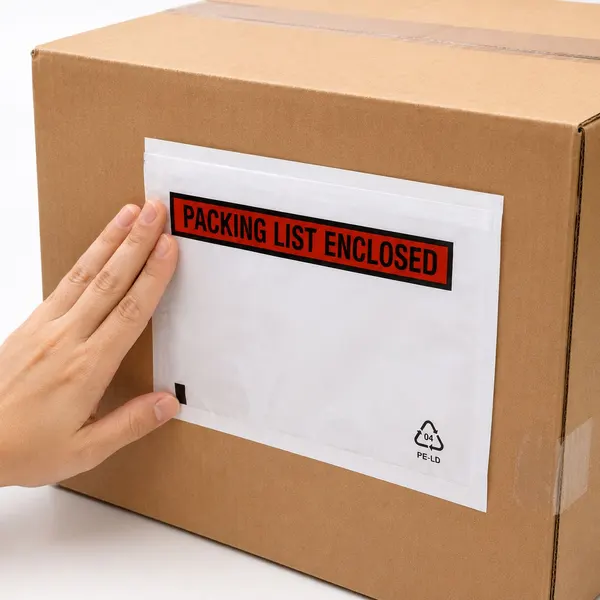
Packing list envelope too small? Documents bunch, crease and fail to seal. Here is how to cut the folds, size up one step and pick a pouch that fits flat.
Read →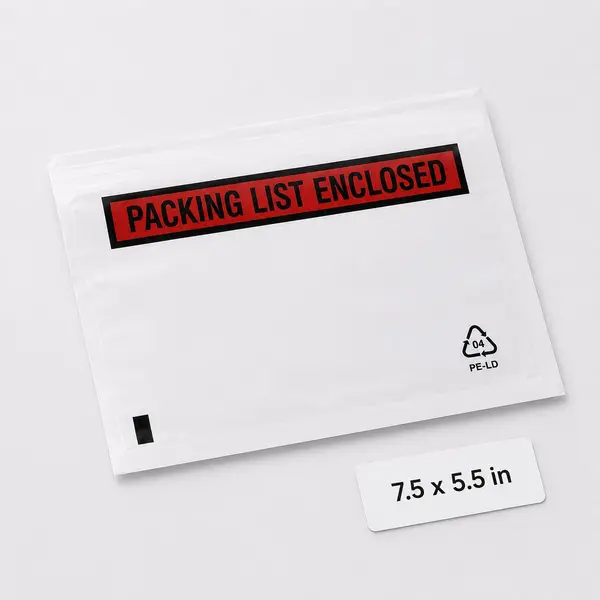
Packing list envelope poly mailer adhesion fails for two reasons: waxy film and a loose surface. Here is why, and how high-tack glue and taut film fix it.
Read →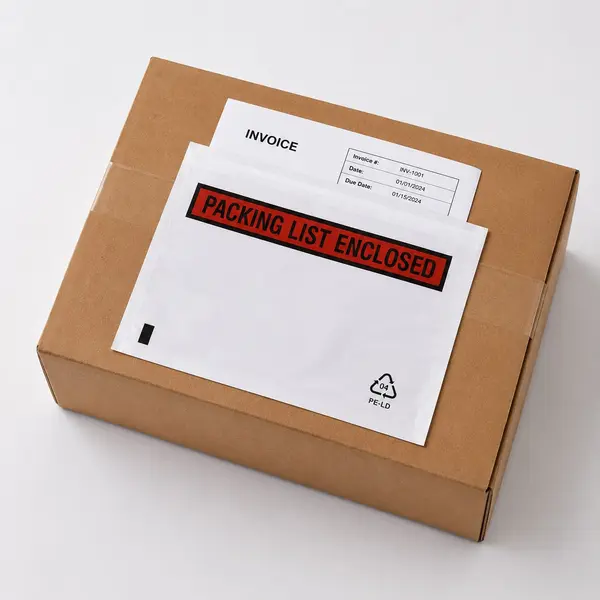
Packing list envelope ink rubbing off or smudging? Find out if it is the pouch print or the document, why it happens, and how to specify print that lasts.
Read →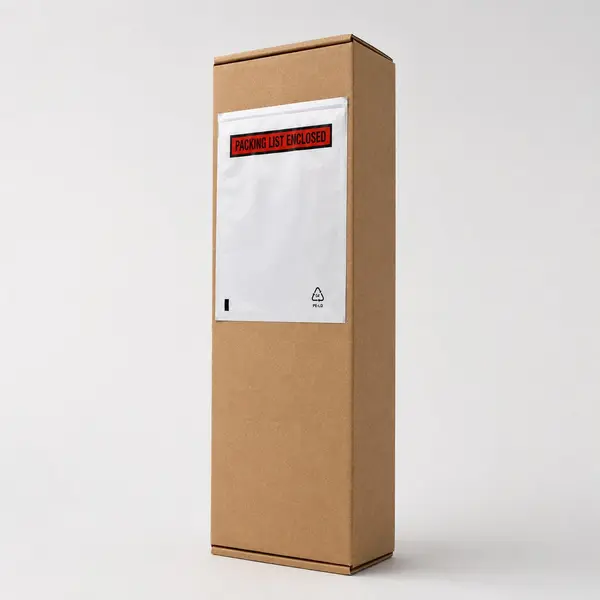
Packing list envelopes sticking together in the box? It is usually blocking from heat, pressure or a short liner. Here is how to fix it and how to prevent it.
Read →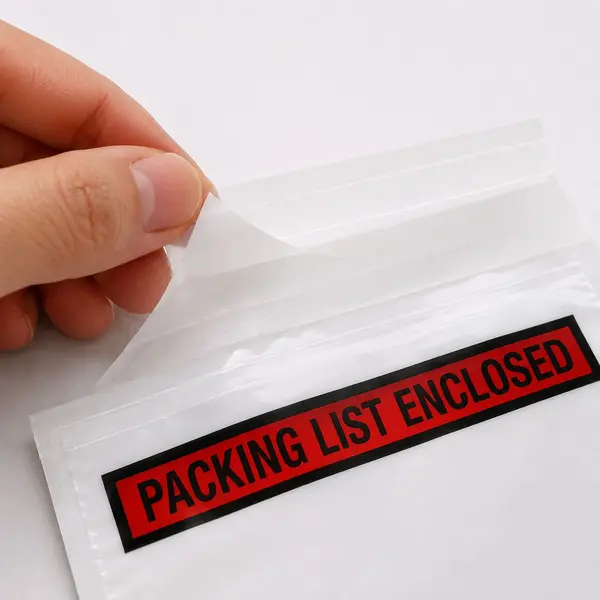
Packing list envelope static and uneven liner release cause misfeeds, double-feeds and jams on applicator lines. Here is how to fix it at the peel point.
Read →
Barcode won't scan through the packing list envelope window? Glare, wrinkles and fog are the usual causes. Here is how matte film and good placement fix them.
Read → How to choose packing list envelopes in 5 steps: size, loading format, clear or printed face, adhesive and material. With a decision table for each shipment.
Read →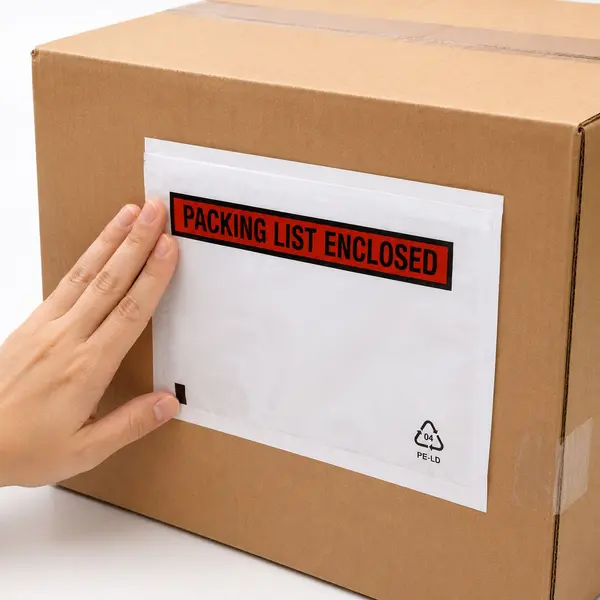
Packing list envelope vs shipping label pouch: one carries documents, one carries the carrier label, and one clear pouch often does both. How to choose.
Read →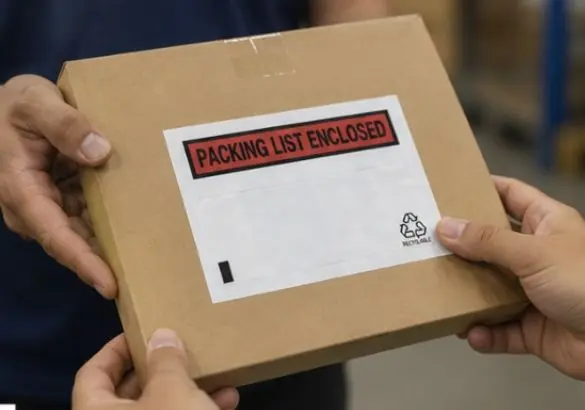
Do you need a packing slip? For most domestic parcels the law does not ask for one, but customs, regulated goods and B2B contracts often do. How to decide.
Read →No guide matches that search.