
Packing Slip Pouch vs Packing List Envelope: Same Thing?
If you have shopped for shipping supplies, you have seen one product sold under half a dozen names. Packing slip pouch, packing list envelope, invoice enclosed sleeve, documents enclosed wallet.
It is confusing, so let me settle it.
Is a packing slip pouch the same as a packing list envelope?
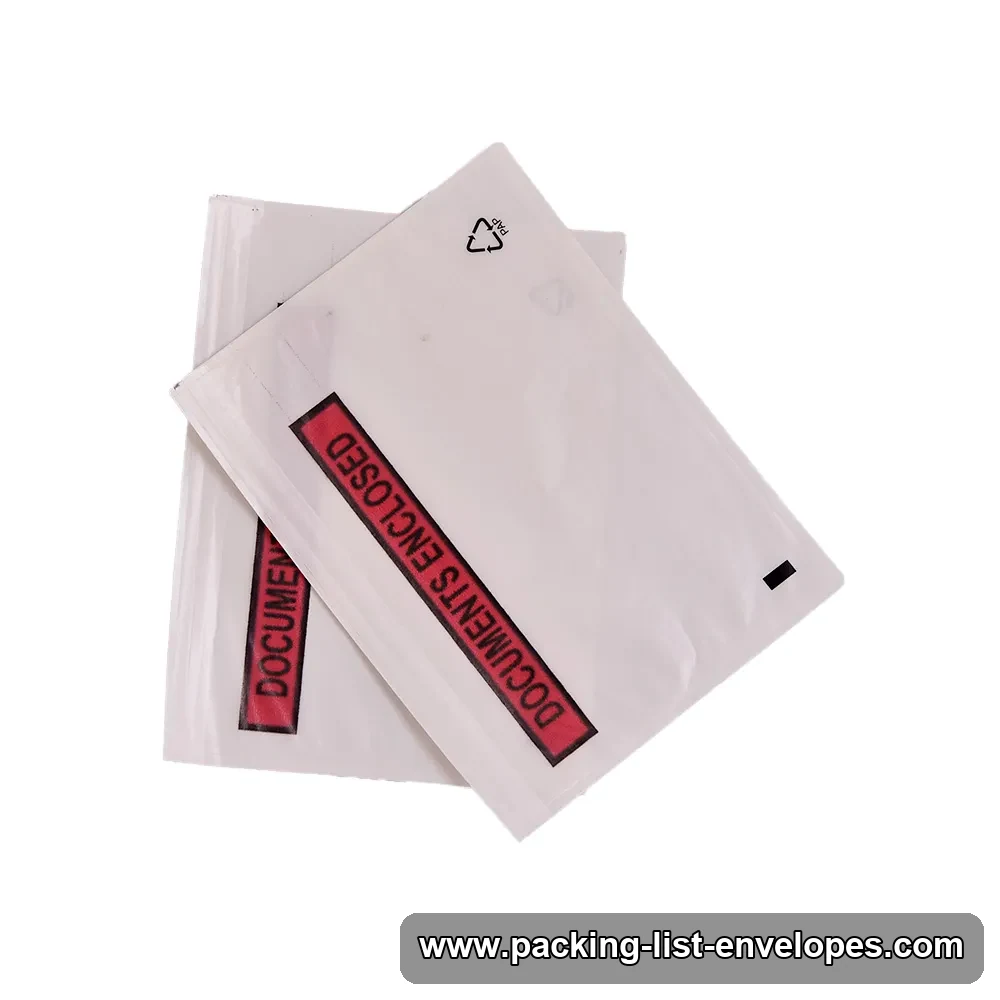
Yes, they are the same product. A packing slip pouch and a packing list envelope both describe a self-adhesive plastic pocket that sticks to the outside of a carton, mailer or pallet and holds the invoice or packing slip. Suppliers use the words interchangeably, and you will often see both on one product page.
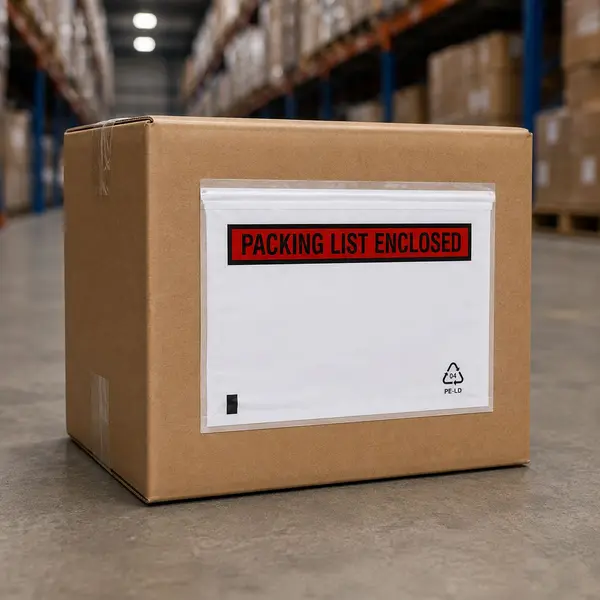
The pocket does one job. It carries shipping paperwork on the outside of the parcel, protected from weather and visible to handlers, so the documents never get lost inside the box or soaked on the way.
We have made these pockets in Jaipur since 1997 and exported them to 20+ countries. Whatever name you use in your enquiry, we will know what you mean.
Why are there so many names for the same thing?
Regional habit and marketing, mostly. The product stayed the same while the vocabulary multiplied.
- “Envelope” is the older catalogue word, common in North American distributor listings.
- “Pouch” has grown fast in ecommerce, because it sounds tougher and more weatherproof than a paper-sounding envelope.
- “Sleeve” points at the slide-in, top-loading design.
- “Packing list enclosed” describes the printed words on the front, not a different product.
So packing slip envelope pouches, packing list pouches and a packing list enclosed sleeve all point to the same adhesive document pocket. We export our document-enclosed wallets to the UK and Australia too, where “wallet” is a common word for it as well.
Pouch, envelope or sleeve: what does each name mean?
This table maps the common names to what they really describe.
| Term you’ll see | What it really means | Who tends to use it |
|---|---|---|
| Packing list envelope | Adhesive document pocket | Distributors, North America |
| Packing slip pouch | Same pocket, “pouch” framing | Ecommerce, global listings |
| Packing list enclosed pouches | Pocket pre-printed “Packing List Enclosed” | Warehouses, 3PLs |
| Packing list enclosed sleeve | Same, emphasising top-load design | Label/supply vendors |
| Invoice enclosed sleeve | Same pocket, invoice-focused wording | Exporters, B2B |
My advice is not to get hung up on the word.
Look at the specs instead: size, film thickness, print and adhesive. That is where products actually differ, and it is what decides whether the pouch still holds your invoice after a wet week in transit.
What are packing slip pouches made of?
Most are low-density polyethylene (LDPE) film with a peel-and-stick adhesive back. A common spec is around 2 mil film. That is thick enough to resist tearing and thin enough to follow the surface of a carton.
In any adhesive packing slip pouch, I would check these 4 features.
- Clear, water-resistant film, so barcodes and text stay readable and scannable.
- A self-adhesive back with a peel-off liner, so no tape or glue is needed.
- A top-loading opening, usually with a tuck-in flap to keep the documents in place.
- Tamper-evident behaviour. Once it is stuck down, the pouch generally has to be torn to get the contents out.
For the full picture of construction and uses, see What Are Packing List Envelopes?.
Should I buy a clear-face or full-face pouch?
Choose clear-face when the document should be readable through the film. Choose full-face, also called a panel pouch, when the paperwork should stay hidden.
Clear packing slip pouches have a fully transparent front. Staff and couriers can read the address or order number without opening anything. They suit domestic ecommerce and fast warehouse picking.
Full-face or panel pouches have a printed front, often “PACKING LIST ENCLOSED”, which hides prices and invoices until the pouch is opened. They suit shipments where commercial terms should not be on show at the loading dock. If you want your own wording or logo on that panel, see custom print.
Both are self adhesive packing slip pouch designs. The only difference is whether the front is see-through or printed.
What size packing slip pouch do I need?
Start from your folded document, then add a small margin. Quoted sizes are usually outside dimensions, so the usable space inside is a little smaller than the number on the box.
| Pouch size (in) | Typical fit |
|---|---|
| 4.5 x 5.5 | Folded A6 slip, small order labels |
| 5.5 x 7.5 | Folded A5 packing slip |
| 5.5 x 10 | Folded A4 invoice / customs docs |
| 7 x 10 | Multi-page export paperwork |
For a deeper sizing guide with folding tips, read Packing List Envelope Sizes. If you are unsure which document belongs in the pouch, our guide on packing list vs packing slip vs invoice clears that up.
Are clear packing slip pouches waterproof?
They are water-resistant, not fully waterproof. I would rather say that plainly than oversell it. The sealed film and adhesive keep out rain, splashes, dust and humidity in normal road and air handling, which covers most shipments.
For sea freight, refrigerated transit or long outdoor storage, treat the pouch as the first line of defence. Keep a backup copy of important paperwork inside the carton as well. For ordinary parcel and pallet shipping, a good 2 mil packing list enclosed pouch gets the documents there in readable shape.
How do I apply and remove them cleanly?
Apply to a clean, dry surface. Peel slowly from a corner to remove.
I would train packers on both steps.
- To apply, wipe away dust, peel the liner, lay the pouch down from one corner, then smooth it across with a flat edge to push out the air. A plastic card works well for this.
- To remove, lift slowly from one corner at a low angle. On clean corrugated board the adhesive usually comes away without leaving a sticky mark.
When you compare suppliers, ignore the name on the listing. Compare size, film thickness, clear face or panel, and print.
We list all of these across our range on the products page.
Need packing slip pouches in your own sizes? Tell us your document size and monthly use, and we will send a free sample pack to try.
Frequently asked questions
Is a packing slip pouch the same as a packing list envelope?
Yes. Both names describe the same self-adhesive plastic pocket that sticks to the outside of a parcel and holds the shipping paperwork. Suppliers and regions simply use different words for it.
Why do some suppliers say 'pouch' and others say 'envelope'?
Mostly habit and marketing. North American catalogues lean towards 'envelope' or 'sleeve', while ecommerce listings favour 'pouch' because it sounds tougher. The product underneath is the same.
What is a 'packing list enclosed' pouch?
It is a pouch printed with the words 'PACKING LIST ENCLOSED' on the front, often in orange or red. The print tells handlers that documents are inside, so the pouch is not ripped off and thrown away. A plain clear pouch has no print and shows the document directly.
What are packing slip pouches made of?
Most are low-density polyethylene (LDPE) film, commonly around 2 mil thick, with a peel-off self-adhesive back. The film is clear and resists water, so labels and invoices stay readable on the way.
Are clear packing slip pouches waterproof?
They are water-resistant rather than fully waterproof. They keep out rain, splashes, dust and humidity in normal handling. For sea freight or long outdoor storage, keep a backup copy of key papers inside the carton.
What size packing slip pouch do I need?
Start from your folded document and add a small margin. Common sizes are 4.5 x 5.5 in, 5.5 x 7.5 in and 5.5 x 10 in. Quoted sizes are usually outside dimensions, so the usable space inside is a little smaller.
What's the difference between a clear-face and a full-face (panel) pouch?
A clear-face pouch lets staff read the document through the film. A full-face or panel pouch has a printed front that hides the paperwork until the pouch is opened. Pick the panel when prices or invoices should stay private.
Sourcing these in volume?
We make packing list envelopes in Jaipur for importers and distributors. Factory-direct, private label welcome.