
Incoterms and Documents: Who Provides the Shipping Paperwork?
The Incoterm on your contract decides more than who pays the freight. It also shapes who has to produce, obtain and hand over the shipping documents.
That means the commercial invoice, the packing list, the certificate of origin and the customs papers at each border. If this is unclear before the goods move, you get the classic “I thought you were sending that” argument, and the cargo sits at customs while both sides email each other.
We are exporters ourselves, so this paperwork matters to us as much as to you.
This is a general overview, not legal or customs advice. Always confirm the rules for your lane, contract and destination.
Do Incoterms decide who provides the shipping documents?
Partly, and the limits matter.
There are 11 rules in the current Incoterms 2020 set. They decide who handles export and import customs formalities, and who pays for getting documents. Every rule also obliges the seller to provide the commercial invoice.
What they do not do is list every document a country asks for.
So the real answer has three layers.
- Incoterms fix the framework, i.e. who clears export, who clears import and who pays for what.
- One document is named directly. The seller must always supply a commercial invoice that matches the contract.
- The contract of sale fills the rest. It should say which supporting documents the seller will provide, such as origin, inspection, phytosanitary or insurance papers, and in what form.
I think of Incoterms as the frame of a house and the sales contract as the walls. I would say relying on the Incoterm alone to define your document pack is the most common paperwork mistake in cross-border trade.
Who provides each document?
The seller almost always produces the core commercial documents. Who handles the clearance paperwork shifts with the chosen rule.
| Document | Who provides it | Notes |
|---|---|---|
| Commercial invoice | Seller (all rules) | Required by every Incoterms rule. Values must match the packing list. |
| Packing list | Seller | Not named in Incoterms, but always the seller’s, since only they know carton contents and weights. |
| Certificate of origin | Seller obtains, buyer often uses | Usually validated by a chamber of commerce and passed to the buyer or carrier for duty purposes. |
| Export customs declaration | Whoever clears export (seller, except EXW) | Under EXW the buyer arranges export clearance. |
| Import customs declaration | Whoever clears import (buyer, except DDP) | Under DDP the seller handles import clearance and duty. |
| Insurance document or certificate | Seller under CIF and CIP only | Other rules leave insurance optional. |
| Transport document (B/L, AWB) | Whoever contracts the main carriage | Follows the cost split for main carriage in the chosen rule. |
One thing stays the same under all 11 rules.
The commercial invoice and packing list start with the seller. For the customs document set itself, see what documents to enclose for international shipments.
How does the chosen Incoterm change customs responsibility?
The further the rule pushes the seller’s duty towards the destination, the more paperwork the seller takes on. Customs clearance shows this most clearly.
- EXW (Ex Works). The buyer does export clearance, import clearance and every document at both ends. The seller only makes the goods available and issues the invoice.
- FCA, FOB, CFR and CIF. The seller handles export clearance and documents at origin. The buyer handles import clearance and documents at destination.
- DAP and DPU. The seller carries the goods to the destination, but the buyer still handles import clearance and duty.
- DDP (Delivered Duty Paid). The seller handles export clearance, import clearance and duties.
EXW and DDP are the two ends. The buyer carries the most paperwork under EXW and the seller carries the most under DDP. Everything else sits in between, with the border as the dividing line.
This is where I would be careful.
EXW looks easy for a seller, but a foreign buyer often cannot clear export in the seller’s country without the seller’s help. For an exporter, FCA is usually the cleaner choice.
Who is responsible for the certificate of origin and special documents?
Generally the seller obtains them and passes them on, even when the buyer clears import. The buyer needs origin proof to claim a lower duty, but only the seller can certify where the goods were made.
The same pattern applies to papers you cannot simply print yourself.
- Certificate of origin, issued or validated by a chamber of commerce or a similar body. The seller arranges it.
- Inspection or quality certificates, often arranged by the seller and sometimes specified by the buyer in the contract.
- Phytosanitary, health or CITES certificates, obtained from the right authority by the party handling export and then passed on.
Incoterms do not list these.
So the sales contract or letter of credit should name them clearly, with who pays and who hands them over. I would put that list in the contract every time, even for a repeat buyer we know well. Our note on the certificate of origin explains what it proves and who validates it.
What about insurance documents?
Only two rules make insurance a document obligation: CIF and CIP. Under both, the seller must buy cargo insurance and give the buyer an insurance document or certificate, so the buyer can claim if goods are lost or damaged.
Under every other rule, insurance is optional. Either party can insure its own risk, but no certificate changes hands automatically.
This confuses a lot of buyers. They assume they are covered when the rule says nothing of the kind.
Where do the documents physically travel?
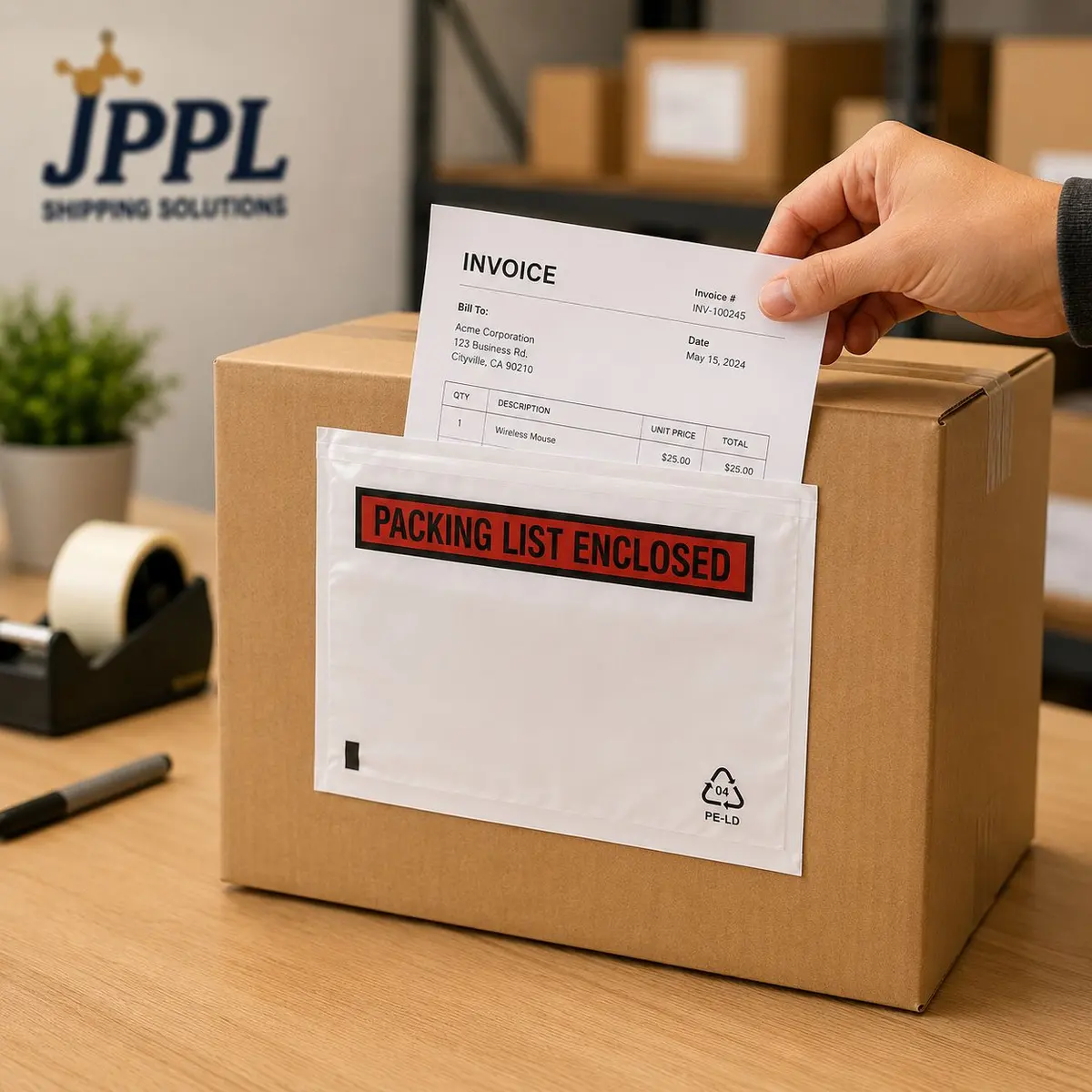
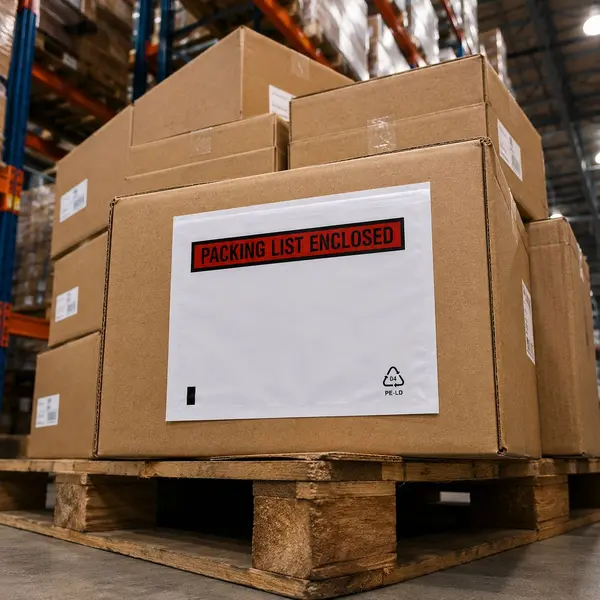
Whoever produces them, the invoice and packing list still have to reach customs in a readable state. Under any Incoterm, the documents customs needs should travel on the outside of the carton in a clearly marked pouch, not sealed inside.
A few habits help.
- Match the pouch to the document set. An A4 invoice, packing list and certificate of origin need an A4 pouch that takes flat sheets. A small parcel may only need a DL or 6 × 9 pouch.
- Use a printed legend. A pouch marked “Invoice Enclosed” or “Documents Enclosed” is faster for customs to spot than a blank one.
- Include enough copies, because origin, transit and destination customs may each want their own.
- Seal against weather. Border yards are wet and rough, and the paperwork has to arrive legible.
We have made packaging in Jaipur since 1997 and we export to 20+ countries. Document-enclosed wallets are one of our long-running export products, and we make them from A7 to A4. You can see the sizes and printed legends on our products page, or print your own wording through custom print.
Exporting under any Incoterm? Send us your document set and carton sizes, and we will send “Documents Enclosed” pouch samples to try.
Frequently asked questions
Do Incoterms say who provides the shipping documents?
Only partly. They decide who handles export and import customs formalities, who pays for getting documents, and they oblige the seller to provide the commercial invoice. They do not list every document a destination needs, so the contract of sale should fill the gaps.
Who provides the commercial invoice under Incoterms?
The seller, under every rule from EXW to DDP. Each Incoterms rule requires the seller to provide the goods and a commercial invoice that matches the contract of sale.
Who prepares the packing list, the seller or the buyer?
Almost always the seller. Only the seller knows what went into each carton, the marks, and the net and gross weights. Incoterms do not name the packing list, but it travels with the commercial invoice as part of the normal export set.
Who is responsible for the certificate of origin?
Usually the seller gets it, often validated by a local chamber of commerce, and passes it on to the buyer or carrier. Even when the buyer clears import, the seller normally supplies the origin proof the buyer needs to claim a lower duty.
Who clears customs under EXW?
The buyer, at both ends. Under EXW (Ex Works) the seller only makes the goods available at its premises, so the buyer handles export and import clearance and the documents they need. This is why EXW puts the heaviest paperwork on the buyer.
Who arranges customs documents under FOB and CIF?
It is split at the border. The seller clears export at origin and the buyer clears import at destination. The seller still issues the commercial invoice and packing list.
Do Incoterms cover insurance documents?
Only under two rules, CIF and CIP. There the seller must buy cargo insurance and give the buyer an insurance document or certificate. Under all other rules insurance is optional, though either party may insure its own risk.
Sourcing these in volume?
We make packing list envelopes in Jaipur for importers and distributors. Factory-direct, private label welcome.