
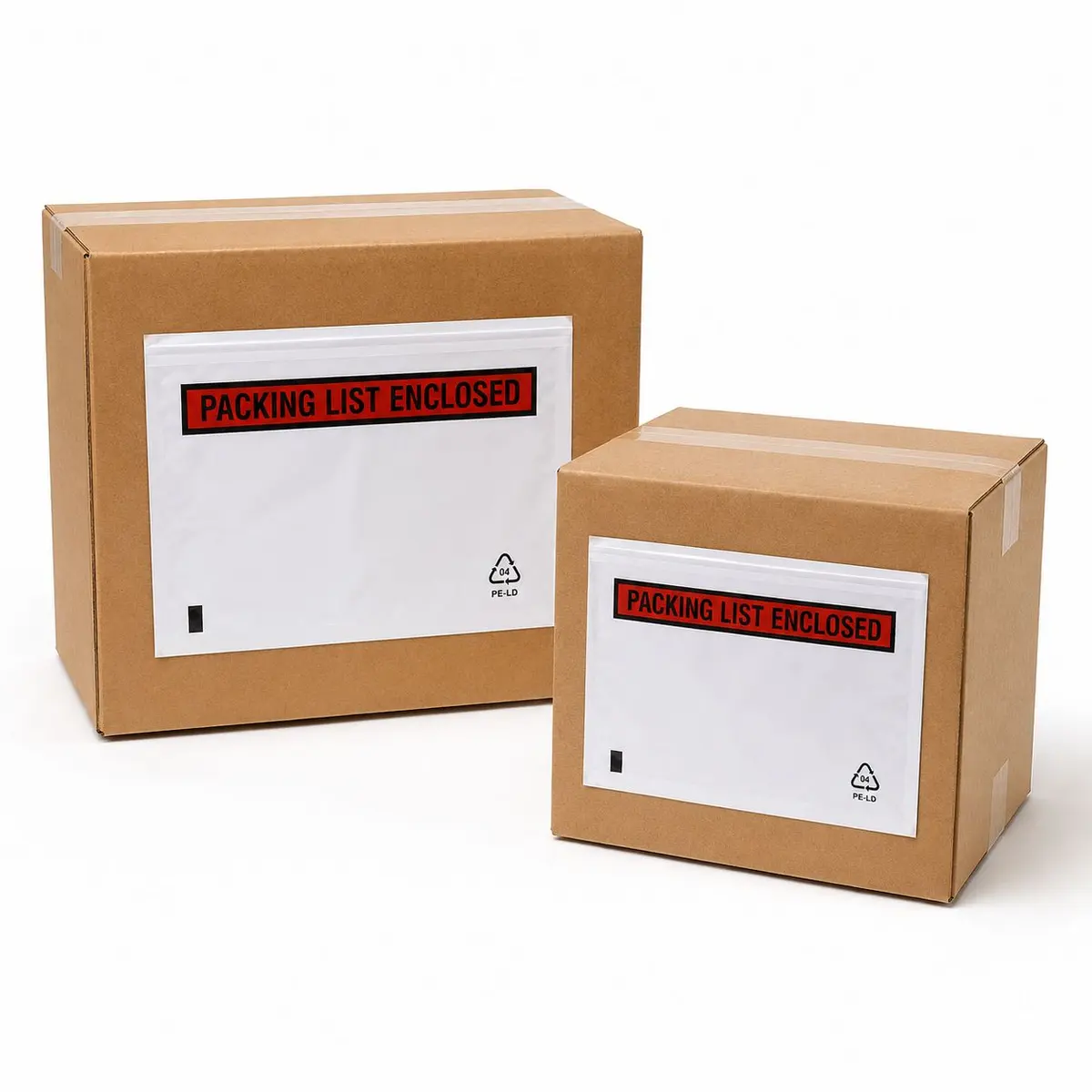
Pouch Too Small? Fixing Folding Problems
A document will not lie flat when the pouch is smaller than the folded paper.
The sheet springs back against the film, domes up and bunches. The pocket fights the paper instead of holding it, and what you see through the window is a creased face nobody can read. The fix is nearly always the same. Fold fewer times, or step up one pouch size so the document sits relaxed with a small margin all round.
Why does a small pouch cause so much trouble?
Because people usually choose it to save money, and the saving is tiny.
A buyer picks one small pouch for everything, and then the packing team has to squeeze every invoice into a wad that will not stay flat. The real cost shows up later: slower packing benches, barcodes that will not scan, and shipments held at customs.
I would call this the most avoidable problem in the whole category. It is a sizing decision, and sizing costs nothing to get right. As manufacturers, we would much rather help you choose correctly at the beginning than sell you a pouch that creates problems on your packing line.
What goes wrong when the pouch is too small?
Forcing a big or over-folded document into a small pocket causes 4 failures. Each one slows you down or puts the shipment at risk.
- Bunching. Several thicknesses of paper cannot lie flat in a tight pocket, so the document bulges against the film.
- Illegibility. Crease lines catch the light and can fall right across a barcode, stamp or signature. Scanners and customs officers both struggle.
- A poor seal. When the paper pushes into the sealing lip, the adhesive cannot bond film to film. The pouch gapes at one edge and lets in moisture and dust.
- Slow packing. Every parcel that needs a refold costs seconds at the bench, and seconds add up over thousands of orders.
The root cause is the same in all 4. The pouch was sized to the paper, not to the folded document plus a margin for the seal.
How do I choose a bigger size or reduce folds?
Size the pouch to the document exactly as it will travel, then add margin for the lip. We manufacture documents-enclosed pouches to follow the ISO “A” paper series, so each fold of an A4 sheet corresponds to exactly one pouch size down.
| Document state | Becomes size | Pouch to use | Typical pouch size |
|---|---|---|---|
| A4 flat, no fold | A4 (210 x 297 mm) | A4 pouch | ~328 x 230 mm |
| Folded once, in half | A5 (148 x 210 mm) | A5 pouch | ~225 x 165 mm |
| Folded in three, letter fold | ~DL (110 x 220 mm) | DL pouch | ~230 x 110 mm |
| Folded in three, compact | small slip | ~4.5 x 5.5 in pocket | ~114 x 140 mm |
| Folded in four, quarters | A6 (105 x 148 mm) | A6 pouch | ~158 x 110 mm |
Two things matter when you read this table.
First, these are outer sizes. Take off a few millimetres for the sealed lip, because the usable space inside is smaller than the headline number.
Second, 2 folds is the practical limit. This is the rule of the trade I would hold to. A letter fold into thirds is fine. Anything tighter starts to bunch, like a chapati folded one time too many, and the paper gets fiddly to open and easy to misread. If your document needs a third fold to fit, that is your signal to size up.
For an inch-based operation the logic is the same. A flat letter or A4 sheet wants roughly a 7 x 10 in pouch, a half-letter slip a 6 x 9 in pouch, and a single folded slip a 4.5 x 5.5 in pocket. The full cross-reference is in our packing list envelope sizes guide.
Should I fold the document or buy a larger pouch?
I would buy the larger pouch, every time. It uses a little more film, but it keeps the document flat, readable and quick to scan, and that pays back at the bench and at the border.
| Factor | Fold more (smaller pouch) | Size up (larger pouch) |
|---|---|---|
| Readability | Creases cross barcodes and stamps | Whole page visible and flat |
| Customs and courier speed | Slower, officers must unfold | Faster, read through the film |
| Seal | Paper fouls the lip, pouch gapes | Clean film-to-film seal |
| Packing time | Refold and cram each parcel | Slide in flat once |
| Material cost | Slightly lower per piece | Slightly higher per piece |
Folding wins in one row only, which is material cost, and the gap there is small.
To be fair to the smaller pouch, it does have a place. On a tiny carton or a polybag, a big pouch can hang over the edge and get knocked loose during transportation. So I would not say “always go big”. I would say size to the document first, then check it fits the carton. We are happy to send both sizes so you can test them on your actual packaging.
For anything crossing a border or carrying a barcode, default to the size that lets the document lie flat. The flat-versus-folded detail for A4 is in our A4 invoice pouch guide.
Which pouch for which document?
Match the pouch to the most common document on your line, and keep one larger size for exceptions. I find most operations need only 2 sizes, not the whole range, and we can help you pick those 2.
- Ecommerce, single-page slips and small cartons: DL or 4.5 x 5.5 in. A folded A4 invoice fits, and the small footprint suits polybags and compact boxes.
- Flat A5 packing slips and half-letter documents: A5 or 6 x 9 in.
- Export, multi-page customs sets and certificates of origin: A4 or 7 x 10 in, kept flat so inspectors can read everything through the window.
- Pallets, freight and rough handling: A4 wallets with a high-tack adhesive.
Before you reorder, run through this:
- Measure your most common document, flat and folded.
- Decide whether the window must show the whole page or only an address block.
- Pick the smallest pouch that holds it without forcing, with margin left for the seal.
- Cap folds at 2. If you need more, size up.
- Order a sample pack before a bulk run.
We have made documents-enclosed pouches in Jaipur since 1997, from A7 to A4, and we export them to 20+ countries. If you want your own legend or logo on them, see custom print. All sizes, films and print options are on our products page.
Send us your most common document and your carton size, and we will tell you which pouch to order and send samples to try.
Frequently asked questions
Why won't my document lie flat in the packing list envelope?
Because the pouch is smaller than the folded paper, so the sheet springs back against the film and bunches. Fold it fewer times, or step up one pouch size so the paper sits relaxed with a small margin.
What size pouch do I need so I don't have to fold the invoice?
A flat A4 invoice needs an A4 pouch, around 328 x 230 mm. A flat US letter or half-letter slip needs roughly a 7 x 10 in or 6 x 9 in pouch. Always leave margin for the sealed lip.
How many times can I fold an invoice for a pouch?
Two folds, the letter fold into thirds, is the practical limit. Beyond that the paper bunches, creases land on barcodes and stamps, and the pouch will not seal flat. If you need a third fold, buy a bigger pouch instead.
Is it better to size up the pouch or add more folds?
Size up. The bigger pouch uses a little more film, but the document stays flat, readable and quick to scan. Extra folds save almost nothing and cause bunching, poor seals and slower customs checks.
Why won't the pouch seal properly when the document is too big?
The paper pushes into the sealing lip, so the adhesive cannot bond film to film. The pouch then gapes at one edge and lets in moisture and dust. Leave clear space around the document for the seal.
How do I choose the right pouch size to avoid folding problems?
Measure your most common document flat and folded. Decide whether the whole page or only the address must show, then pick the smallest pouch that holds it without forcing. Try a sample pack before a bulk order.
Sourcing these in volume?
We make packing list envelopes in Jaipur for importers and distributors. Factory-direct, private label welcome.