
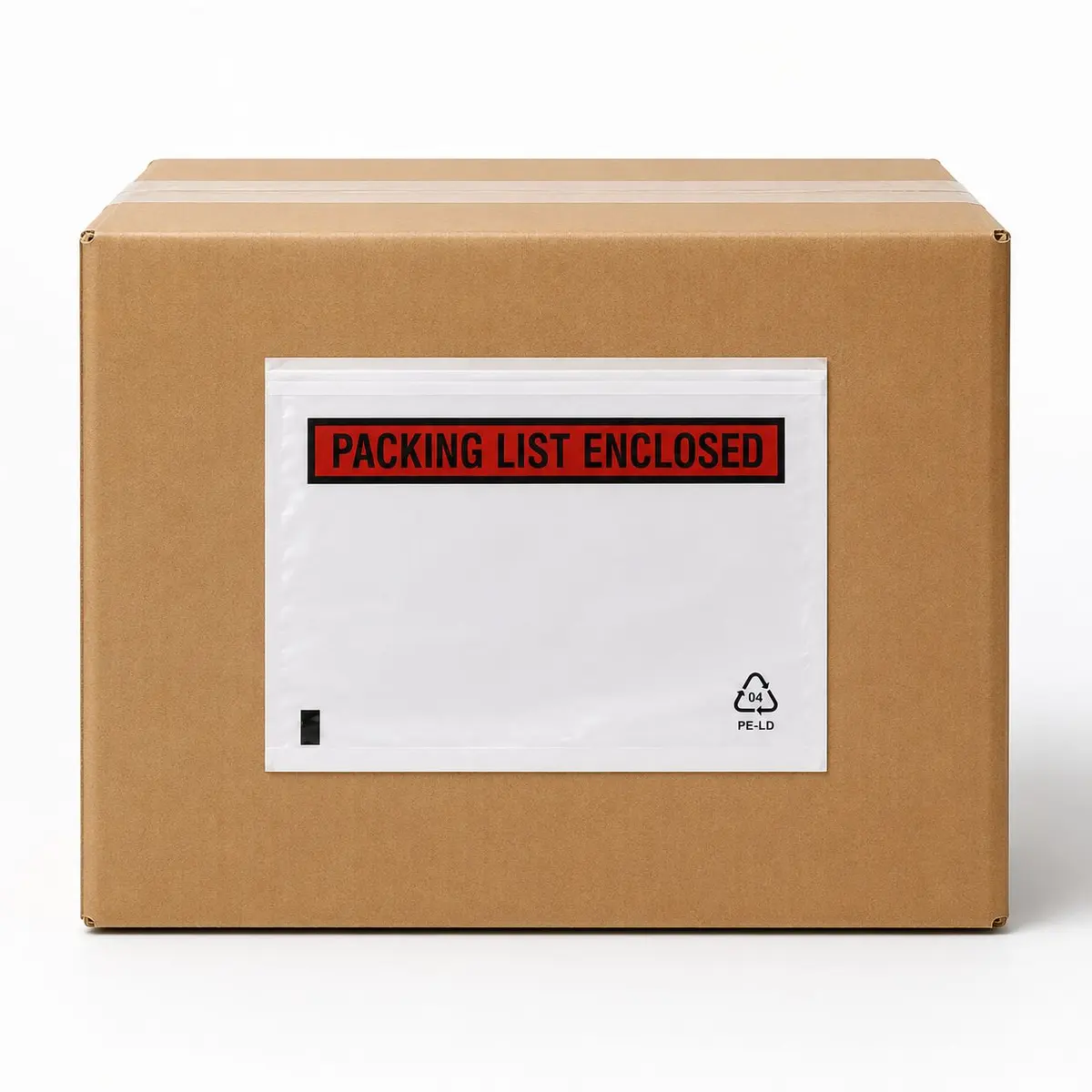
Packing List Envelopes Sticking Together: Causes and Fixes
If your packing list envelopes stick together when you pull them from the box, the cause is nearly always blocking.
Blocking means the adhesive has crept past the liner, or gone soft in heat, and bonded to the pouch underneath. It wastes pouches, slows the packing line and can damage the film.
The good part is that I think you can almost always prevent it. It comes down to storage, liner quality and how you specify the pouch.
Why do packing list envelopes stick together in the pack?
They stick because the adhesive is meant to stay soft and tacky. That is exactly what lets it grab a carton in one press. When the adhesive gets out from under its release liner, it grabs whatever is next to it, and in a pack that is the next pouch.
3 things let it escape: heat, pressure, and a liner that does not fully cover the adhesive.
This is a storage and specification problem, not a random defect. A pack that blocked in a hot warehouse would usually have been fine in a cool, flat, sealed stack. Once you know which of the three is at work, you know what to fix.
What is blocking, and what causes it?
Blocking is the trade name for self-adhesive items sticking to each other in storage instead of separating cleanly. In document pouches you notice it as pouches that fight you when you peel them, tear the film, or leave adhesive smears on the face.
The common causes are these.
- Heat during storage. Warmth softens the adhesive so it flows past the liner edge. This is the number one cause.
- Pressure and stacking. Heavy weight on a pack, or pouches stored leaning, squeezes adhesive out to the edges.
- A liner that is too narrow or faulty. If the silicone liner does not cover all the adhesive, the bare strip bonds to the next pouch however well you store it.
- Adhesive bleed at the edges. Poor trimming, or an adhesive grade that is too soft, leaves a tacky margin around the pouch.
- Time plus poor conditions. Adhesive creeps slowly anyway, and bad storage speeds it up.
How does heat cause pouches to stick together?
Heat is the main trigger, because a pressure-sensitive adhesive behaves like a very slow liquid. Warm it and it flows faster. It spreads, thins and moves past the edge of the liner, and once two tacky surfaces meet under the weight of the stack, they bond.
Think of ghee in a steel dabba. In winter it sits firm and stays put. Leave the same dabba in the sun and it runs into every gap. Adhesive in a hot store does much the same thing, only slower.
This is why the packs that block are the ones kept near heaters, in sunny windows, in metal-roofed sheds or in closed shipping containers. The pack may have looked perfect when it left the factory.
A rule of the trade I like: if the store room is too uncomfortable for a person to work in all afternoon, it is too warm for adhesive stock.
| Driver | What happens | The fix |
|---|---|---|
| Heat | Adhesive softens, flows, creeps past the liner | Cool, stable storage and a heat-rated adhesive |
| Pressure or stacking | Adhesive squeezed out to the edges | Store flat, no heavy weight on top |
| Narrow or faulty liner | A bare adhesive strip bonds to the next pouch | Full-coverage liner matched to the adhesive |
| Edge bleed | Tacky margin around the pouch | Clean trimming and the correct adhesive grade |
| Time plus poor conditions | Slow creep speeds up | First-in, first-out use and sealed packaging |
Is it a release liner problem?
Often it is. The release liner is the silicone-coated backing that keeps the adhesive covered until you use the pouch, and a lot of blocking traces back to a liner that is wrong or damaged. I would check for 3 faults.
- It is too narrow. The liner has to meet or overhang the whole adhesive area. A liner cut shorter than the adhesive leaves a live edge that sticks to anything.
- It has the wrong release level. Too tight and it will not peel cleanly. Too easy and the adhesive can lift and wander. The silicone has to be matched to the adhesive.
- It is crushed or dirty. A liner damaged in transit, or one that has picked up dust and damp, no longer protects the adhesive properly.
In my view the liner is part of the product, not an afterthought. A correctly sized, full-coverage silicone liner, tuned to the adhesive grade, is the best single barrier against blocking. Our adhesive guide explains how adhesive and liner work as a pair.
How do I separate pouches that are already stuck?
I would cool the pack down first. Move it somewhere cool for 2 or 3 hours, because firm adhesive lets go far more cleanly than warm, soft adhesive.
Then peel slowly, from a corner, at a shallow angle. Do not yank two pouches straight apart. That stretches the film and tears the liner.
Now I would sort the batch with a quick check.
- If a pouch peels apart cleanly, the liner is intact and it still grips a test carton firmly, use it.
- If the film has stretched or delaminated, the liner has torn, adhesive sits on the face, or the edges lift in a press test, retire it. A pouch that falls off a carton in transit costs far more than the pouch.
If a whole delivery is blocking, it is not a few stray pouches. It points to a storage or specification problem, and you should raise it with your supplier. If that supplier is us, please do. We would want to know, and we would want to see the pouches.
How do I store and specify pouches so they do not block?
Prevention is mostly good storage plus the right spec.
For storage, keep pouches flat in their original sealed packaging, somewhere cool, dry and dark, away from heat and sun. Put no heavy weight on top, leave the liner on until use, and use the oldest stock first. Our guide to storing packing list envelopes covers the conditions in more detail.
For the spec, tell your supplier the real conditions the pouches will face and ask for 4 things.
- A full-coverage release liner, sized and silicone-matched to the adhesive.
- An adhesive grade rated for your warmest storage and transit. A grade chosen for a mild climate will let you down in a hot one.
- Clean edge trimming with no adhesive past the pouch edge.
- Outer packaging that keeps the pack flat and sealed all the way to your packing table.
This matters to us in a very direct way. We have made packaging in Jaipur since 1997, and we make these pouches there, where summer storerooms get properly hot, and we ship them to 20+ countries through hot ports and long container trips. Sorting this out at the order stage is far cheaper than throwing away blocked stock. You can see our formats and adhesive options on the product range page.
Pouches sticking together, or planning a batch for a hot climate? Send us your storage and transit conditions, and we will suggest a liner and adhesive grade and send samples to try.
Frequently asked questions
Why are my packing list envelopes sticking together in the pack?
Almost always it is blocking. The adhesive has crept past the edge of the release liner, or softened in heat, and bonded to the pouch below it. Cool, flat, sealed storage and a liner that fully covers the adhesive prevent it.
What is blocking in self-adhesive pouches?
Blocking is when pouches in a stack stick to each other instead of separating cleanly. It happens when adhesive oozes past the liner or stays slightly tacky at the edges, so the stack glues itself together. Heat, pressure and time make it worse.
How do I separate pouches that are stuck together?
Cool the pack first. Leave it somewhere cool for a few hours, because firm adhesive releases more cleanly. Then peel slowly from a corner at a shallow angle, and set aside any pouch that tears, delaminates or leaves adhesive behind.
Does heat make packing list envelopes stick together?
Yes, and heat is the biggest single cause. Warmth softens the adhesive so it flows past the liner edge and grabs the next pouch. Storage near heaters, in sunny windows, under metal roofs or in closed containers is the usual culprit.
Can stuck-together pouches still be used?
Sometimes they can. If they peel apart cleanly with the liner intact and still grip a test carton firmly, use them. If the film has stretched, the liner has torn, adhesive has moved onto the face, or the edges lift in a press test, retire that batch.
Is sticking together a sign of a faulty release liner?
It can be. A liner that is too narrow, has uneven silicone release, or has been crushed leaves adhesive exposed at the edges. A full-coverage silicone liner matched to the adhesive is the main defence against blocking.
How do I specify pouches that will not stick together?
Ask for a full-coverage release liner matched to the adhesive grade, an adhesive rated for your warmest storage and transit, and clean edge trimming with no bleed. Tell the supplier your climate and storage conditions at the start, so the right film and adhesive are chosen.
Sourcing these in volume?
We make packing list envelopes in Jaipur for importers and distributors. Factory-direct, private label welcome.