
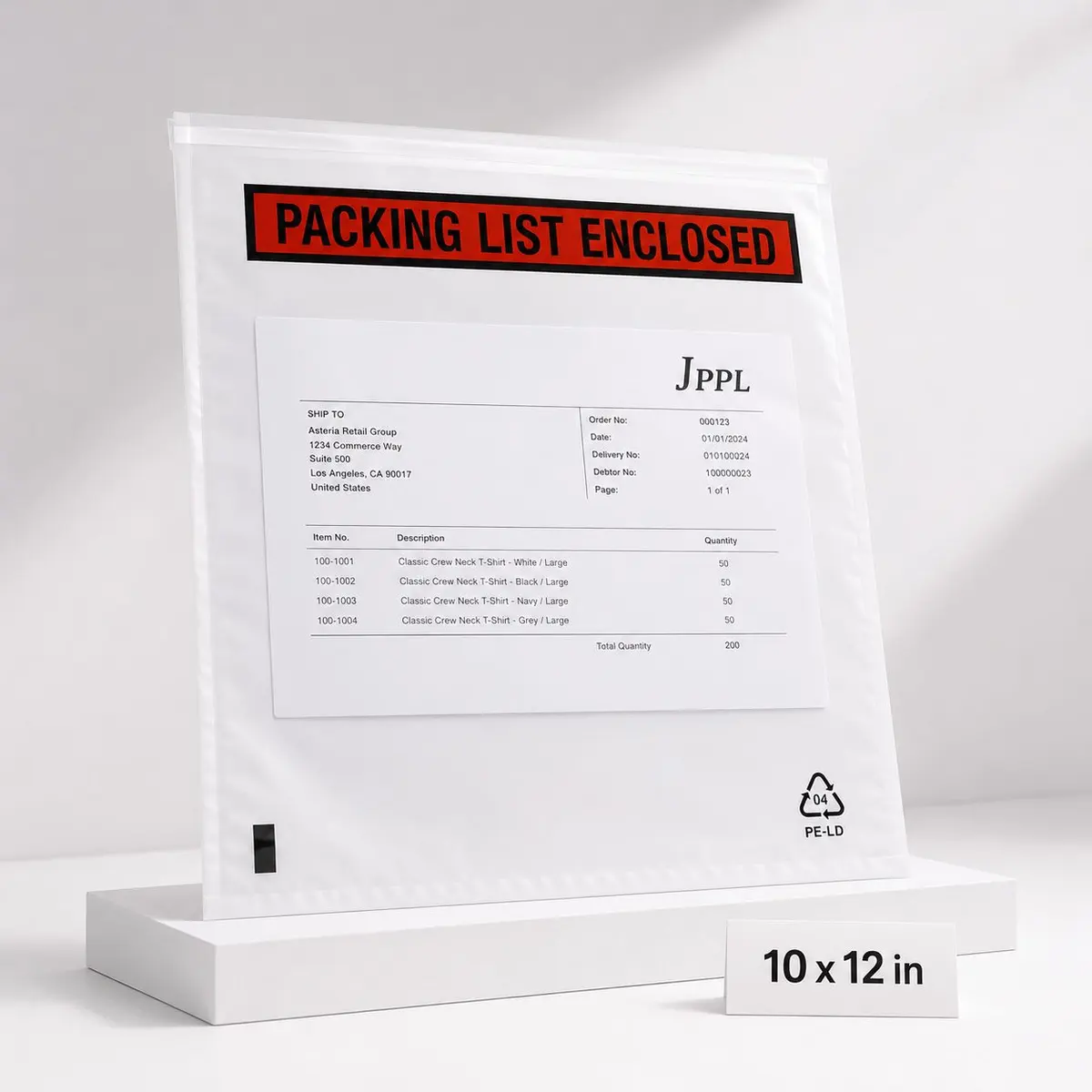
Printed Ink Rubbing Off or Smudging: Causes and Fixes
A printed legend that smears under a thumb looks cheap. So does a “Documents Enclosed” line that is half gone by the time the carton arrives, and it defeats the whole point of printing it.
The good news is that print rub-off is almost always a specification problem, not bad luck.
We have made printed packaging in Jaipur since 1997, and I can tell you the causes are remarkably predictable. Once you know whether the marking is on the pouch or on the paper inside, the fix is simple.
Is it the pouch print or the document inside?
Find out which surface is marking first. That tells you whose problem it is.
Rub a fingertip across the smudge and look where the ink comes from.
- Pouch legend rub-off. The printed text or logo on the polyethylene pouch itself, say “Invoice Enclosed”, lifts or transfers. This is a film printing issue, i.e. ink chemistry, curing or coating. The pouch manufacturer owns this one.
- Document smudge. The smear is on the invoice, packing slip or label sealed inside. This is the document’s own laser toner or inkjet ink, and it is a printer, paper or drying issue on the shipper’s side.
The 2 have completely different fixes, so never assume.
Here is a quick way to split them.
| Symptom | Likely source | Where the fix lives |
|---|---|---|
| Pouch legend comes off on fingers | Under-cured or uncoated pouch ink | Print spec (manufacturer) |
| Logo flakes after belt or roller contact | Rubbing on an unprotected ink layer | Add varnish or lamination |
| Invoice text smears, pouch is clean | Inkjet or fresh toner on the document | Use laser print, let it dry |
| Smudge worse after a damp journey | Moisture softening the ink | Coating plus dry storage |
Why does ink rub off a plastic pouch?
Because polyethylene is smooth and does not absorb anything. Pouch ink stays put only if the ink, the surface treatment and the curing are all right.
Paper gives ink something to soak into. Film gives it nothing. It is a bit like painting a wall versus painting a glass window, where the same paint behaves very differently.
In our experience of film printing, 3 causes explain nearly every case.
- Under-curing. If the ink is not fully dried or cured before the film is converted and packed, it stays soft and lifts under friction. This is the most common cause.
- Abrasion. Conveyor belts, applicator rollers, cartons rubbing in transit and repeated handling all scuff an unprotected ink layer. A legend that survives the warehouse can still arrive worn after a long courier leg.
- Moisture. Condensation, humid climates or damp storage soften a poorly protected ink layer, so it smudges far more easily under the same handling.
Behind all 3 is adhesion. Ink on smooth film needs a corona surface treatment, an ink made for polyethylene and full curing. Skip any one and you will see rub-off however gently the pouches are handled.
How do you fix and prevent pouch print rub-off?
Fix it at the specification stage, with the right ink, full curing and a protective top layer. You cannot fix an under-cured print after it has shipped.
When you order custom printed packing list envelopes, ask for these 5 things. We would ask the same questions of our own printing line.
- Ink made for polyethylene film, not a generic ink that happens to run on the press.
- Full curing before conversion, so the ink is hard and dry to the touch.
- An overprint varnish or lamination over the print. I think this is the biggest single upgrade, because the clear coat takes the rubbing instead of the ink.
- Corona-treated film, so the ink keys to the surface in the first place.
- A tested sample signed off before the full run.
If the smudge is on the document inside, the fix is on the packing bench. Print on a laser printer, because fused toner holds up far better than inkjet. Let inkjet or freshly printed sheets dry fully before sealing. And keep the documents dry until they go in the pouch.
How can you confirm print durability before a full run?
I would always test the physical sample, not just the digital proof. A proof shows the layout. It tells you nothing about durability.
2 checks are worth doing.
- Ask for a rub or scuff test. A weighted dry and wet rub across the printed legend shows whether the ink resists marking in handling and in damp conditions. Ask for the result or a tested sample.
- Do a desk check yourself. Run a thumbnail hard across the legend. Then press a strip of tape over it and peel it off. The print should not transfer, lift or flake. Repeat after wetting the surface, to copy a humid journey.
Sign off both the proof and a physical sample before production. Catching a weak print spec on a sample costs very little. Catching it on 50,000 pouches already stuck to cartons costs a lot. Our custom print page covers artwork and proofs.
Does film thickness or pouch style matter?
Thickness does not help. It affects tear resistance, not ink adhesion, so a heavier pouch will not cure a smudging problem.
I say this plainly because it is a common and understandable assumption.
We would rather sell you the right thinner film than a heavier one that still smudges. Print durability depends on ink type, surface treatment, curing and coating, and nothing else.
Style does change your exposure, though, and I think this part is often overlooked.
- Printed-face pouches carry the legend on the film, so they need the spec above.
- Clear unprinted pouches have no legend to rub off. They move the question to the document inside, which should be laser-printed and dry. For the messaging side of that choice, see printed legends explained.
- Storage matters for every style. Keep pouches sealed and dry, because damp stock can start smudging before it is even used.
Match the specification to where your shipments actually travel. Climate, courier network and how much belt and roller contact your cartons get all make a difference.
We have made packaging in Jaipur since 1997 and ship to 20+ countries, from dry winters to monsoon ports. You can browse our pouch range to match film, style and print to your conditions.
Seeing print rub off your current pouches, or planning a new printed run? Send us your design and tell us where your cartons travel, and we will suggest a print build and send samples for you to rub-test yourself.
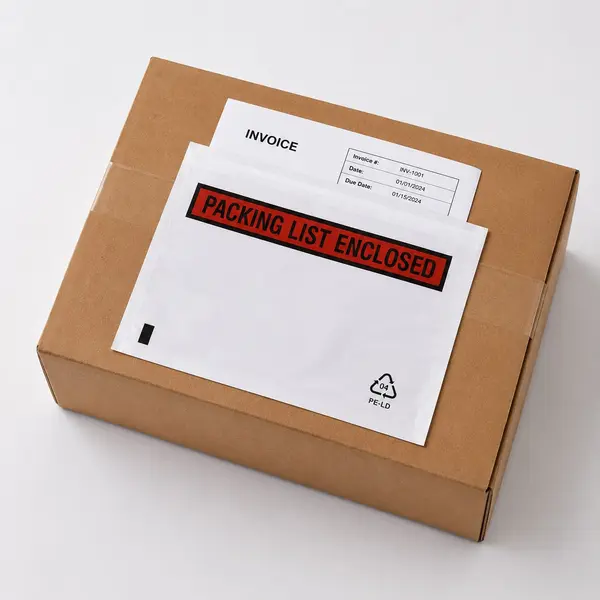
Frequently asked questions
Why is the ink rubbing off my packing list envelopes?
On a pouch, rub-off almost always means the printed legend was not fully dried or cured, or was printed without a protective varnish or lamination. The ink never bonded properly to the smooth polyethylene, and friction and moisture in transit lift it. The fix is in the print spec, not in how you handle cartons.
Is it the pouch print or the document inside that is smudging?
Rub the smudge with a fingertip and see where the ink comes from. If the legend on the pouch face transfers, it is a pouch print problem. If the smear is on the invoice or label inside, it is the document's own toner or inkjet ink, which is a printer, paper or drying issue.
How do I stop pouch legend ink from rubbing off?
Ask for ink made for polyethylene film, full curing, and a varnish or lamination over the print. Together these give a hard, bonded ink layer that survives belts, rollers and handling. Test a sample before you commit to a full run.
Does humidity or moisture cause printed ink to smudge?
Yes, it often does. Condensation, damp storage or a humid climate can soften a poorly protected ink layer, and then it lifts under friction. Keep pouches sealed and dry, and choose a coated or laminated print.
Why does ink rub off plastic more easily than paper?
Paper is porous, so ink soaks into the fibres and anchors itself. Polyethylene is smooth and does not absorb anything, so the ink sits on top. It depends fully on the right ink, a corona surface treatment and full curing to stay put.
Will a clear unprinted pouch avoid the rub-off problem?
It avoids pouch print rub-off, because there is no legend to rub. The document inside can still smudge if it is inkjet-printed or not fully dry, so the question moves from the film to your paperwork.
Does thicker film stop the print from smudging?
No. Film thickness affects tear and puncture resistance, not how well ink bonds. A thick pouch with the wrong print spec will still rub off.
Sourcing these in volume?
We make packing list envelopes in Jaipur for importers and distributors. Factory-direct, private label welcome.