
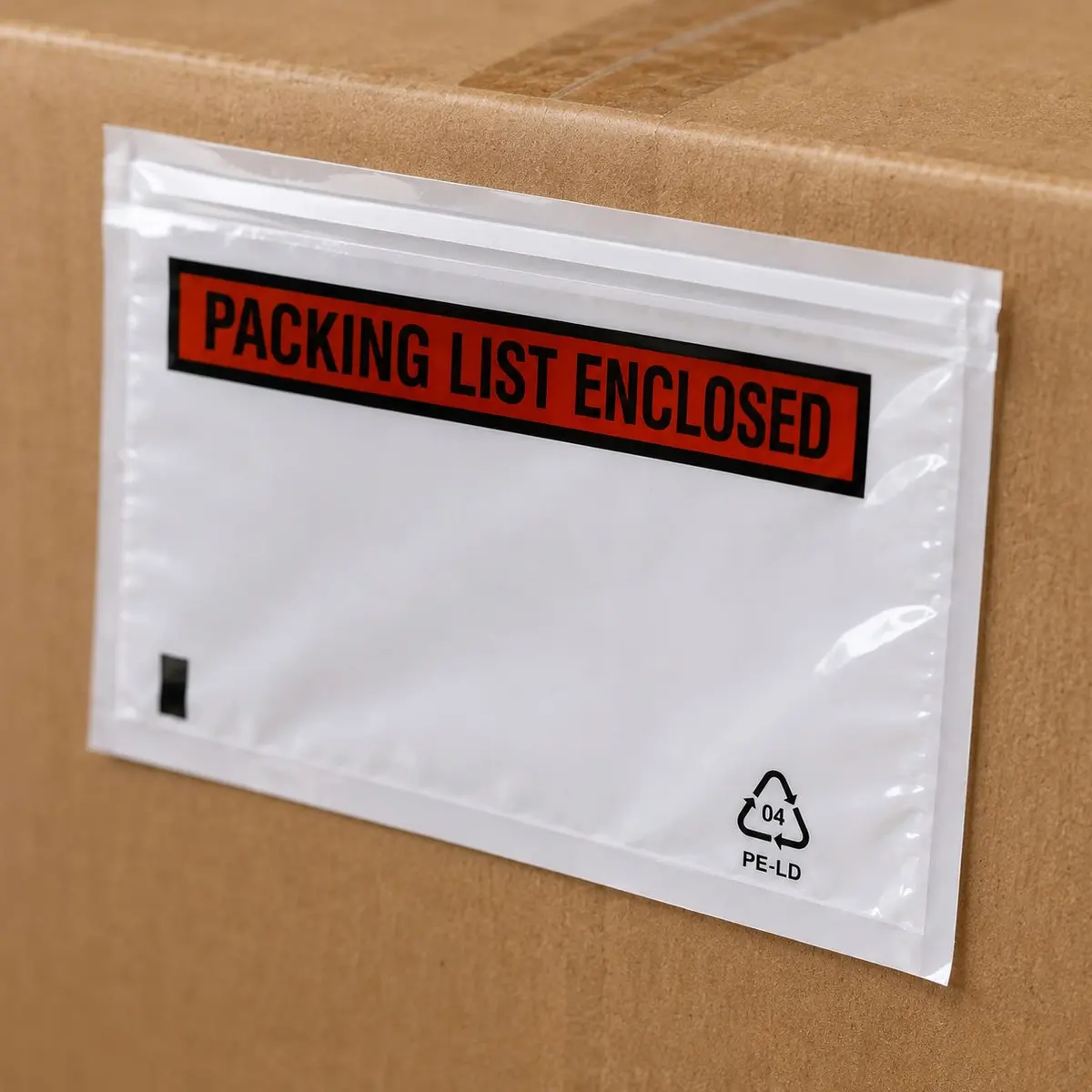
Packing List Envelope Adhesion in Heat and Humidity
In hot and humid weather, a packing list envelope usually fails for two linked reasons. Heat softens the adhesive until it creeps, lifts or oozes out at the edges. Humidity puts a thin film of moisture on the carton, so the bond is weak from the first second.
The fix is half habit and half chemistry.
Good application solves most cases. A climate-matched adhesive grade solves the rest, and that part is our job as the maker.
I know this problem well. We have made packaging in Jaipur since 1997, and a Rajasthan summer followed by a monsoon teaches you about heat and damp faster than any lab. We ship these pouches to 20+ countries, and many of those lanes cross the tropics.
Why does heat make the adhesive fail?
Heat softens the pressure-sensitive adhesive, and a soft adhesive loses its shear strength. Shear is what stops the pouch sliding down the carton under its own weight.
Every pouch adhesive balances three properties. Tack is the instant grab, peel is how hard it resists being lifted, and shear is how well it resists sliding. Heat tips that balance in three ways.
- The adhesive creeps. The warmer it gets, the more it behaves like a thick liquid, so the pouch slowly migrates and the corners pop up.
- The adhesive oozes. Past a point it flows out beyond the edge of the pouch, leaves a sticky bead, collects dust and marks the next carton.
- The real temperatures are extreme. A sealed container or trailer parked in tropical sun can reach 60 to 70°C inside, which is far beyond what an economy adhesive was made for.
Think of ghee on a summer afternoon. It is solid in the morning and runny by lunch.
A soft adhesive behaves the same way on a hot container deck.
If you want our longer note on tack, peel and shear, read how a packing list envelope’s adhesive works.
How does humidity stop a pouch sticking?
Humidity attacks the bond at the moment you apply the pouch. A thin layer of moisture on the carton stops the adhesive from wetting out, i.e. flowing into the tiny pores of the board and locking in. The pouch grips only the high points and lifts within hours.
It shows up in three ways.
- Damp surfaces. A carton that sat in a humid warehouse, or came out of a cold room and is now sweating, carries water the adhesive cannot push aside.
- Moisture in the board. Corrugated soaks up moisture from the air, and that changes its surface and weakens the grip.
- Slow breakdown. Weeks of damp air on a long voyage can weaken even a pouch that bonded well.
Heat and humidity together are worse than either alone. The heat softens the glue while the moisture stops it gripping cleanly. That is exactly the life of a tropical climate packing slip pouch in transit, and it is the lane we think about most when we choose a grade for our export buyers.
How do you apply pouches reliably in heat and damp?
Apply to a clean, dry, room-temperature surface and press firmly. Most heat and humidity failures are storage and application problems, not pouch problems.
- Dry the surface. Wipe off visible moisture, and let cold cartons warm up until the condensation clears.
- Apply at room temperature. Around 20 to 23°C is ideal. The bond forms best at a moderate temperature and then holds as things heat up or cool down.
- Press the whole pad. Use firm, even pressure across the entire pouch, not a quick dab in the centre, because the edges are where lifting starts.
- Store stock cool and dry. Keep envelopes flat and sealed, away from sun, hot walls and tin roofs. Bring them to the packing area a day before use.
- Keep dust and oil off. Dirty board defeats any adhesive, and humidity makes the margin for error even smaller.
This is my rule of the trade here.
Fix the storeroom before you change the pouch, because heat damage to the adhesive often happens months before the pouch meets a carton.
For the full routine, see how to apply a packing list envelope. The same moisture that breaks adhesion can also spoil the papers inside, which is covered in are packing list envelopes waterproof.
Which adhesive should you choose for tropical export lanes?
Choose a heat-stable permanent or high-tack grade that holds its shear strength when hot and tolerates humidity. An economy adhesive made for mild, dry climates will soften and ooze on a tropical lane.
| Condition | Risk to a standard adhesive | Better choice |
|---|---|---|
| Sustained high heat | Softens, creeps, corners lift | Heat-stable permanent grade |
| Container or trailer at 60 to 70°C | Oozing, pouch slides off | High-tack, heat-resistant formula |
| High humidity at packing | Poor wet-out, early lifting | Humidity-tolerant grade and a dry surface |
| Cold carton, then condensation | Bond never forms | Warm the carton first, then apply |
| Long tropical sea voyage | Slow loss of grip | Tropical-rated permanent grade |
| Mild, dry, short domestic run | Performs fine | Standard permanent is enough |
Match the chemistry to the climate, not to habit. The cheapest adhesive is no bargain if it sheds documents and a shipment sits in customs.
Now the other side, and I say this as someone who sells the expensive grade too.
Do not overspend. A mild, dry domestic lane does not need a tropical-rated grade, and on those lanes you would be paying for grip you never use. A high-tack grade also buys margin on the hardest lanes, but it is harder to remove cleanly. The trade-offs are in high-tack vs standard adhesive.
As a manufacturer, we can match the document pouch heat adhesive to your conditions instead of sending one formula to every market. We make both standard and high-tack grades, so we have no reason to push you toward the dearer one. The formats and adhesive options are on our products page.
What is the quickest way to stop oozing and peeling now?
Start with storage and application before you change pouches. I would rather you try the free fixes first.
Move the stock out of the heat. Dry the carton, press firmly, and let cold cartons warm up first. That clears most pouch adhesive oozing heat complaints and most peeling, with no change to the product.
If the pouches still fail after the process is right, the grade is wrong for your climate. That is when I would move to a heat-stable or tropical-rated adhesive, and we can help you pick one for your route.
Shipping into hot or humid markets and seeing pouches ooze or peel? Tell us your export lanes and climate, and we will suggest a heat-stable, humidity-tolerant grade and send samples to test.
Frequently asked questions
Why does my packing list envelope peel off in hot, humid weather?
Two things are working against you at once. Heat softens the adhesive so the pouch slowly slides and the corners lift, and humidity leaves a thin film of moisture on the carton so the glue never grips fully. Dry the surface, apply at room temperature and use a grade made for humid climates.
What causes adhesive to ooze from the edges of a document pouch?
Too much heat. The adhesive gets so soft that it flows out past the edge of the flap, leaves a sticky bead and picks up dust. It usually means the stock was stored or shipped too hot, or the grade is too soft for the lane. A firmer, heat-stable formula and cooler storage stop it.
Will a packing list envelope stick to a damp or condensation-covered carton?
Badly, and often not at all. The adhesive has to flow into the tiny pores of the board to grip, and a layer of water blocks that contact. Wipe the carton dry, or let cold cartons warm up until the condensation clears, and then apply.
What is the best adhesive for tropical export lanes?
A heat-stable permanent or high-tack grade that keeps its shear strength when hot and tolerates humidity. Economy adhesives made for mild, dry climates soften and creep in tropical heat. Tell us your lanes and we will suggest a grade to test.
At what temperature does packing list envelope adhesive start to fail?
It depends on the grade, so there is no single number. As a rough guide, these adhesives bond best when applied around 20 to 23°C, stiffen below about 5°C, and soften as it climbs well above 40°C. A sealed container in strong sun can get far hotter than that inside.
How should I store packing list envelopes in a hot or humid warehouse?
Keep them flat and sealed in their cartons, in a cool, dry, shaded spot away from hot walls, roofs and direct sun. Bring the stock to the packing area a day before use so it settles to room temperature.
Can I fix heat and humidity problems without changing pouches?
Often, yes. Most failures come from storage and application, so dry the carton, press the whole pad firmly, keep stock out of the heat and let cold cartons warm first. If pouches still lift after that, the adhesive grade is wrong for your climate.
Sourcing these in volume?
We make packing list envelopes in Jaipur for importers and distributors. Factory-direct, private label welcome.