
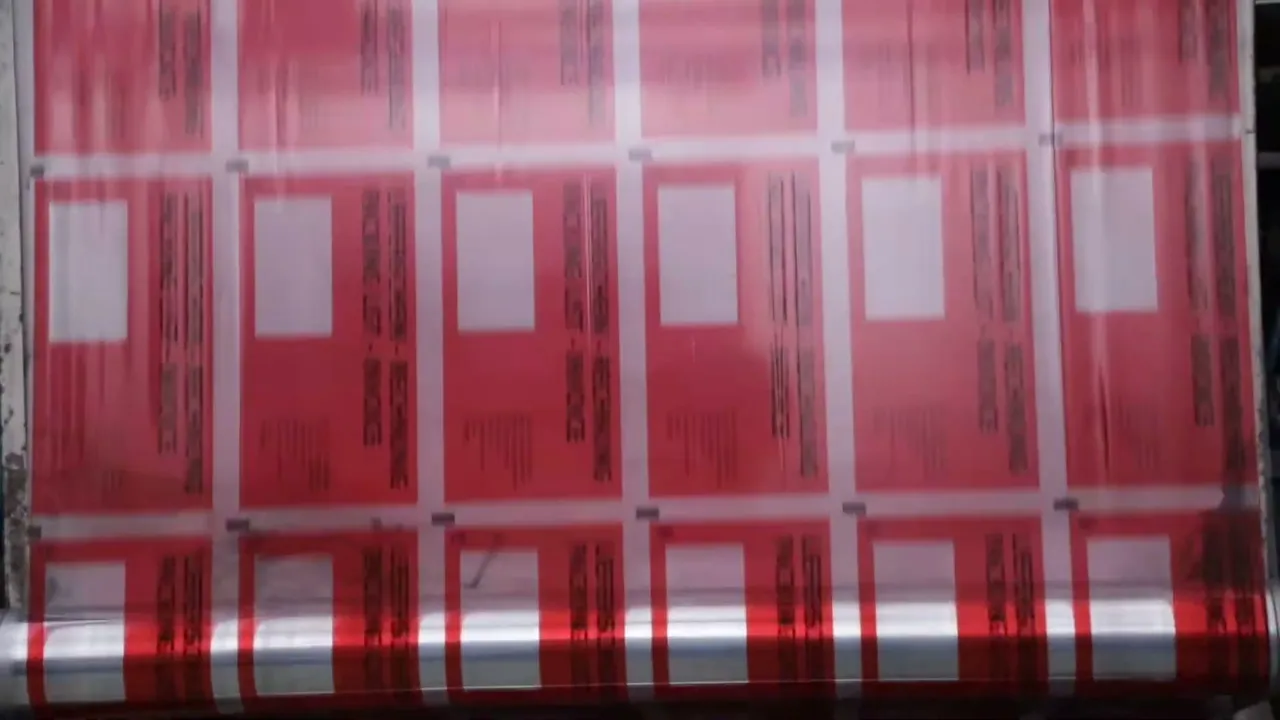
Switching Packing List Envelope Suppliers Without Disruption
Switching your packing list envelope supplier does not have to interrupt dispatch.
The safe method is simple: keep your current supplier running, qualify the new one alongside, and only run down the old stock once a full production run has passed inspection. Done this way, your packing line and your customers never notice the change.
Done cold, with the old supplier off and the new one on and no overlap, you are one failed batch away from a stalled dispatch bay.
I will say this plainly as a supplier. If you are moving to us, we would rather you move slowly and safely than quickly and badly, because a bad first month is bad for both of us.
Why switch packing list envelope suppliers at all?
Most teams change for one of a handful of reasons: price, quality, lead time, capacity, or a custom job the current source cannot do.
- Cost. The per-piece price has crept up, or your volume has grown enough to justify buying direct from a manufacturer.
- Quality. Adhesive lifts in transit, pouches split, or print drifts between runs.
- Reliability. Missed lead times leave the dispatch line short.
- Capability. You now need a custom size, printed legends or multi-language text the current supplier cannot produce.
- Resilience. You want a qualified second source so no single supplier can ever halt your dispatch.
Whatever the trigger, the risk of the changeover is the same, and so is the way I would manage it.
How do you switch suppliers without disrupting dispatch?
Run the old and new supplier side by side, and commit only when the new one has proved itself on a real production run. The overlap is your safety net.
Here is the order I would follow, and the order we would suggest to any buyer:
- Write down the spec. Capture exactly what you buy today (see the table below), so the new supplier has a clear target.
- Get a sample and approve it. Ask for a physical pre-production sample and check it against the written spec, with a ruler, not just by eye.
- Place a validation batch. A small first order proves the quality and the real lead time, from sample approval to dispatch, before you move full volume.
- Hold overlap stock. Keep buying from your current supplier, or keep their stock in hand, through the new one’s full lead time plus a buffer.
- Inspect the first full production run. Compare it to the agreed spec before you sign it off.
- Phase the switch. Move part of the volume, check it stays consistent over a couple of runs, then complete the move or keep both suppliers.
How do you match the new pouch to your current spec?
Give the new supplier a written spec and a physical reference pouch, then approve a sample against both.
A sample that looks good on a desk is only the first check, so make sure it holds your documents, sticks to your cartons and survives handling the way your current pouch does.
| Spec to match | What to confirm | Why it matters |
|---|---|---|
| Size | Closed and usable size (for example A4, DL, 6 × 9) | Your packing slip or invoice must fit without extra folds |
| Material and gauge | Film type and micron, or paper weight | Drives strength, clarity and feel |
| Adhesive | Tack level and the surfaces it must stick to | The top cause of pouches lifting in transit |
| Face style | Clear full face, or panel face with print | Affects scanning and how visible the legend is |
| Print and legends | Logo, “Documents Enclosed”, barcodes, languages | Keeps brand and compliance consistent |
| Pack and case format | Pieces per pack, case pack, labelling | Fits your put-away and line routine |
Keep the written spec and the approved sample in agreement. If they ever conflict, the supplier has to guess, and guesses are how a mismatch reaches a full pallet.
A rule of the trade I would stick to: the approved sample should sit in a sealed bag on your shelf, signed and dated. Every later shipment gets compared to it. For a full checklist, see how to evaluate a pouch supplier.
How much overlap stock should you hold?
Enough that a late or rejected first batch never stops dispatch. A practical rule is the new supplier’s full lead time, production plus shipping, plus a buffer of roughly two to four weeks of normal use.
Here is the arithmetic with example numbers: say the new supplier quotes 4 weeks and you use 10,000 pouches a week. You would want well over 40,000 pouches in hand, closer to 60,000 to 80,000 with the buffer, before you stop reordering from the old supplier.
The overlap ties up a little working capital, but a stalled packing line costs far more.
How do you de-risk quality on the first runs?
Treat the first orders as a controlled trial, not a leap of faith. These are the failures to watch for, and how to catch each one early:
- Adhesive failure. Test the grip on your actual cartons and polybags, in your real temperature and humidity.
- Size or material mismatch. Measure the sample, and compare the film gauge to your baseline spec.
- Print or colour drift. Approve a print proof, then check colour again on the first reorder as well as the first order.
- Lead time slipping. The validation batch shows you the real timeline before it can hurt you.
Check every early shipment against the agreed spec. I would also point out that a written spec makes any future supplier move easier, including a move away from us, and we are fine with that.
Should you keep a second source?
For high-volume shippers, yes. A qualified second source is a resilience tool, not just a fallback. It protects you against price rises, capacity limits, quality slips and shipping delays at any one supplier. You can see our range as a second source for document pouches.
| Approach | Pros | Cons |
|---|---|---|
| Single source | Best volume pricing, simplest to manage | One point of failure for dispatch |
| Dual source | Resilience, bargaining power, backup capacity | More qualification work, split volume softens pricing |
I should admit the honest cost here. Splitting your volume means neither supplier sees your full order, and you may lose a little on price. For a small shipper, one good supplier plus a healthy stock buffer can be the better answer.
A common set-up is a manufacturer-direct supplier as the main source, for cost and custom work, with a quick-turn distributor kept as the emergency backup.
What does a phased changeover look like?
It runs in 4 stages, and at no stage does your line depend on an unproven supplier.
- Stage 1: the spec is written down, and a sample is requested and approved.
- Stage 2: a validation batch is ordered, received and inspected.
- Stage 3: the first full production run arrives, both suppliers run in parallel, and volume shifts in steps.
- Stage 4: every early shipment is checked against the approved sample, and you decide on single or dual source.
We have made packaging in Jaipur since 1997 and we export to 20+ countries. We can work from a pouch another factory made, and we can quote against your existing spec. If your current pouch carries your own print, we can reproduce it through custom print.
Planning a switch or a second source? Send us one of your current pouches and your monthly usage, and we will match the spec and send a sample to approve.
Frequently asked questions
How do I switch packing list envelope suppliers without disrupting dispatch?
Keep your current supplier running while you qualify the new one. Approve a sample against a written spec, place a small validation batch, then run both in parallel. Run down the old stock only after the first full production run has passed inspection.
How much overlap stock should I hold during a supplier changeover?
Enough to cover the new supplier's full lead time, production plus shipping, and then a safety buffer of roughly two to four weeks of normal use. That way a late or failed first batch never leaves your line without pouches.
Should I keep two packing list envelope suppliers?
For high-volume shippers, it is usually worth it. A qualified second source protects you against price rises, capacity limits, quality slips and shipping delays at one supplier. The cost is more qualification work, and split volume can soften your per-piece price.
How do I make sure a new supplier matches my current pouch exactly?
Write the spec down: size, material and gauge, adhesive, face style, print and legends. Send a physical reference pouch with it. Then approve a pre-production sample against both before you allow a full run.
What are the biggest risks when changing packaging suppliers?
Adhesive failure, a size or material mismatch, print or colour drift, and lead times that slip and starve your line. Approve samples, compare each early shipment to the agreed spec, and hold overlap stock so one bad batch never stops dispatch.
Can I get a sample before committing to a new supplier?
Yes, and you should insist on it. A good manufacturer will send samples so you can check size, feel, adhesive grip and print before a bulk order. I think it is the most important step in the whole changeover.
Sourcing these in volume?
We make packing list envelopes in Jaipur for importers and distributors. Factory-direct, private label welcome.