
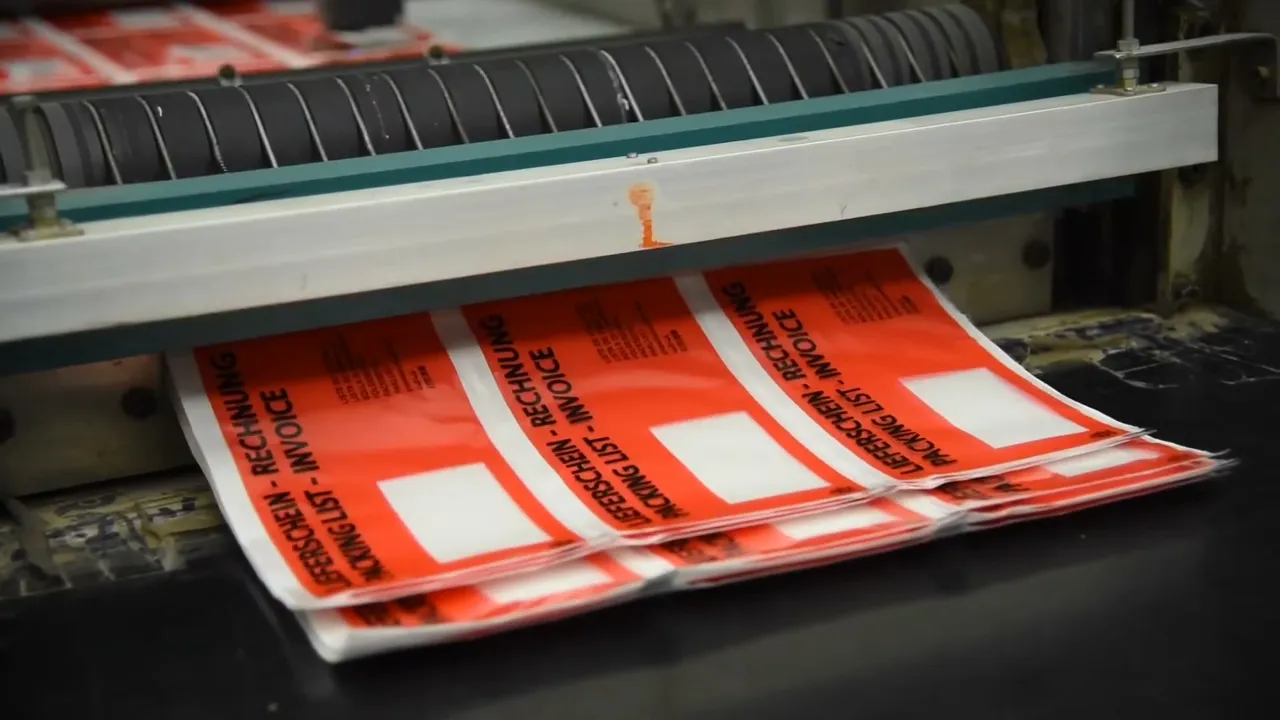
What Drives the Cost of Packing List Envelopes?
“How much do packing list envelopes cost?” has no honest one-line answer.
Any supplier who gives you a single price without asking about your job is guessing.
The cost per pouch is built from a handful of factors: film gauge, size, print colours, adhesive, order volume and freight. Understand how each one moves the price, and you can spec a pouch that protects your documents and your margin at the same time.
I have been on the pricing side of this for years. We have made packaging in Jaipur since 1997, that is 30+ years, and we export to 20+ countries, and the same six factors decide the price for every buyer we quote. Here is how each one works, as we see it from the factory side.
What are the main factors that drive packing list envelope cost?
The price is the sum of material, conversion, printing, volume and freight. Material is usually the biggest single part, so size and film gauge set the baseline, and everything else moves the number up or down.
| Cost factor | What it covers | How it moves price |
|---|---|---|
| Film gauge | Thickness of the polyethylene, in microns (mil for US buyers) | Thicker film means more material and a higher unit cost |
| Size | Pouch dimensions (A4, DL, 6 × 9 and so on) | A larger pouch uses more film and adhesive per unit |
| Print colours | Number of spot colours or full colour, and coverage | One-time setup plus a small unit cost that rises with colours |
| Adhesive | Strength and type of the self-seal | High-tack and specialist adhesives cost more |
| Volume | Order quantity and reorder pattern | Higher volume spreads fixed costs, so each unit costs less |
| Freight | Shipping the finished pouches to you | Light but bulky, depends on order size and destination |
How does film gauge affect price?
Film gauge is the thickness of the polyethylene, measured in microns, or in mil if you buy in the US. It is one of the biggest material levers. More microns means more raw material in every pouch, so the unit cost goes up with gauge.
Thicker film resists tearing and bursting on heavy, sharp-edged or roughly handled cartons. Thinner film is cheaper and perfectly fine for light parcels on gentle courier networks.
The trap works both ways. You can pay for gauge you do not need on light shipments. Or you can under-spec a heavy pallet load and lose the documents when the pouch splits.
I like to compare good film to a good roti, which can be thin as long as it does not tear.
So match the gauge to how your goods really travel: carton weight, rough handling and climate. Tell your manufacturer the truth about the journey, and ask for the lightest film that still survives it.
How do size and print colours change the cost?
Size scales material use almost directly. A pouch for a flat A4 customs set uses far more film and adhesive than a small A7 label pouch.
So be honest about size. Order the pouch that fits your document the way it travels, folded or flat, and do not pay for a bigger pouch than your paperwork needs.
Print colours work differently. Printing carries a one-time setup cost for plates and machine make-ready, plus a small cost per unit that climbs with each colour.
- A single spot colour, for example your logo or “Documents Enclosed” in one ink, is the cheapest custom option.
- Full colour, usually 4 process colours, or heavy coverage costs more per unit and more in setup.
- At low volume the setup cost dominates. At high volume it is spread so thin that it barely shows per pouch.
If the branding budget is tight, I would go with one bold colour. It gets you most of the benefit for a fraction of the full-colour cost. Our guide to custom printed packing list envelopes and the custom print page cover what is worth printing.
How do adhesive and volume affect the price?
Adhesive is a smaller line, but a real one. A standard self-seal strip suits most corrugated cartons. High-tack or specialist adhesives for shrink wrap, cold stores or rough surfaces cost a little more.
Do not over-spec it.
Do not under-spec it either, because a pouch that peels off in transit is a total loss. We make both grades, and we would rather sell you the right one than the dearer one.
Volume is the lever buyers use least. Print setup, machine make-ready and order handling are fixed costs, and they are spread across every unit in the run. So the price per pouch falls as quantity rises, and material and freight also buy better at scale.
This is why a small trial order always costs more per pouch than a full production run. It is also why we would suggest combining orders into fewer, fuller ones where you can. The reasons minimums exist are in packing list envelope MOQs explained.
Does freight change the final price?
Yes, and it is easy to forget.
We ship from Jaipur, so for our export buyers freight is part of the real price. Packing list envelopes are light but bulky, so the cost to ship them depends on order size, destination and whether they travel with other goods.
Many small, frequent deliveries carry more freight per pouch than fewer, fuller ones. Compare delivered cost, not just the ex-works price per pouch.
How do you cut cost without false economy?
Aim for the lowest delivered cost that still does the job, not the lowest sticker price. I would pull the levers in this order.
- Size the pouch to your document. Do not pay for film you fold away.
- Match the gauge to the journey, light for light parcels and sturdier for heavy or rough handling.
- Print only the colours that matter. One spot colour is often enough.
- Choose the adhesive for the surface, not for the maximum.
- Combine orders to reach better volume and freight breaks.
- Buy direct from a manufacturer on repeat volume, to remove the reseller margin.
This is the rule of the trade I would underline.
Spec for reliability first, then work the price down around it.
The false economy to avoid is cutting gauge or adhesive so far that pouches burst or peel in transit. A few lost commercial invoices, and the customs delays and reprints that follow, cost far more than the microns you saved. Our guide on where to buy packing list envelopes compares buying direct with buying through resellers.
Why we do not publish a single price
Because an honest price depends on your spec. A small, clear, unprinted pouch at high volume and a large, thick, full-colour pouch at low volume are different products with very different costs. One “from” price for both would only mislead you.
I know that is a little frustrating when you just want a number.
But a quote built on your real job saves you from a surprise later, and it saves us an awkward phone call too.
Browse the product range to settle on size and style. To quote properly, we need your size, film gauge or shipping conditions, face style, print colours, adhesive needs, and your expected quantity and reorder frequency. With those, we can give you a delivered price that includes any one-time setup.
Want a real price for your exact spec? Send us your size, gauge, print and quantity, and we will come back with an all-in quote, the lead time and samples to try.
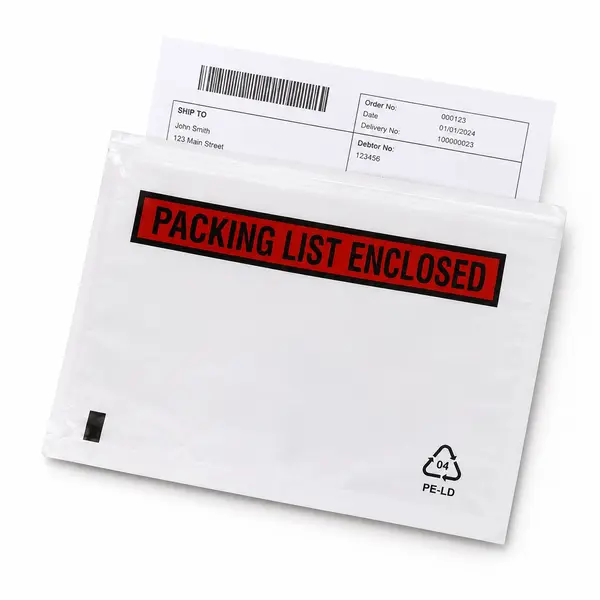
Frequently asked questions
How much do packing list envelopes cost?
There is no single price. The cost per pouch depends on size, film gauge, print colours, adhesive, order volume and freight. A small, clear, unprinted pouch at high volume sits at the low end, and a large, thick, multi-colour pouch at low volume sits at the high end. Send your spec for a real quote.
What is the biggest factor in packing list envelope price?
Material, in most cases. Film gauge and pouch size together decide how much polyethylene goes into each unit, and that drives most of the cost. Print colours and volume then move the price up or down from there.
Why are prices cheaper at higher volume?
Because fixed costs get shared. Print plate setup, machine make-ready and order handling are spread over more units, so each pouch carries less of them. Material and freight also buy better at scale.
Does printing add a lot to the cost?
It adds a one-time setup cost plus a small cost per unit that rises with each colour. On a full run the effect per pouch is usually modest, and one spot colour is far cheaper than full colour. At low volume the setup cost is what you feel.
Is a thicker film always worth paying for?
No. Thicker film resists tearing on heavy or sharp-edged cartons, but gauge you do not need is money wasted. Match the film to your carton weight, handling and climate. Going too thin on a heavy pallet is the bigger risk, though, because a burst pouch loses the documents.
How can I reduce packing list envelope cost without lowering quality?
Size the pouch to your document, choose only the gauge your route needs, print only the colours that matter, combine orders to reach better volume breaks and buy direct. Do not cut gauge or adhesive so far that pouches fail, because replacing lost documents costs far more than the saving.
Does freight affect the price I pay?
Yes. Packing list envelopes are light but bulky, so the freight cost per unit depends on order size, destination and whether you ship them with other goods. Fewer, fuller orders usually cost less in freight per pouch than many small ones.
Sourcing these in volume?
We make packing list envelopes in Jaipur for importers and distributors. Factory-direct, private label welcome.