
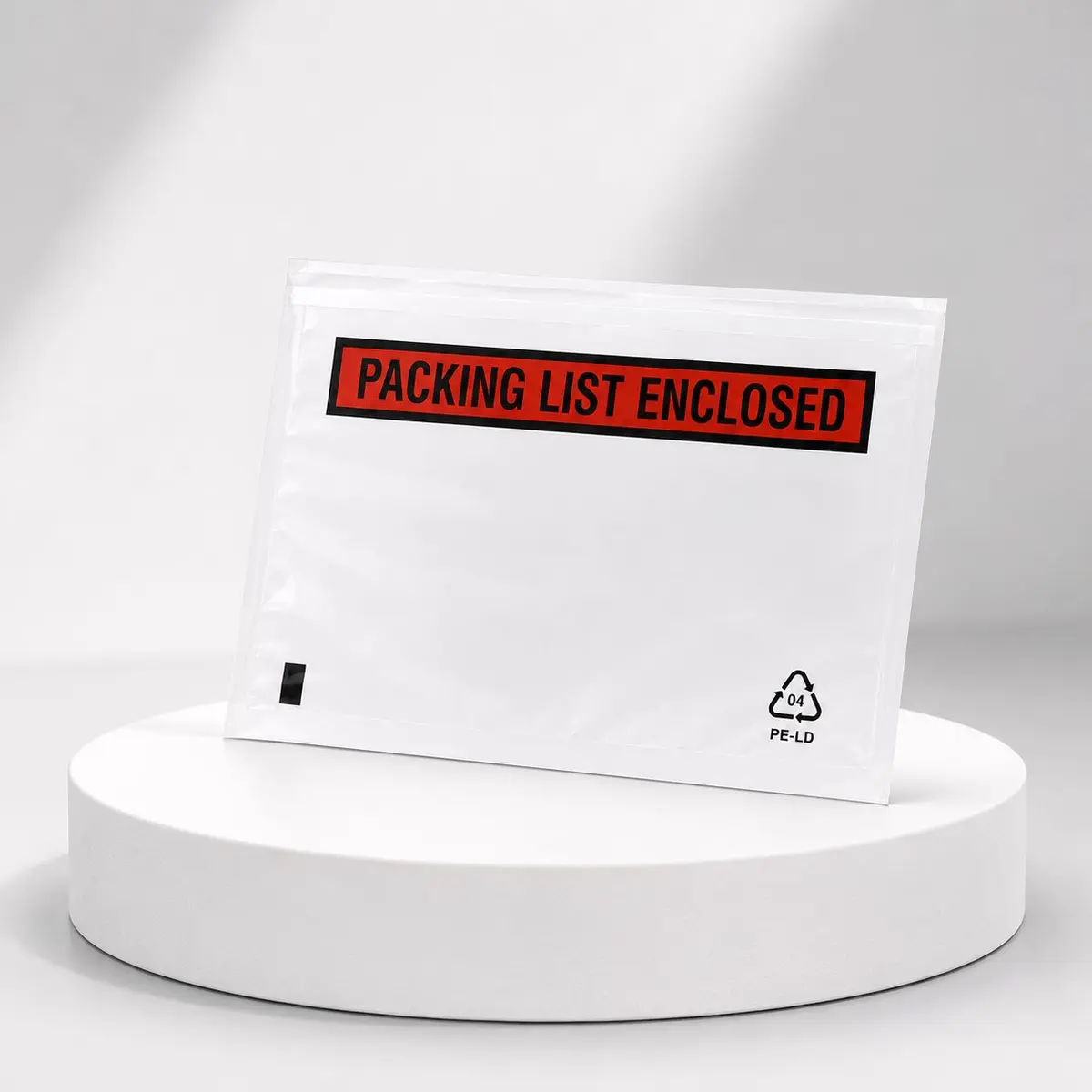
Are Packing List Envelopes Waterproof? The Honest Answer
A packing list envelope is the clear, self-adhesive pouch you stick on the outside of a carton. Its job is to keep an invoice or packing slip dry and readable from the warehouse to the receiving dock.
We have made packaging in Jaipur since 1997, and we ship these pouches to 20+ countries, from humid ports to cold stores. Buyers ask us one question about them more than any other.
Is it waterproof?
The word gets used loosely in this trade, so I will give you the plain answer first and the details after.
Are packing list envelopes waterproof?
No, they are water-resistant. For almost every real shipping job, that is exactly what you need.
The clear polyethylene film does not absorb water, and the sealed edges keep the opening shut. Rain, splashes, condensation and humid handling do not reach the paper inside. What the pouch is not built for is long submersion in standing water, where pressure can slowly push moisture past the adhesive lip.
This difference matters. “Waterproof” suggests a pressure-rated, submersible seal, and a standard document pouch does not claim that or need it. A packing list envelope is made to protect paper from the weather and handling of normal transit. At that job, it works very well.
How does the pouch keep documents dry?
3 things work together here.
- The poly film is non-absorbent. Water beads up and runs off instead of soaking in, so the face stays clear and the paper stays dry.
- The pouch is heat-sealed on three sides. The document goes in through a self-adhesive lip that closes the fourth side, so the obvious entry points are blocked.
- The adhesive border grips all the way round when you apply it to a clean, dry carton. This leaves no lifted corner for water to creep under.
The result is simple.
A packing slip survives a wet delivery run, a humid container or a misty cold-store transfer and is still legible. It is also still visible without opening the pouch, which is the whole point of a clear face.
Where are the limits?
A water-resistant pouch is not a dive bag. I would be careful in three situations.
- Submersion. A parcel left in a puddle long enough will let water past the adhesive lip. The film holds, but the seal gives way under steady pressure.
- Lifted or damaged seals. A pouch stuck on a dusty or wet surface, or with the document poking out past the lip, loses its barrier. How you apply it matters as much as the material.
- Long, harsh exposure. Deck cargo at sea, repeated wash-downs or weeks of damp outdoor storage are beyond what a standard gauge is made for. Specify a heavier film and confirm the closure.
Poly vs paper: how do they compare in wet weather?
Poly wins in every wet condition. The material is the biggest weatherproofing decision you make, and paper documents-enclosed wallets behave very differently once moisture arrives.
| Condition | Poly (plastic) pouch | Paper wallet |
|---|---|---|
| Light rain or splashes | Sheds water, stays clear and intact | Coating softens, ink can smudge |
| High humidity | Unaffected, non-absorbent | Absorbs moisture, cockles and weakens |
| Cold-store condensation | Stays flexible, resists the water film | Softens and can pulp at the edges |
| Rough or wet handling | Tough, resists tears and punctures | Tears easily once damp |
| Submersion | Resists for a while, not rated for it | Fails, document at risk |
| Long outdoor exposure | Good with a heavier gauge | Poor |
I will be fair to paper here. We make paper wallets too, and for dry indoor routes they do the job and are easier to recycle in paper streams.
But if a shipment might see weather, we would steer you to poly. You can see both on the products page.
Which pouch suits which route?
Match the film gauge to the worst weather the parcel will meet, not the average day.
| Scenario | Suitability | What to specify |
|---|---|---|
| Indoor warehouse to dry van | Standard pouch is enough | Standard gauge |
| Road or air freight in mixed weather | Well suited | Standard to medium gauge |
| Humid climate or monsoon transit | Well suited | Medium gauge, firm seal |
| Cold store or chilled logistics | Well suited | Confirm low-temperature flexibility |
| Outdoor yard storage for days | Use with care | Heavier gauge |
| Marine deck or repeated wash-down | Water-resistant only | Heavy gauge plus a second barrier |
| Full submersion | Not recommended | A sealed waterproof container |
Here in Jaipur we see both extremes in one year. Dry heat for months, then the monsoon arrives and every dock is wet for weeks. A pouch that does not care about the season is worth a lot in that kind of year.
What about cold stores and outdoor use?
Poly handles cold well. The film stays flexible across a wide temperature range and shrugs off the condensation that forms when a parcel moves from a freezer to a warm dock. That is exactly the moment a paper wallet goes soft, often within 1 or 2 transfers.
This makes a weatherproof document pouch a good choice for chilled and frozen goods, where the paperwork has to survive temperature swings and surface moisture.
For outdoor yard storage or marine freight, the same logic applies but the exposure lasts longer. Move up a film gauge, and for the harshest cases add a second barrier. Tell us the route and we will suggest the gauge we think fits it. If the pouch has to be opened and closed again on a multi-leg journey, a resealable packing list envelope gives you a re-closable lip and keeps the weather out.
What should buyers ask for?
Do not ask “is it waterproof?”. Ask “is it water-resistant enough for my route?”
Here is a rule of the trade I would keep in mind. The seal fails before the film does, so put your attention on the closure and on clean, firm application before you worry about film thickness.
For warehouse, road, air, humid and cold-store shipments, a standard poly pouch keeps documents dry and readable. For long outdoor or marine exposure, ask for a heavier gauge and the right closure. Keep the word “waterproof” for truly sealed containers.
Not sure which gauge and closure suit your climate? Send us your route, shipping conditions and document size, and we will suggest a spec and send samples to try.
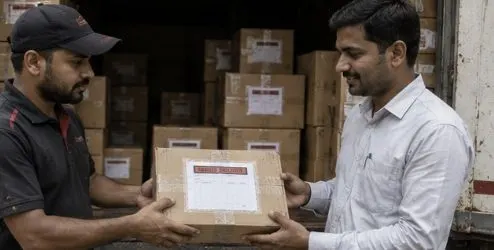
Frequently asked questions
Are packing list envelopes waterproof?
They are water-resistant, not fully waterproof. The clear poly film and sealed edges keep out rain, splashes, condensation and humidity in normal transit, so the document stays dry and readable. They are not made for long submersion, and the weak point there is the adhesive lip, not the film.
What is the difference between water-resistant and waterproof?
Water-resistant means the pouch sheds rain and damp handling and keeps paper dry in everyday shipping. Waterproof means a sealed barrier that survives full submersion under pressure for a long time. A standard packing list envelope meets the first test easily. It is not certified for the second, and a supplier should not claim it is.
Will the document inside get wet in the rain?
Not in normal rain. The poly face sheds water and the self-seal lip keeps the opening shut, so the invoice stays readable through a wet delivery run. The risk only starts when a parcel sits in pooled water long enough for moisture to creep past the lip.
Are poly packing list envelopes more weatherproof than paper ones?
Yes, by a wide margin. Polyethylene film does not soak up water, swell or pulp. A paper documents-enclosed wallet depends on a coating that softens once it is wet through, so for rain, humidity or cold-store condensation, poly is the safer pick.
Can I use packing list envelopes for outdoor or cold-storage shipments?
You can. Poly film stays flexible across a wide temperature range and handles the condensation that forms when parcels move from a cold store to a warm dock. For long outdoor exposure or marine freight, ask for a heavier film gauge and check the closure type.
Does a thicker film make the pouch more waterproof?
It makes the pouch tougher, not submersible. A heavier gauge improves puncture resistance and holds the sealed edge together better under stress, so moisture stays out for longer. For outdoor, marine or cold-store work, a thicker film is the right thing to ask for.
How should I apply the pouch to keep water out?
Stick it on a clean, dry carton and press the whole adhesive border down firmly, so there is no lifted edge for water to enter. Push the document fully inside so nothing sticks out past the seal. Store unused pouches flat, away from heat and sun.
Sourcing these in volume?
We make packing list envelopes in Jaipur for importers and distributors. Factory-direct, private label welcome.