
Do You Need a Packing Slip? When It Is Required
Do you need a packing slip? For an ordinary domestic parcel, the law in most countries does not ask for one. For exports, regulated goods and many B2B contracts, you effectively do need one.
That is the short answer. The detail matters, though, because the rules are clearer than most shippers think.
I will say it plainly first. Even where a slip is optional, I would include one. We have made packaging in Jaipur since 1997 (30+ years now), and we ship to 20+ countries, and the paperwork side of shipping is where small savings turn into big delays.
(This is general guidance, not legal advice. Check the rules in your own country and your own contracts.)
Is a packing slip legally required?
For ordinary domestic shipments, no. In most countries no general law forces you to put a packing slip in a domestic parcel. It is a long-standing business habit, not a legal duty.
Three situations change that.
- The shipment crosses a border. Customs expects a packing list alongside the commercial invoice, and many export rules require one.
- The goods are regulated. Pharmaceuticals, food and dangerous goods come with their own paperwork rules, and itemised contents lists are part of them.
- A contract or purchase order asks for one. B2B supply agreements and vendor compliance guides often spell out the fields, the format and even where the slip must sit on the carton.
So the practical rule is simple. A slip is optional at home and effectively required for customs, regulated goods and contract B2B.
Required or optional: a quick reference
| Scenario | Packing slip status | Why |
|---|---|---|
| Domestic ecommerce parcel | Optional (but standard) | No general law, included for service and returns |
| Domestic B2B with a PO | Often required by contract | Vendor compliance and PO matching |
| International or export | Required in practice | Customs checks contents against the declaration |
| Regulated goods (pharma, DG, food) | Required | Sector paperwork rules |
| Gift or dropship order | Optional, without prices | Receiver checks contents without seeing the cost |
Packing slip vs invoice: which does customs actually need?
For cross-border shipments, the commercial invoice is the required document. It states the value, the terms and the parties, and customs uses it to work out duty. The packing list is the supporting document.
Supporting does not mean you can skip it. Customs officers use the packing list to check what is physically in the shipment against what was declared. A clean, itemised packing list that matches the invoice line by line is one of the simplest ways to avoid an inspection hold, and for exports it is often a required entry document anyway.
The two stay separate for a good reason.
- The invoice shows prices, and customs and your accounts team read it.
- The packing slip shows the physical contents, often without prices, and the buyer or the warehouse reads it.
If the names still confuse you, and they confuse plenty of people in the trade, our guide to packing list vs packing slip vs invoice explains who reads which one.
Why include a packing slip even when it is optional?
Because it pays for itself many times over. We see it from the packaging side, and our view is simple. A slip costs a few paise of paper and toner. One missing-item dispute costs far more.
Here is what it does for you.
- Returns get easier, because the buyer has the order number and item list in hand and does not need to raise a ticket first.
- You get fewer “did I get everything?” queries, because the receiver can check the box themselves.
- Packers catch mistakes earlier. A packer who checks goods against the slip spots a short item before the carton leaves, not after a complaint.
- You have a record. If a buyer says an item was missing, the slip shows what was packed and sent.
- Multi-SKU cartons become much easier to receive when a list travels with them.
This is the rule of the trade I would pass on to any new shipper. The more line items in a carton, the more that slip is worth.
The honest downside is small, but it is real. A slip is one more step on the packing bench, and a wrong or stale slip causes more confusion than no slip at all. So print it from the same system that picked the order. We would rather you skip the slip than send a wrong one.
For domestic B2B and ecommerce, our note on what documents to enclose for domestic shipments covers which papers earn their place in the pouch.
Where does the packing slip go?
Put it where the right reader can find it without unpacking. For domestic orders, the slip can sit inside the box or in a document pouch on the outside.
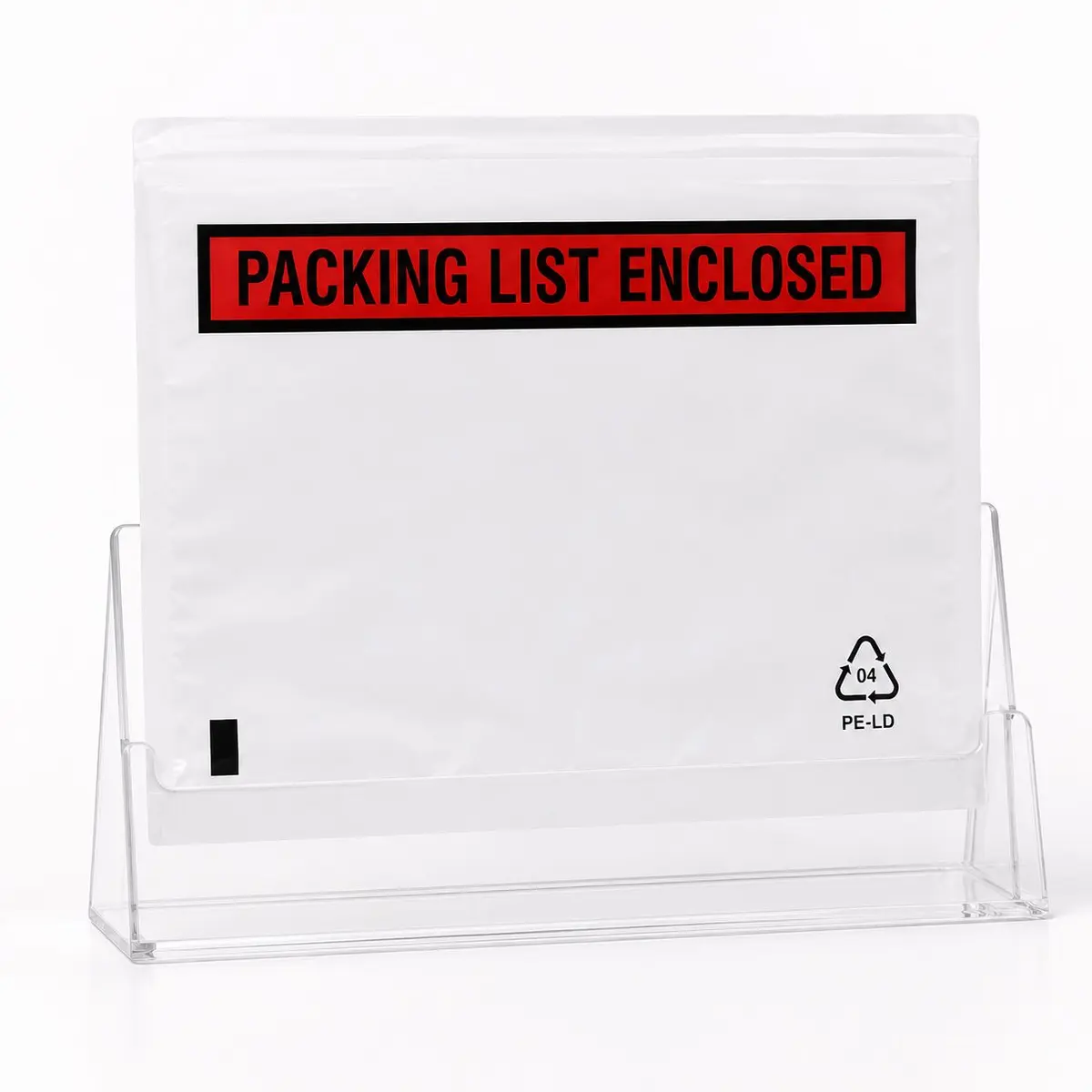
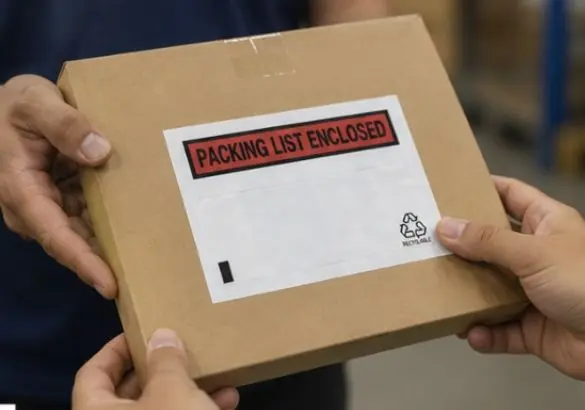
For shipments crossing a border, I would put the packing list and invoice in a printed “Documents Enclosed” or “Invoice Enclosed” pouch on the outside of the carton. Customs can then read them without opening the box, and that often decides whether a shipment clears or waits. Document-enclosed wallets like these have been a long-running export product of ours to the UK and Australia, so this is the part of the job we know best.
Size the pouch to the paper. A single slip folded once fits an A5 pouch, while a flat 2 or 3 page export pack needs A4.
That visibility is the whole point of a packing list envelope. The paper stays protected from rain and rough handling, yet the buyer, the warehouse or the customs officer can read it at a glance. If you want your own wording or logo on the pouch, see our custom print options.
My way of deciding is to look at the shipment type first, then ask who needs to read the paper, and pick the pouch last.
Not sure which documents your shipments should carry on the outside? Tell us what you ship and where, and we will suggest printed “Documents Enclosed” or “Invoice Enclosed” pouches sized for your paperwork and send samples to try.
Frequently asked questions
Is a packing slip required by law?
For an ordinary domestic parcel, usually not. In most countries it is standard business practice, not a legal duty. It does become a requirement for exports, for regulated goods such as pharma or dangerous goods, and where a B2B contract asks for one. This is general guidance, not legal advice.
Do you need a packing slip for domestic shipping?
Not legally, in most cases. Most established online and B2B sellers still include one, because it speeds up returns, lets the buyer check the contents and cuts down on support queries.
Is a packing slip required for international shipments?
Customs needs the commercial invoice to clear and value the goods. A packing list is strongly recommended and often required for exports as well, because it lets officers check the contents against the declaration without opening the carton.
What is the difference between a packing slip and an invoice for customs?
The invoice is the money document. It shows prices and terms, and customs uses it to work out duty. The packing slip lists what is physically inside, with quantities and sometimes weights, but no prices, and customs uses it to verify the shipment.
When should you include a packing slip even if it is optional?
Include one when the buyer needs to check contents, when returns are likely, when a B2B order has a purchase order to match, or when a carton holds several SKUs. The slip costs very little compared with one dispute or one re-shipped order.
Does a packing slip show prices?
Usually not. It lists items and quantities so the receiver can check what arrived. Leaving prices off is common for gift and dropship orders, which is one reason the slip is kept separate from the invoice.
Can a packing slip and invoice be the same document?
They can be combined on one form, but I would keep them separate. The buyer or warehouse reads the slip to check the goods, while customs and accounts read the invoice for value and duty. Different readers need different papers.
Sourcing these in volume?
We make packing list envelopes in Jaipur for importers and distributors. Factory-direct, private label welcome.