
Which Documents to Enclose for Domestic Shipments
“What do I actually need to put in the box?” This is one of the first questions a team asks when it sets up a dispatch area.
For domestic shipments, the answer is pleasantly short. It is far simpler than the customs paperwork an export carton needs, and I have tried to keep this post just as short. Here is what to enclose, and where each document goes.
What documents do I need to enclose for a domestic shipment?
For most domestic parcels you need just 2 things: a packing slip inside or on the box, and a shipping label on the outside. Everything else is optional and depends on whether you ship to a consumer or to a business.
The parcel never crosses a border. So there is no commercial invoice for customs.
That is the biggest difference from export shipping. Many sellers email the tax invoice and put only the packing slip in the carton.
These are the common documents, and when each one applies.
- The packing slip lists what is in the box, so the receiver can check it against the order. Almost every domestic parcel should carry one.
- The shipping label is made by the carrier and always goes outside. It carries the barcode, the addresses and the service level.
- The delivery note is signed by the receiver as proof of delivery. It is standard in B2B and pallet freight.
- The invoice or tax invoice is usually emailed for online orders, and printed and enclosed for B2B buyers who want it with the goods.
- A returns label or returns slip is optional, and it makes returns simpler for online customers.
Packing slip, delivery note or returns slip: what is the difference?
They are often mixed up, but each does a different job for a different reader.
| Document | What it does | Primary reader | Typical use |
|---|---|---|---|
| Packing slip | Lists items and quantities in the box | Receiver / packer | Every domestic parcel |
| Delivery note | Proof goods arrived, signed on receipt | Receiver | B2B, wholesale, freight |
| Returns slip / label | Enables an easy return | Customer | Ecommerce returns |
| Shipping label | Routing, tracking, addresses | Carrier | Always, on the outside |
I remember it like this. The packing slip checks the contents, the delivery note confirms arrival, and the returns slip handles what happens next.
What goes in the pouch on the outside, and what goes inside?
The shipping label always goes outside. For the rest of the paperwork, it depends on who has to read it without opening the carton.
Inside the box is fine for a plain consumer order. The customer opens the parcel and finds the packing slip waiting. Keep any prepaid returns label inside as well, so it is never mistaken for the outbound label.
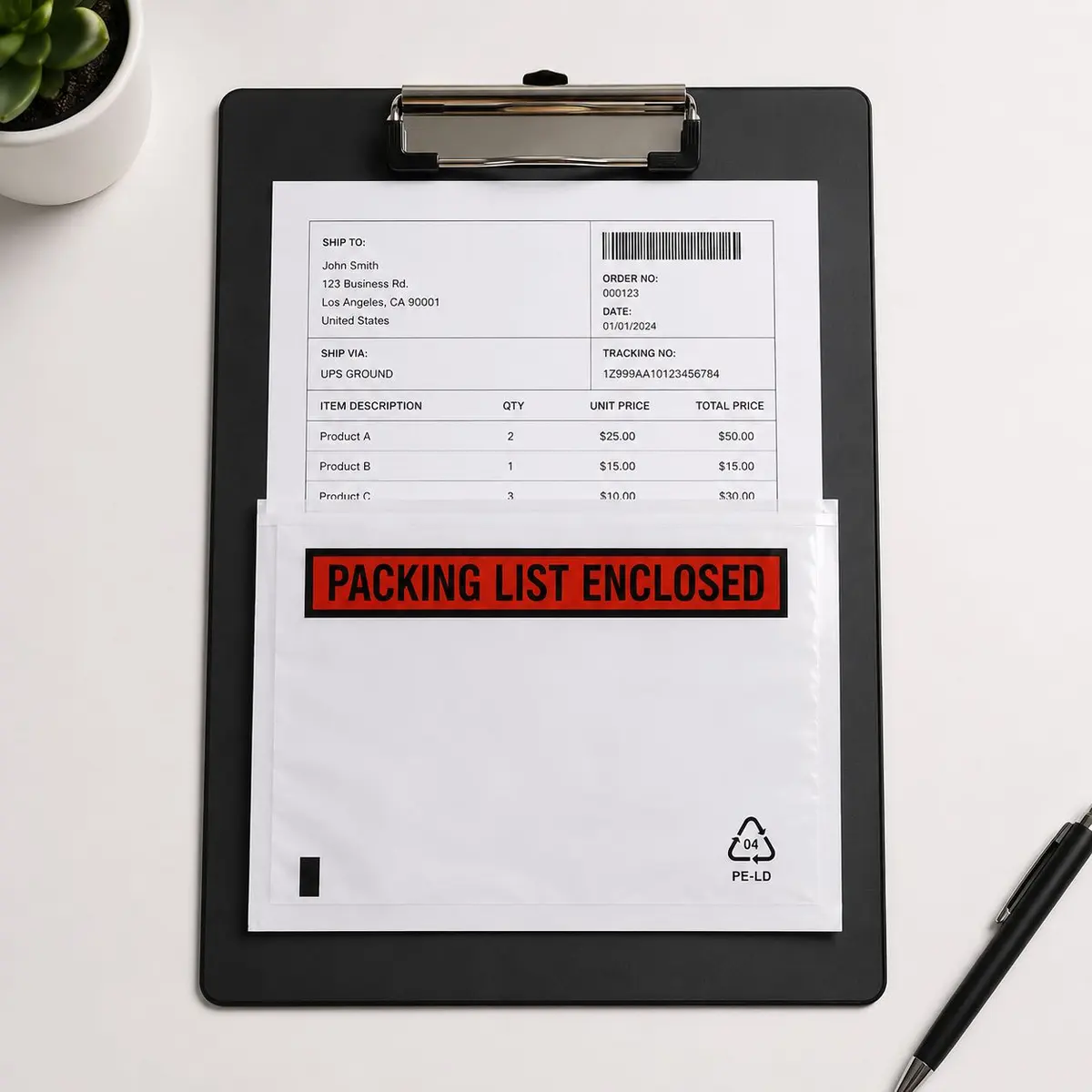
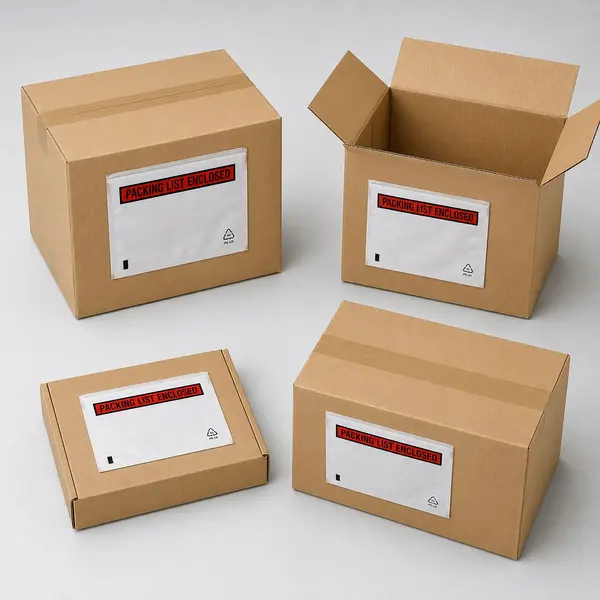
An outside pouch is better for B2B, wholesale and 3PL work. A self-adhesive packing list envelope lets warehouse, dock and returns staff check the contents without cutting the box open. A clear or printed “Documents Enclosed” or “Packing Slip Enclosed” pouch tells everyone in the chain exactly where to look. If you want your own wording on it, see custom print.
Here is the rule of the trade I would give any dispatch team.
If anyone other than the end customer must read the document, such as a goods-in clerk, a returns desk or a 3PL, it goes in a pouch outside. If only the customer needs it, inside is fine.
How do ecommerce and B2B domestic shipments differ?
The type of buyer decides the document set more than anything else. A consumer order is light on paper.
A business order is heavier, because the receiving dock at a warehouse or factory has its own goods-in checks to run before anyone will sign for the delivery and pass your invoice for payment.
For an online order to a consumer, the usual set is short.
- A packing slip inside the box, often the only paperwork enclosed.
- The shipping label outside.
- An optional returns slip or prepaid returns label inside.
- The invoice, usually sent by email rather than enclosed.
For a B2B or wholesale order to a business, it grows.
- A packing slip plus a delivery note for sign-off, ideally in an outside pouch.
- A printed invoice or GST invoice, if the buyer needs it with the goods.
- Purchase-order or reference numbers, so goods-in can match the delivery.
- A clearly marked document pouch, so the receiving dock handles it fast.
| Ecommerce domestic | B2B domestic | |
|---|---|---|
| Packing slip | Yes (inside) | Yes (often external pouch) |
| Delivery note | Rare | Common, for sign-off |
| Invoice | Usually emailed | Often enclosed |
| Returns label | Optional, inside | Rare |
| Pouch location | Inside box | Outside, clearly marked |
What rule should I give the packing bench?
Give packers one line per shipment type: this shipment, these documents, this pouch.
Keep it that simple.
This removes the “I thought you put the slip in” kind of mistake. It also keeps the returns desk and the goods-in team happy, and those two teams notice every missing slip.
Pair the rule with a pouch of the right size, so an A4 or DL document sits flat and stays readable. We have made document pouches in Jaipur since 1997 and export them to 20+ countries, so we can match a size to whatever your slips look like. For the full difference between these documents, see our guide to packing list vs packing slip vs invoice.
Setting up a domestic dispatch area? Send us your slip and delivery note sizes, and we will send clear and printed pouch samples to try.
Frequently asked questions
What documents should I enclose in a domestic shipment?
For most domestic parcels, a packing slip and a shipping label are enough. B2B orders usually add a delivery note for sign-off. Many online sellers also add a returns slip or a prepaid label.
Do domestic shipments need an invoice?
Not for customs, because the parcel never crosses a border. Many sellers email the tax invoice and put only the packing slip in the box. B2B buyers may still want a printed invoice or delivery note with the goods.
Should the packing slip go inside or outside the box?
Either works. Inside is fine for a plain consumer parcel. An outside pouch lets warehouse and returns staff check the contents without cutting the carton open, which is why B2B and 3PL shipments prefer it.
Is a packing slip the same as a delivery note?
Not quite. A packing slip lists what is in the box so the receiver can tick it off. A delivery note is signed by the receiver as proof the goods arrived, and it is common in B2B and pallet freight. Both can travel in the same pouch.
Should I include a returns label in domestic parcels?
It is optional, but it makes returns easier for online customers. You can enclose a prepaid label, a returns slip, or just print return steps on the packing slip. Keep any prepaid label inside the box so nobody uses it on the way out.
What goes in the document pouch on the outside of the carton?
Anything a handler or warehouse clerk must read without opening the box. That usually means the packing slip, the delivery note and any goods-received paperwork. A pouch printed 'Documents Enclosed' or 'Packing Slip Enclosed' makes it easy to spot.
Do B2B domestic shipments need different documents than ecommerce?
Yes. A consumer parcel usually carries only a packing slip and a shipping label. A B2B order often adds a delivery note, a printed invoice or GST invoice and purchase-order references, grouped in a pouch on the outside.
Sourcing these in volume?
We make packing list envelopes in Jaipur for importers and distributors. Factory-direct, private label welcome.