
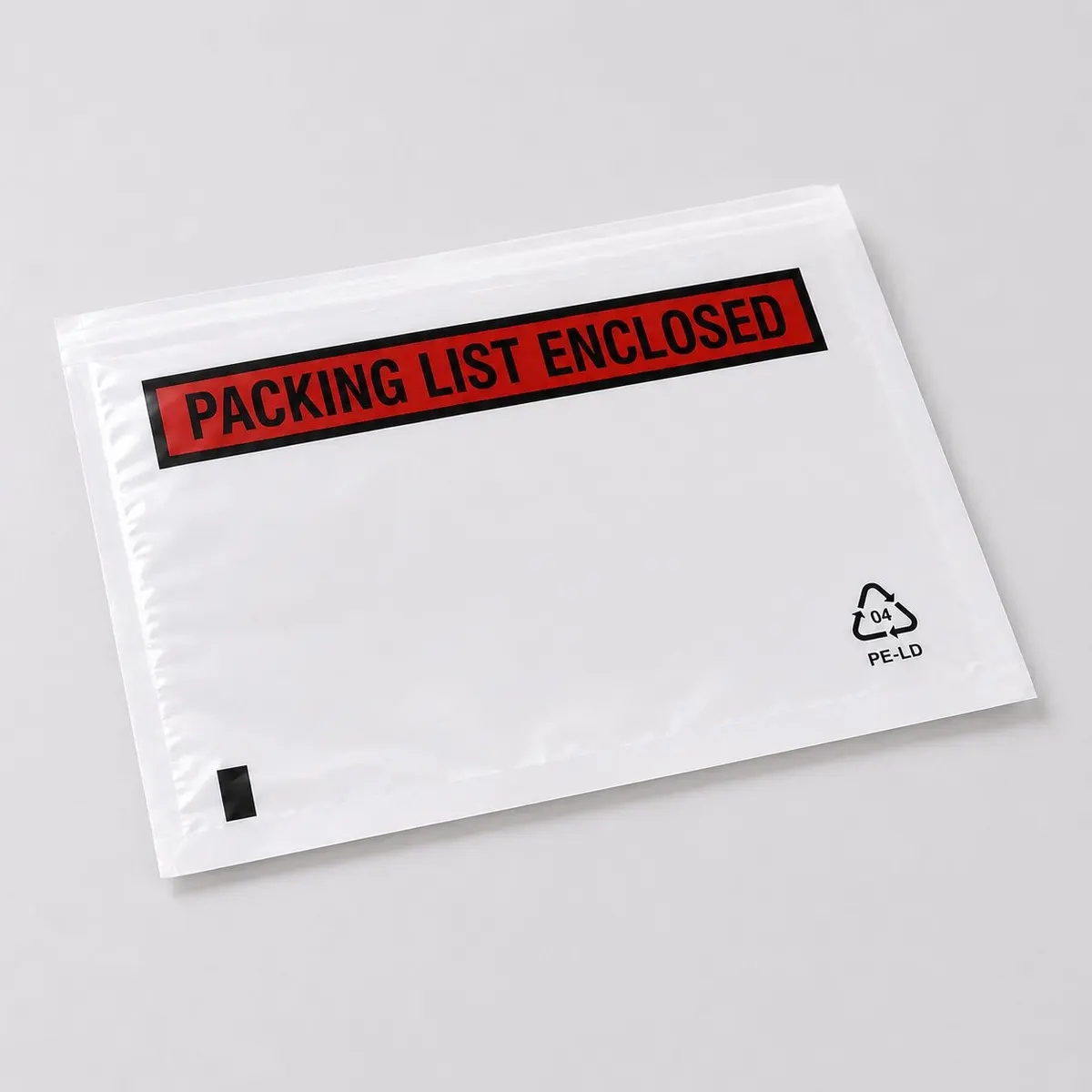
Paper vs Plastic Document Pouches: How to Choose
Choosing between a paper document pouch and a plastic packing list envelope comes down to one trade-off.
Plastic wins on durability and water resistance. Paper wins on recycling and on how it looks.
Both do the same basic job. They hold an invoice, packing list or customs papers in a self-adhesive pocket on the outside of a carton or pallet. The material only starts to matter once goods hit a wet dock, a long sea route or a buyer with an ESG target.
I will be upfront about where we stand. We make packaging in both plastic and paper, we have done it in Jaipur since 1997, and we ship to 20+ countries with very different weather. I think paper is a good choice where it works, and plastic is still the right choice where paper fails. Below is how I would decide for a B2B operation.
What is the difference between paper and plastic document pouches?
Plastic pouches are polyethylene film, which is waterproof and tear-resistant. Paper pouches are kraft or glassine, which is recyclable and plastic-free.
Everything else follows from that. In our 30+ years, we have seen the same split in every market.
- Plastic pouches use low-density polyethylene (LDPE) or a co-extruded film, with a clear window and a pressure-sensitive adhesive back. They are flexible, moisture-proof and made for rough handling.
- Paper pouches use kraft or glassine, often with a glassine or thin film window so the documents stay visible. They feel stiffer, take print beautifully and go in the paper bin.
- Hybrid pouches put a plastic face on a paper back. They add some moisture protection, but they usually cannot go in household recycling.
For more on how they are built, see what packing list envelopes are made of.
Which is more durable and water-resistant?
Plastic wins. It is not close.
Polyethylene naturally repels water, so a poly pouch sheds rain, condensation and spills and keeps the paperwork dry.
Paper is moisture-resistant at best.
A pure paper pouch will soften, wrinkle or turn to pulp in steady rain, a damp warehouse or a leaking carton. Anyone who has left a newspaper out in the monsoon knows how fast that happens. Once the document inside cannot be read, you are looking at delays, returns or a customs hold. Water-resistant kraft grades exist, but they handle light splashes only, not a soaking.
Plastic also resists tearing, puncture and scuffing far better when pallets are stacked, shrink-wrapped or dragged. If your goods move through ports, humid climates or export lanes with several legs, I would use plastic. The note on are packing list envelopes waterproof goes into more detail.
Which is more recyclable and better for ESG?
Paper is easier to recycle at home. Plastic can be recycled, but it needs the right stream.
This is the strongest reason to choose paper.
- Paper and glassine pouches are widely accepted in household paper recycling, so the receiver can do the right thing without thinking.
- Poly (LDPE) pouches are recyclable, but through store drop-off or commercial film recycling, not the normal kerbside bin. In practice, many end up in general waste.
- Paper-plus-plastic hybrids usually cannot go in the household bin, because the two materials have to be separated first.
If your brand sells itself on plastic-free packaging, paper supports that story directly. If you want plastic-level protection with a better end of life, recyclable poly grades sit in between. Our guide to recyclable and biodegradable document pouches covers those.
Paper vs plastic document pouches: side by side
| Factor | Paper or glassine pouch | Plastic (poly) pouch |
|---|---|---|
| Water resistance | Low, softens when wet | High, sheds water |
| Tear and puncture resistance | Moderate | High |
| Household recycling | Yes (paper bin) | No, needs film drop-off |
| Compostable option | Often | No (biodegradable poly exists) |
| Print and branding | Excellent, premium feel | Good |
| Best transit | Dry, indoor, light handling | Wet, heavy, long export routes |
| Typical unit cost | A little higher | Often the lowest at volume |
| ESG positioning | Strongest | Improving with eco grades |
Are paper or plastic pouches cheaper?
At volume, standard poly pouches are usually cheaper. Paper tends to cost a little more for the same size, whether that is an A5 or an A4. We would quote both if you ask.
Unit price is only part of it, though. The total also depends on your order volume, the size (A4, DL, 6 × 9 and so on), the printing and the finish. Then there is the cost of failure. One ruined customs document can cost far more than every pouch in the carton.
This is the rule of the trade I keep coming back to. Price the pouch against the cost of the paper inside going missing, not against the cheapest pouch on the market.
A dry, domestic ecommerce flow may justify paper for the brand benefit. A heavy export operation usually leans on poly for protection. Specs and volumes vary a lot, so ask us for a quote rather than trusting a sticker price.
When should you choose each?
Choose plastic when the documents must survive. Choose paper when sustainability and presentation lead.
That is my short answer.
- Plastic is right when shipments face rain, humidity, refrigeration or rough handling, when routes are long or international, or when pallets are shrink-wrapped.
- Paper is right when recyclability is a stated requirement, when your brand markets plastic-free packaging, when goods stay dry and indoors, or when a premium branded look matters.
- A hybrid or an eco-grade poly makes sense when you need moisture protection and a lower footprint in a single SKU.
Here is the honest downside of my own advice. Running both materials means two stock lines, and packers can grab the wrong one for a wet export lane. If you do run both, label the shelves clearly. It sounds small, but one wet invoice on a 40 ft export container is a big problem.
Many operations still run both, i.e. poly for export and wet lanes, paper for domestic and brand-led shipments. You can see the formats on our products page, and printed options on the custom print page.
Not sure which material suits your lanes? Tell us where your cartons go and how many you ship, and we will send paper and plastic samples to try side by side.
Frequently asked questions
What is the difference between paper and plastic document pouches?
Plastic pouches are polyethylene film, so they are waterproof, tear-resistant and suited to rough or wet transit. Paper pouches are kraft or glassine, go in the paper recycling bin and suit plastic-free shipping. Both hold invoices and packing lists in a self-adhesive pocket you can read through.
Are paper packing list envelopes waterproof?
No. A pure paper pouch is moisture-resistant at best, and it will soften or turn to pulp in steady rain, condensation or standing water. For wet or long export routes, pick a poly pouch or a hybrid with a plastic face over a paper back.
Which is more recyclable, paper or plastic document pouches?
Paper and glassine pouches are widely accepted in household paper recycling. Poly (LDPE) pouches can be recycled too, but through store drop-off or commercial film streams, not the home bin. Paper-plus-plastic hybrids usually cannot go in the household bin at all.
Are paper or plastic envelopes cheaper?
Standard poly pouches are often the lower-cost choice at volume, and paper or glassine usually costs a little more for the same size. Order volume, print and size also move the price, so ask for a quote on your exact spec.
When should I choose a paper document pouch over plastic?
Choose paper when recyclability is a stated requirement, when your brand sells itself as plastic-free, or when shipments stay dry and indoors. Choose plastic for wet, rough, heavy or long export routes where the documents have to survive.
Can paper document pouches be printed and branded?
Yes. Paper and poly pouches can both carry wording such as ‘Packing List Enclosed’ or ‘Invoice Enclosed’ and a company logo. Paper takes ink particularly well, which gives a premium look.
Do paper pouches meet customs and carrier requirements?
Yes. Carriers and customs care that the documents are visible and firmly attached. They do not mind whether the pouch is paper or plastic.
Sourcing these in volume?
We make packing list envelopes in Jaipur for importers and distributors. Factory-direct, private label welcome.