
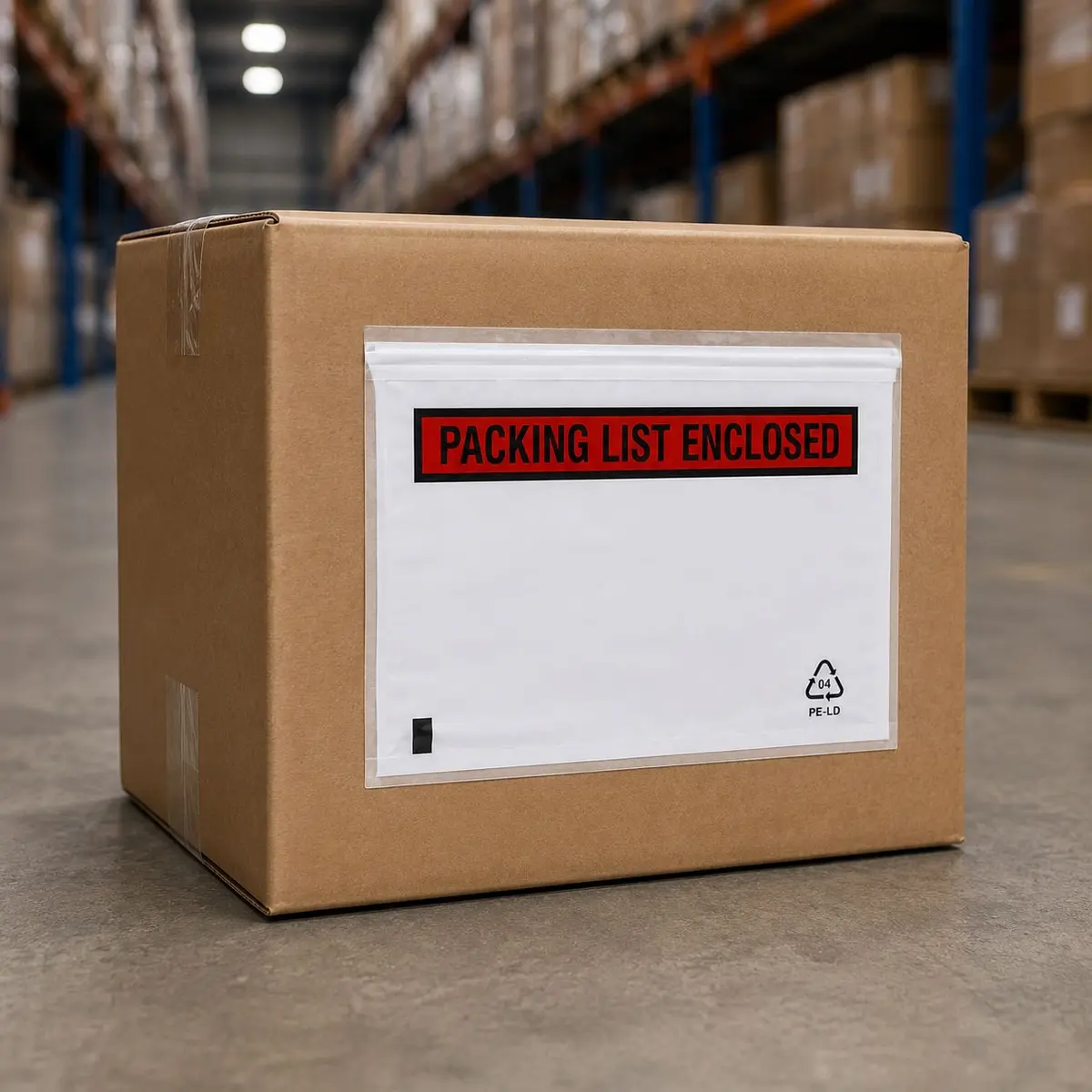
Reducing Returns Friction with Visible Documents
Returns are part of the product now. Whether a customer buys from you again often depends on how painless it is to send something back, and that is decided in the box before they ever think about returning.
The cheapest lever you have is visibility. Put the returns slip, the instructions and, if you offer one, the return label in a pouch the customer can see and use.
Get that right, and you reduce returns friction, cut support tickets and get stock back on the shelf faster.
We have made packaging in Jaipur since 1997, and we ship our pouches to 20+ countries. We do not run your returns desk, of course. But we see what goes on the outside of the parcel, and this is how I would set up the paperwork side of returns.
How do you reduce returns friction?
Put everything the customer needs to send an item back in one visible, readable place. That means instructions, a returns reference and a label, not bits scattered across an email, a website and a loose card.
Friction is simply the sum of small moments where a customer has to stop and work something out.
Remove those moments and the return becomes self-service.
In practice that comes down to three things.
- One home for the documents. A clear returns process document pouch holds the packing slip, returns slip and label on a single panel.
- No hunting. The customer does not dig through their inbox or your help centre to learn how returns work, because it is printed and in their hand.
- No repacking puzzle. A peel-and-reseal closure means they do not need tape or a new box.
Each of those is a point where a confused customer would otherwise open a ticket. Make the path obvious, and they stay off your queue. For most returns paperwork we would suggest an A5 pouch, or a DL pouch for a slim 1 page slip.
We would start there before spending anything on software.
Should you put the return label in the package?
A label in the box is the easiest option for the customer, and it makes sense when your return rate is high.
It is a commercial choice, though, not a default.
Printing a prepaid label for every box means paying for labels on the many parcels that never come back. So there are two common models.
| Model | What is enclosed | Best for | Trade-off |
|---|---|---|---|
| Label in the box | Printed return label and slip in the pouch | High-return categories (apparel, footwear), gifting, less digital buyers | You pay for labels never used |
| Print on demand | Returns slip with a QR code or portal reference | Lower return rates, cost-sensitive operations | Customer must scan or visit a drop-off point to get the label |
A middle path is the QR-code label. The customer shows a code at a carrier counter or drop-off point, and the staff print the label there, so nothing needs a home printer.
Our pouches work with either choice, and so would any decent document pouch. It keeps a printed label dry and scannable, or keeps the QR slip flat and readable. See returns slips and reverse-logistics paperwork for how each document is used.
What should the returns slip actually say?
It should answer the questions customers would otherwise email you about, in 4 or 5 short lines. I would keep it to one side of an A5 sheet. Most returns support volume comes from people asking things the slip could have told them.
- The return window, i.e. how many days they have.
- The condition rules, such as tags on, unused, original packaging.
- How to start, with a QR code or short URL to your returns portal and a returns reference.
- What happens next: refund or exchange, the timing, and where the label comes from.
Stating the rules plainly stops the “how do I return this?” tickets at the source. A clear packing slip does the same on the order side. It shows what shipped, what is on backorder and what was refunded, so the customer does not have to contact you to make sense of the order.
For the wider picture, see packing list envelopes for ecommerce.
How does a documents pouch make returns easier?
It keeps everything the customer needs together and readable, which turns a return from a ticket into self-service. In my view, this is the biggest lever on returns cost. A return label pouch helps in three concrete ways.
- Nothing gets lost. A clear pouch holds the returns slip and label with the packing slip, instead of a loose card that slides out of a poly mailer and goes in the bin with the wrapping. The customer who wants to return but threw away the instructions is a very common story, and this fixes it.
- The customer routes themselves. A QR code for your returns portal lets them start an exchange or refund without writing to you.
- The barcode scans on arrival. The film keeps the RMA barcode dry and clean through the return trip, so your warehouse scans once and moves on. A smudged barcode means a manual lookup, and that small cost repeats on every line of the returns desk.
I think of the pouch as the one drawer in the house where the important papers live. When everything is in that drawer, nobody wastes an evening searching.
How do visible documents speed up restock?
Faster restock comes from clean identification on arrival. The bottleneck on a returns line is rarely the physical handling. It is working out what came back and why.
When the RMA slip and barcode arrive flat, dry and on one panel, three things happen.
- Check-in takes one scan, not a manual search against the order.
- The decision is immediate, because the system already knows whether the item goes to resale, refurbishment or scrap.
- The item rejoins available stock sooner, and that can decide whether a return costs you a sale.
Automated portals and 3PL receiving targets can shorten returns processing a lot. All of them assume the inbound documents are readable. The pouch is the cheap, physical way to make that assumption true. We think it is the most underrated part of the returns chain. For high-volume operations, see packing list envelopes for 3PL.
How do peel-and-reseal pouches support reuse?
Peel-and-reseal formats let the customer send the item back in the same packaging, using a second adhesive strip. No tape, no new box, and far less effort for them.
- Two-strip mailers carry one strip for the outbound seal and a second, untouched strip for the return. The customer peels the second strip and reseals the same bag.
- Resealable document pouches let the slip and label be taken out and closed again without tearing, so one pouch carries the outbound paperwork and then the return paperwork.
- Put the two together, a resealable mailer plus an enclosed label and slip, and you get the easiest return there is. The customer opens, repacks, peels, reseals and drops it off.
Reusing the same mailer also cuts packaging waste per order, which matters to customers and to procurement teams.
Here is the honest downside, and we sell these, so take it seriously. Resealable formats cost a little more per unit than a single-seal mailer or pouch. If your return rate is very low, you may be paying for a second strip that most customers never use, so I would test it on your highest-return lines first.
A quick checklist for low-friction returns
- Keep the packing slip, returns slip and label together in one visible pouch.
- Write the slip to answer the usual tickets: the window, the condition, how to start and what happens next.
- Send customers to self-service with a returns-portal QR code.
- Protect the barcode so it arrives flat, dry and on one panel.
- Pick your label model, label in the box or print on demand, by customer type and return rate.
- Use peel-and-reseal where reuse and waste matter to your buyers.
This is my rule of the trade on returns. Every question the slip answers is one ticket your team never has to open.
You can look at the formats and sizes we make in our products section, from A7 up to A4. If you want your returns message printed on the pouch itself, see our custom print options.
Planning a smoother returns flow? Tell us what you sell, your mailer sizes and roughly how many orders come back, and we will suggest pouch sizes and send samples to try.
Frequently asked questions
How do you reduce friction in the returns process?
Put everything the customer needs in one visible place. That means a returns slip with clear instructions, a returns reference or QR code for your portal and, if you offer one, a return label, all kept together in a documents-enclosed pouch. Add a peel-and-reseal closure so they can reuse the same packaging.
Should you include a return label in the package?
It depends on your return rate and your customers. A label in the box is the easiest option for them and suits high-return categories like apparel. Many retailers enclose a QR code or reference instead, so they only pay for labels on parcels that actually come back.
What should a returns slip say to cut support tickets?
Four things, in a few short lines: the return window, the condition items must be in, how to start the return (a QR code or short URL), and how the refund or exchange works. When the rules are in the box, customers stop emailing to ask.
What is a peel-and-reseal mailer for returns?
It is a mailer with two adhesive strips. One seals the outbound parcel, and the second, untouched strip lets the customer reseal the same bag for the return. No tape or new box is needed.
How can returns be restocked faster?
By making the return easy to identify on arrival. A scannable RMA barcode that survives the trip lets the warehouse check the item in with one scan and send it to refund, exchange or restock. A clear pouch keeps that barcode flat and dry on the way back.
Where should the return label go on a returned parcel?
On the outside, covering the original shipping label and barcode, so the carrier reads only the return address. Until the customer is ready to send it, the label is safest in the documents pouch with the order.
Can the same pouch hold the packing slip and the return label?
Yes, and I would recommend it. One documents-enclosed pouch can carry the packing slip, the returns slip and a return label together, so nothing gets separated or thrown away with the wrapping.
Sourcing these in volume?
We make packing list envelopes in Jaipur for importers and distributors. Factory-direct, private label welcome.