
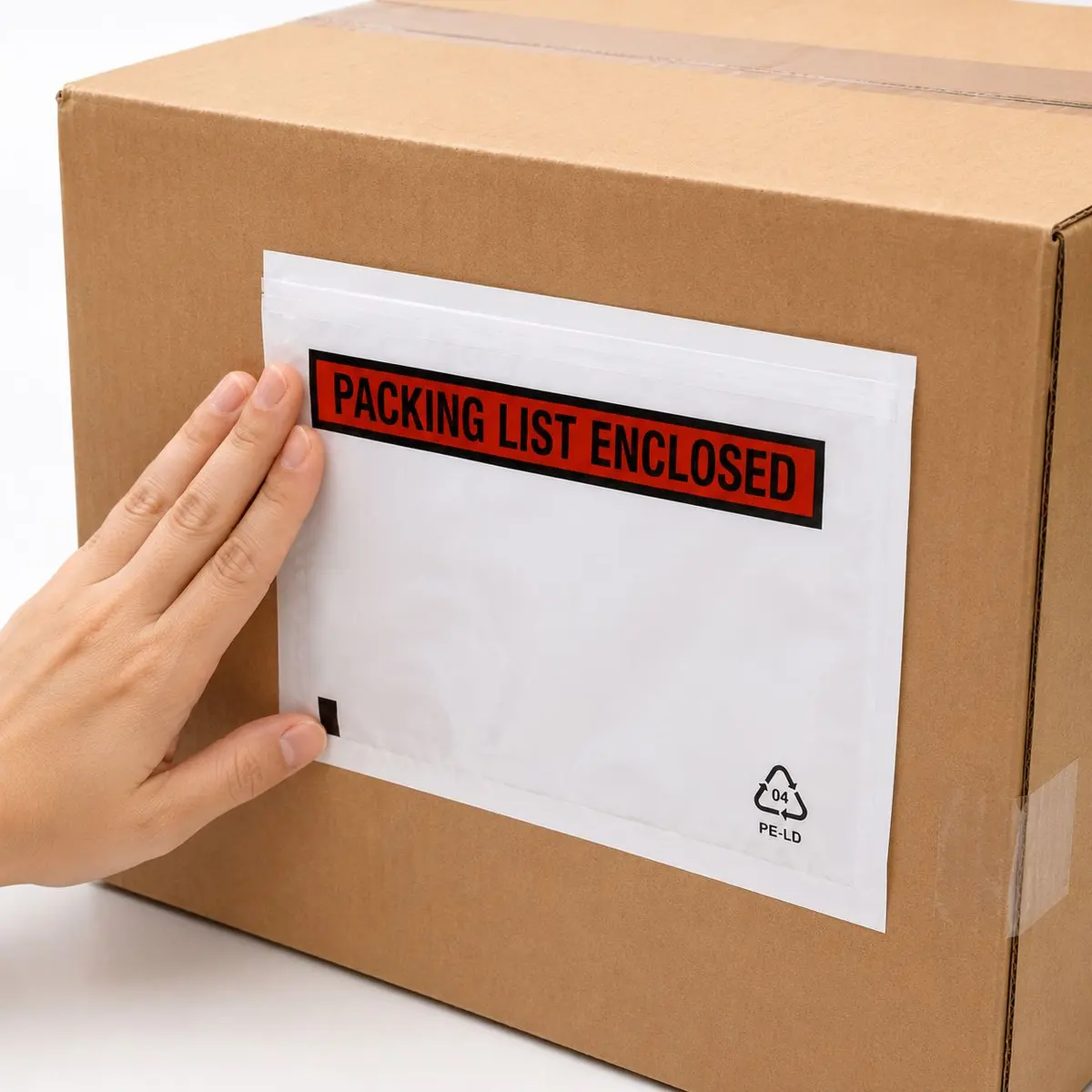
Removing Packing List Envelopes Without Adhesive Residue
The cleanest way to remove a packing list envelope without adhesive residue is to order a removable grade in the first place.
If a permanent pouch is already on the box, you can still do a decent job. Warm it gently, peel it slowly at a low angle, and lift any leftover glue with oil, alcohol or a citrus remover.
Residue happens because most shipping pouches use a permanent pressure-sensitive adhesive. We make it to grip hard and stay on, because that is what a shipping pouch is for.
That is also the problem when you want it off.
Below, I will explain why that residue forms, how removable and permanent grades differ, and how to get a clean surface for reuse or recycling.
Why does a packing list envelope leave adhesive residue?
The glue sticks to the carton more strongly than it holds itself together. So when you pull, the adhesive layer splits. Some lifts with the pouch, and some stays on the box.
In my experience, 3 things decide how bad it gets:
- Adhesive type. A permanent pressure-sensitive adhesive (PSA) is designed to wet out, which means it flows into the tiny valleys of the surface and locks in. That is exactly why it resists peeling, and exactly why it tears and leaves residue when forced off. A high-tack grade is even more aggressive.
- Time. The longer a pouch sits, the deeper the adhesive keys in. A pouch peeled the same day usually lifts more cleanly. One that has spent weeks on a ship has bonded much harder.
- Temperature. Heat softens the adhesive and lets it flow further, so a box stored warm or shipped through a hot climate bonds harder. Cold does the opposite and makes the adhesive brittle, so it can crack and leave specks.
This is the trade-off in one line. The same grip that keeps a pouch on the box from door to door is what fights you when you try to take it off. The mechanism is explained in how a packing list envelope’s adhesive works.
Removable vs permanent: which adhesive peels off cleanly?
If clean removal matters, solve it at the ordering stage and ask us for a removable adhesive. The 2 are different chemistries, built for opposite jobs, and we would rather sort this out before you order than after.
A permanent or high-tack adhesive is made to hold for the whole journey. It flows into the surface and stays. Removing it splits the glue, leaves residue, and can tear the carton face. Most shipping pouches use this by default.
A removable, or peelable, adhesive is made so that its internal strength stays higher than its grip on the surface. It makes limited contact and does not fully wet out, so it lets go at the surface in one clean piece.
| Factor | Permanent / high-tack | Removable (peelable) |
|---|---|---|
| Hold strength | Very high, for the whole journey | Moderate, enough to stay put |
| Removal | Difficult, splits and tears | Lifts cleanly in one piece |
| Residue left | Common, especially over time | Minimal to none |
| Repositioning | First placement is final | Can lift and reapply |
| Best for | Single-use cartons, long export hauls | Reusable cartons, totes, returns, rental crates |
| Risk of surface damage | Can tear board or film | Low |
I should be honest about the downside of removable.
It holds less. On a rough export haul, or on a dusty or cold carton, a peelable pouch is more likely to lift than a permanent one. So I would not put removable on a single-use carton going halfway across the world.
If you need to open and reseal the same pouch, look at resealable packing list envelopes. For the balance between hold and removability, see high-tack vs standard adhesive.
How do you remove a packing list envelope cleanly?
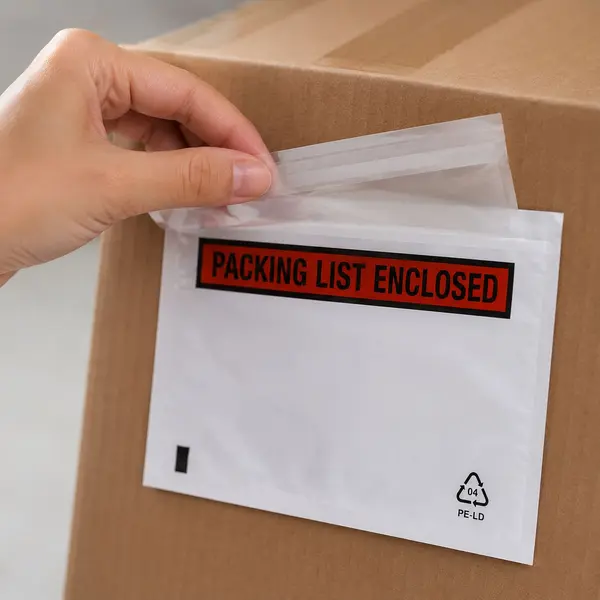
Soften the adhesive, peel slowly at a shallow angle, then clean off what is left. Yanking the pouch straight up is what tears the board and leaves residue.
Here are the 4 steps I would give anyone on a returns bench:
- Warm the pouch. Move a hairdryer on medium heat across it from about a hand’s width away. The heat softens the adhesive so it releases in one piece. Warm a section, peel that section, then move on.
- Peel slowly at a low angle. Pull the pouch back over itself, almost parallel to the surface, instead of lifting straight up. A low angle keeps the force at the bond line, so the adhesive comes away whole.
- Lift any leftover glue with something mild. Rub in a little vegetable or olive oil and leave it a minute, then wipe. Isopropyl alcohol on a cloth handles smaller marks. White vinegar or a citrus-based remover deals with stubborn spots.
- Wipe and dry. Take off any oily film with a barely damp cloth, and let the surface dry before you reuse or stack the box.
Always spot-test on a corner first. Cardboard drinks liquid like a sponge, so dab and do not soak. On a printed or coated carton, solvents can lift the ink too.
A pouch that was applied well in the first place is also easier to remove later. The steps are in how to apply a packing list envelope.
Does adhesive residue affect box reuse and recycling?
It affects reuse more than recycling.
For recycling, small amounts of adhesive and the pouch film are mostly screened out when the board is pulped, so a box with a little residue is still recyclable. Heavy residue is a different matter. It forms “stickies” that spoil the recycled fibre, leave dark spots and weak points in new paper, and gum up mill machinery.
For reuse, residue is the bigger nuisance:
- It looks untidy on an outgoing carton, and it collects dust.
- Tearing a permanent pouch off can lift the top liner and weaken the box.
- The next pouch cannot bond properly to residue and torn fibres.
The rule of the trade I would pass on: if a box will be used twice, buy the adhesive for the second trip, not the first. For cartons, totes or crates that are reused or returned, specify a removable packing list envelope from the start. It protects the surface and saves someone the job of scraping every box.
We make both permanent and removable grades at our factory in Jaipur, where we have made packaging since 1997. We export to 20+ countries, so we see pouches used once and thrown away, and pouches that go round the same warehouse loop for months. We can help you pick the grade that fits your loop.
The formats and adhesive options are on our products page. If you want your own legend on a reusable tote pouch, see custom print.
Reusing your cartons and tired of scraping glue? Tell us your surface and how the box is reused, and we will suggest a removable or resealable grade and send samples to try.
Frequently asked questions
Why does a packing list envelope leave adhesive residue when removed?
Because the glue grips the carton harder than it holds itself together. Most shipping pouches use a permanent pressure-sensitive adhesive that flows into the texture of the board, so when you pull, the adhesive layer splits and part of it stays behind. Heat, time and high-tack grades make it worse.
How do I remove a packing list envelope without leaving residue?
Warm it first with a hairdryer, then peel slowly at a low angle, pulling the pouch back on itself. For any glue left behind, a dab of vegetable oil, isopropyl alcohol or a citrus adhesive remover usually lifts it. Spot-test on a corner first.
What is a removable packing list envelope?
It is a pouch with a removable, or peelable, adhesive instead of a permanent one. The glue is made to hold together more strongly than it grips the surface, so it lifts off in one piece. Choose it when cartons or totes are reused or returned.
Does adhesive residue stop a cardboard box from being recycled?
Small amounts usually do not, because adhesive and film are largely screened out at the pulping stage. Heavy residue is different. It forms 'stickies' that spoil recycled fibre and gum up mill machinery. For reuse, residue is a bigger problem than for recycling.
Will warming the pouch with a hairdryer help it peel off cleanly?
Yes, it helps a lot. Medium heat from about a hand's width away softens the adhesive so it releases in one piece instead of splitting. Warm one section, peel it, then move on, and do not overheat thin film or printed board.
What removes leftover adhesive without damaging the box?
Start mild. Rub in a little vegetable or olive oil, leave it a minute and wipe. Isopropyl alcohol on a cloth handles small marks, and white vinegar or a citrus remover handles stubborn ones. Dab, do not soak, because cardboard drinks liquid.
Which adhesive should I order if I need pouches that peel off cleanly?
Ask for a removable or resealable grade, not a permanent or high-tack one. It suits reusable cartons, totes, returns and rental crates. Tell us your surface and how the box is reused, and we will suggest a grade and send samples.
Sourcing these in volume?
We make packing list envelopes in Jaipur for importers and distributors. Factory-direct, private label welcome.