
Which Documents Go on the Outside for Customs?
Which documents go on the outside for customs?
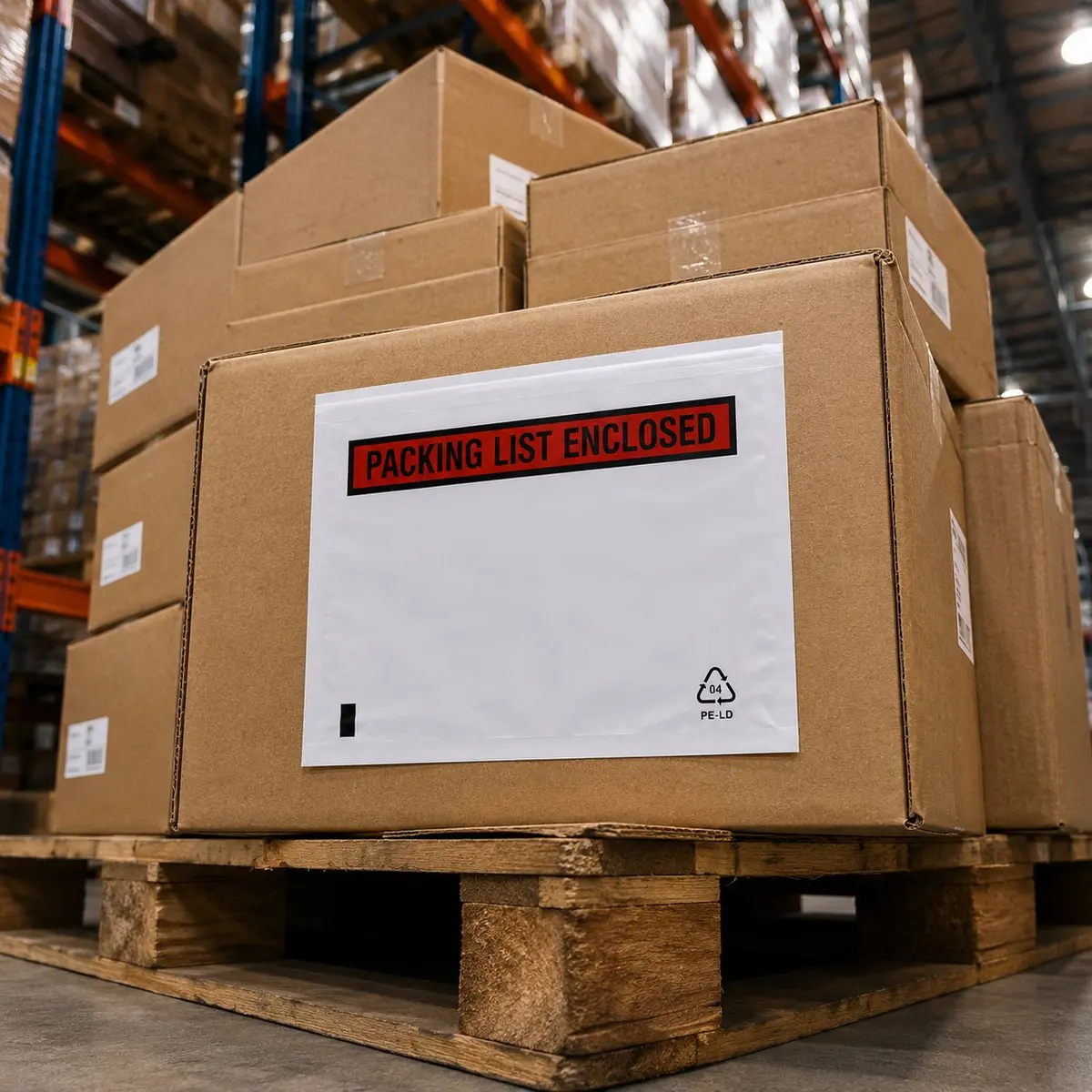
The commercial invoice and packing list go on the outside of the parcel in a clear, visible documents-enclosed pouch. A certificate of origin (COO) joins them whenever the destination requires one.
Together these form the clearance set. It is the paperwork customs reads first to release the shipment, and it must be readable without opening the box. That is why it rides in a clear pouch on an outer face and not buried inside the carton.
Everything else can stay inside. That includes the recipient’s copy, delivery notes, warranty cards and return slips.
That is the short answer.
Most exporters get the list of documents right.
What many get wrong is which ones face outward, and I would spend a minute on that decision because it decides whether an officer can check the parcel in place or has to cut it open, re-tape it and move on to the next one.
What does each outside document do?
Customs reads the outside documents against each other.
So each one has its own job.
- The commercial invoice declares the seller, buyer, goods, value and currency. It is the basis for duty and the first thing an officer checks.
- The packing list confirms quantities, weights, dimensions and carton count. It lets officers check that the physical shipment matches the invoice without unpacking.
- The certificate of origin states where the goods were made, for duty and preferential trade. It is needed only for some destinations and goods, or when a buyer or letter of credit asks for it.
Kept together in one pouch, these let customs cross-check value, quantity and origin in one look.
That is what moves a parcel through faster.
Which documents stay inside the box?
Anything meant for the recipient, not for customs, can stay inside.
Customs does not need it. Adding it only clutters the clearance set if you add it to the outside pouch.
| Document | Outside (clear pouch) | Inside the box | Why |
|---|---|---|---|
| Commercial invoice | Yes, usually 2 copies | 1 recipient copy | Customs reads value first, recipient keeps a copy |
| Packing list | Yes | Optional copy | Lets officers check contents without unpacking |
| Certificate of origin | Yes, when required | No | Cross-checked against the invoice for origin |
| Delivery or dispatch note | No | Yes | For the consignee, not customs |
| Warranty card, return slip | No | Yes | After-sale paperwork, no clearance role |
| Marketing inserts | No | Yes | Never part of the clearance set |
A common carrier convention is 3 copies of the commercial invoice.
Two go in the outside pouch, since the export and destination authorities may each keep one. One goes inside for the recipient.
Officers often take a copy during inspection. I would always keep a spare in the pouch, because 1 missing sheet can stall a whole clearance.
Why must the documents be visible on the outside?
Because officers can then read and verify the paperwork in place, without slitting the box open. They confirm value, quantity and origin against the shipment and release it quickly.
If the only copy is inside, the box has to be opened.
Clearance slows down, and the papers risk getting separated from the goods.
A good outside pouch also keeps the set dry and whole on long sea or air routes. It holds the pages in order from origin to border. It stays stuck to the right parcel instead of floating loose in a pile of packaging.
For multi-page sets, size the pouch so the documents sit flat and unfolded.
A folded invoice is harder to read. We would rather sell you a slightly bigger pouch than see your invoice folded 3 times.
Where on the carton should the pouch go?
Put the clear pouch on the largest flat face that is easy to see. Of the 6 faces on a carton, that is usually the top or a long side. The top sheet should face outward, and the pouch should sit clear of the shipping label.
- Pick a face away from edges, seams and strapping, where the pouch could be crushed or torn.
- Do not cover the barcodes on the shipping label. A pouch over the tracking barcode blocks scanners.
- Press the full adhesive area onto a clean, dry surface so it does not lift in transit.
- Make sure the commercial invoice faces out through the film, so it is the first thing an officer sees.
The pouch goes beside the label, never on top of it. Both need to be visible and scannable at the same time.
I think this is the easiest mistake to avoid. It is also a common one.
How should the pouch be labelled?
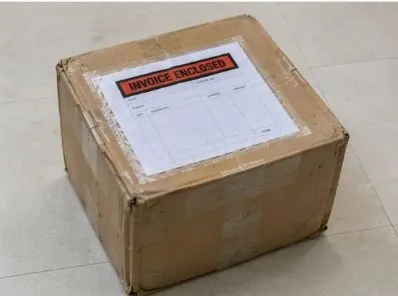
Use a pouch with an “Invoice Enclosed” or “Documents Enclosed” legend, so everyone recognises it as clearance paperwork.
The printed legend does real work, and I would not skip it on export cartons. It flags the pouch as official documentation, not a label or a leaflet, so it gets checked instead of thrown away. For parcels crossing language borders, a legend in more than one language helps every handler along the route. If you want your own wording, we can print it through custom print.
A simple rule for what goes where
When you are unsure, ask one question.
Does customs need this to clear the shipment?
If yes, it goes outside. We keep it that simple.
The clear pouch holds the commercial invoice, the packing list and the certificate of origin. If the answer is no, the document goes inside the box. That means the recipient copy, delivery note, warranty card and inserts.
My advice is to standardise on one clear pouch big enough for the full set, often A4 or C4 for export. Then you never have to fold or split documents when a destination asks for an extra certificate. You simply add or remove a sheet. This is why I like A4 and C4 formats for export.
We have made packaging in Jaipur since 1997, i.e. for close to 30 years. Document-enclosed wallets have been a long-running export product of ours to the UK and Australia, and today we ship to 20+ countries. You can see the range on our products page.
Quick checklist before you ship
- Commercial invoice and packing list in the outside pouch on every customs parcel.
- Certificate of origin added to the same pouch when the destination needs it.
- Recipient copy of the invoice or packing list inside the box.
- Pouch on a flat, visible outer face, top sheet facing out, clear of the barcodes.
- An “Invoice Enclosed” or “Documents Enclosed” legend on the pouch.
- A pouch big enough for the set to sit flat and unfolded.
For the full list of what to include on a cross-border shipment, see which documents to enclose for international shipments. To keep clearance fast, see avoiding customs delays with visible paperwork.
Not sure which pouch size or legend fits your export sets? Send us your document set and destinations, and we will suggest a pouch and send samples to try.
Frequently asked questions
Which documents go on the outside of a parcel for customs?
The commercial invoice and packing list, in a clear documents-enclosed pouch. Add a certificate of origin when the destination asks for one. This is the set customs reads first, so officers must be able to see it without opening the box.
Does the commercial invoice have to be on the outside of the package?
The clearance copies should be, yes. Customs and carriers expect to read the invoice without unpacking, so it travels in a visible outer pouch. A copy for the recipient can stay inside the box.
How many copies of the commercial invoice do I attach outside?
A common convention is three copies in total. Two go in the outside pouch for export and destination customs, and one goes inside for the recipient. Carriers differ, so confirm the count with yours.
Does the certificate of origin go inside or outside?
Outside, with the invoice and packing list, whenever it is required. Customs cross-checks origin against value and quantity, so it belongs in the same pouch as the rest of the clearance set.
What documents can stay inside the box?
Anything meant for the recipient rather than customs. That covers the recipient's invoice or packing list copy, delivery notes, warranty cards, return slips and marketing inserts.
Where on the carton should the documents pouch go?
On the largest flat face you can see easily, usually the top or a long side. Keep it away from edges and seams and clear of the shipping label barcodes, with the invoice facing out.
What does the 'Invoice Enclosed' legend do?
It tells handlers and customs that the pouch holds official clearance papers, not a label or a leaflet. So the documents get checked instead of being missed or thrown away with the packaging.
Sourcing these in volume?
We make packing list envelopes in Jaipur for importers and distributors. Factory-direct, private label welcome.