
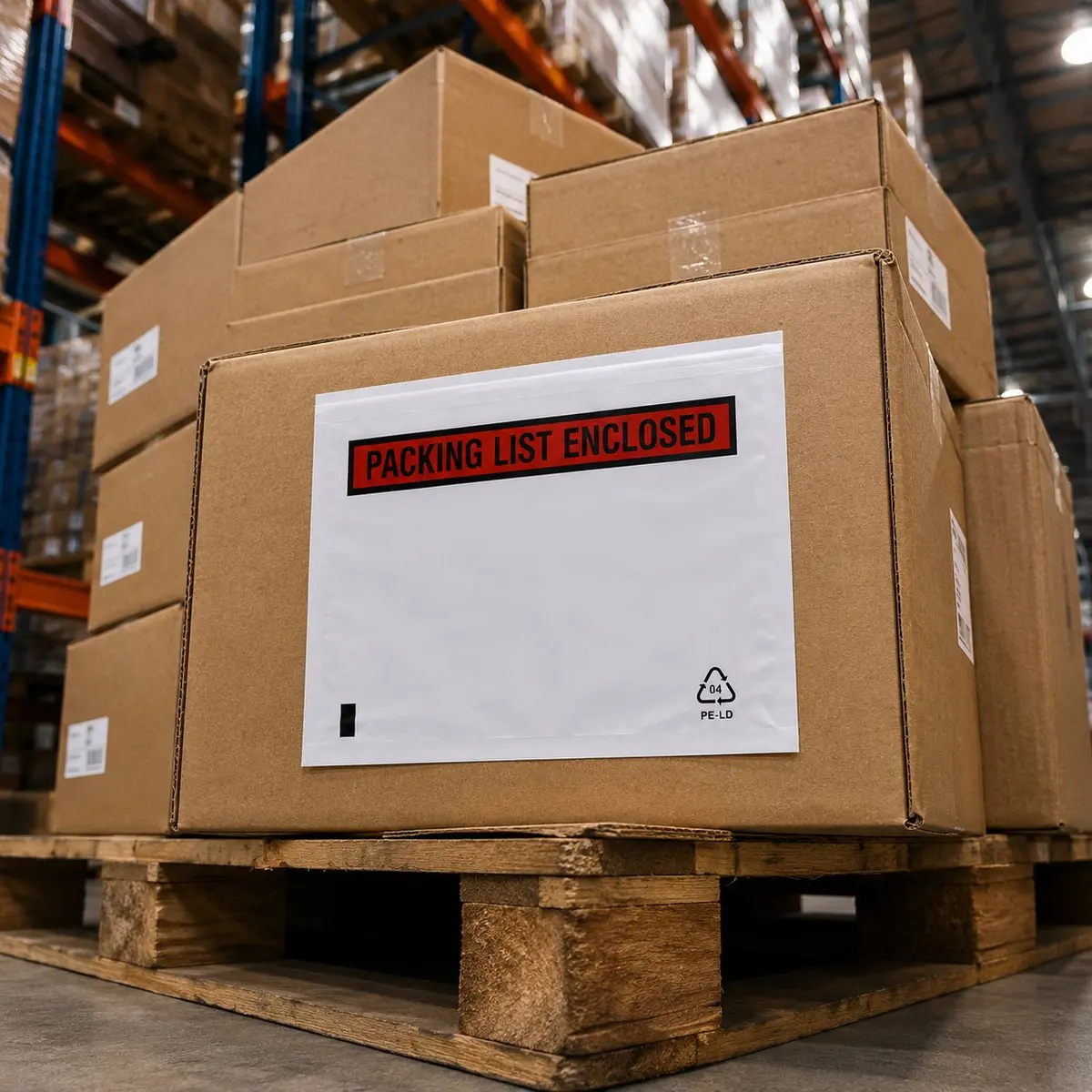
Air Waybill Pouches for Air Freight: Sizes, Film and Placement
In air freight, the paper stuck on the outside of the cargo can hold up the whole shipment. The air waybill (AWB) is the contract that moves the goods. An air waybill pouch is the clear, self-adhesive wallet that keeps it, and the house documents with it, readable on the carton or ULD.
I will cover what an AWB does, what goes in the pouch, which size to buy and which film survives rough handling. We have made packaging in Jaipur since 1997, and document pouches for export cartons are one of our oldest lines.
What is an air waybill, and why does it ride on the carton?
The air waybill is the single most important document in air freight. It is a non-negotiable contract of carriage between shipper and carrier, and it has to travel with the cargo.
It does 4 jobs at once. It is the receipt that says the airline took the goods. It is the contract of carriage. It records weight, pieces, declared value and destination. It is also the tracking reference from end to end.
Being non-negotiable, it does not pass ownership of the goods. It only governs the transport. When it is readable on the outside of the freight, a ground handler or customs officer can process the shipment in seconds instead of holding it aside.
What is an air waybill pouch?
An air waybill pouch (also called an AWB document pouch or air freight document wallet) is a transparent, self-adhesive envelope stuck on the outside of a carton or unit load device. It does three things:
- It holds the AWB and house documents flat against the freight.
- It shows them through a clear face, so nobody has to open the cargo.
- It protects them from rain, oil and scuffing on conveyors.
On a parcel, the AWB usually sits over the pouch flap. On a box, it goes on the top panel. On a consolidated ULD, the documents travel in a customs pouch presented to the carrier. The principle does not change: a person must be able to read the papers without opening the freight.
What documents go in an air waybill pouch?
The pouch carries the air freight document set, i.e. the waybill plus the commercial papers an officer or agent must see. Which ones sit inside and which sit outside depends on where each paper is needed.
| Document | Purpose | Where it travels |
|---|---|---|
| Air waybill (MAWB / HAWB) | Contract of carriage, tracking | On or with the cargo |
| House air waybill (HAWB) | Names the real consignee, used for clearance | Often outside the pouch at origin |
| Commercial invoice | Value, currency, parties for customs | In the pouch |
| Packing list | Pieces, weights, dimensions, contents | In the pouch |
| Certificate of origin | Country of origin for tariffs | Where required |
| Dangerous goods declaration | Regulatory compliance | Often outside the pouch |
The usual rule of the trade is simple. Papers needed at origin go outside, and papers needed at destination go sealed inside. Practice varies by carrier and lane, so confirm with your forwarder. For the wider set used on export cartons, see our guide to packing list envelopes for exporters.
MAWB vs HAWB: which goes in the pouch?
Both can, and I would not overthink it.
The airline issues a master air waybill (MAWB) to the forwarder for the whole consolidation. The forwarder issues a house air waybill (HAWB) to each shipper, and it names the real consignee.
One MAWB can sit over many HAWBs. Customs usually clears against the HAWB because it identifies the importer of record. This is why the house documents are what ground staff reach for first, and a well-sized pouch keeps the right one facing out during fast handling.
What film and adhesive survive air freight handling?
You need a heavy-ply film that resists water and oil, and a high-tack adhesive that grabs corrugate, shrink wrap and ULD surfaces on first contact.
Air freight stresses a pouch differently from road or sea:
- Handling is fast and mechanised. Conveyors and sorters give the adhesive very little time to settle, so first-contact tack matters.
- Pressure and temperature change during the flight, and a cheap film curls at the edges.
- The pouch gets touched at origin, in transit, at customs and at delivery.
A peeled corner is how an air waybill goes missing.
A missing AWB stops a shipment. The face must also stay clear, because a film that clouds or yellows makes the papers hard to read on arrival.
This is the one place I would not save money. A standard pouch is fine for a parcel going across town, but on a busy air lane I would pay for high-tack every time. The grip levels are compared in high-tack vs standard adhesive, and moisture is covered in are packing list envelopes waterproof.
What size air waybill pouch should I choose?
Match the pouch to your document set folded once, then stick to one or two sizes.
| Pouch size | Best for |
|---|---|
| A6 / DL | Single folded AWB on a parcel or small box |
| A5 | AWB plus a folded invoice and packing list |
| A4 | Full unfolded set: AWB, commercial invoice, packing list |
| Full-face clear | When the whole set must be readable from outside |
Most air shipments are well served by A5 or A4 pouches, with smaller formats for express parcels. Buyers often stock too many sizes, and I understand why. We would still suggest 2 for most lanes. Keeping it to two means every carton and ULD gets documented without someone hunting for the right wallet. You can see the formats on our products page, and a printed “Documents Enclosed” face is possible through custom print.
Do air waybill pouches still matter with e-AWB?
Yes. Most air waybills are now electronic, but many lanes still need paper to travel with the goods. House waybills, dangerous goods declarations, certificates and invoices are the usual ones.
The electronic record does not ride on the carton. The paper does.
We make these pouches at our factory in Jaitpura, Jaipur, and export them to 20+ countries. We hold ISO 9001, CE and RoHS certification.
Moving freight by air? Send us your document set and your lanes, and we will suggest sizes and a high-tack grade, with samples to try on your cartons.
Frequently asked questions
What is an air waybill (AWB)?
It is the main document of an air shipment. The air waybill is a non-negotiable contract of carriage between the shipper and the airline, and it also works as a receipt, a record of weight, pieces and destination, and a tracking number. Because it is non-negotiable, it does not give title to the goods.
What is an air waybill pouch used for?
It carries the AWB and its supporting papers on the outside of a carton or ULD. The clear face lets ground handlers and customs read the documents without opening the freight, and the film keeps them dry and clean from acceptance to delivery.
Where should the air waybill be placed on a shipment?
Outside the cargo, where a handler can read it without opening anything. On a parcel it usually sits over the pouch flap, on a box it goes on the top panel, and on a consolidated ULD the papers travel in a customs pouch handed to the carrier.
What is the difference between a master air waybill and a house air waybill?
The airline issues the master air waybill (MAWB) to the forwarder, and it covers the whole consolidation. The forwarder issues a house air waybill (HAWB) to each shipper, naming the real consignee. One MAWB can cover many HAWBs, and customs usually clears against the HAWB.
Should documents go inside or outside the air waybill pouch?
That depends on where each paper is needed. Papers used at origin are often placed outside, and papers needed at destination go sealed inside. Carriers and lanes differ, so check with your freight forwarder before you tender the cargo.
What size air waybill pouch do I need?
Size the pouch to your document set folded once. An A6 or DL pouch holds a single folded AWB on a parcel. A5 or A4 carries the AWB with the commercial invoice and packing list. Most shippers do fine with two sizes.
Do air waybill pouches still matter with e-AWB?
Yes, they do. Most air waybills are now electronic, but many lanes still need paper to travel with the cargo, such as house waybills, dangerous goods declarations, certificates and invoices. The pouch carries those papers next to the electronic record.
Sourcing these in volume?
We make packing list envelopes in Jaipur for importers and distributors. Factory-direct, private label welcome.