
Dangerous Goods Document Pouches: Keep the Declaration Readable
On a normal parcel, a lost packing slip is a nuisance. On a dangerous goods shipment, the paperwork tells handlers and emergency responders what they are dealing with.
That is why the pouch matters more here. The stakes are higher.
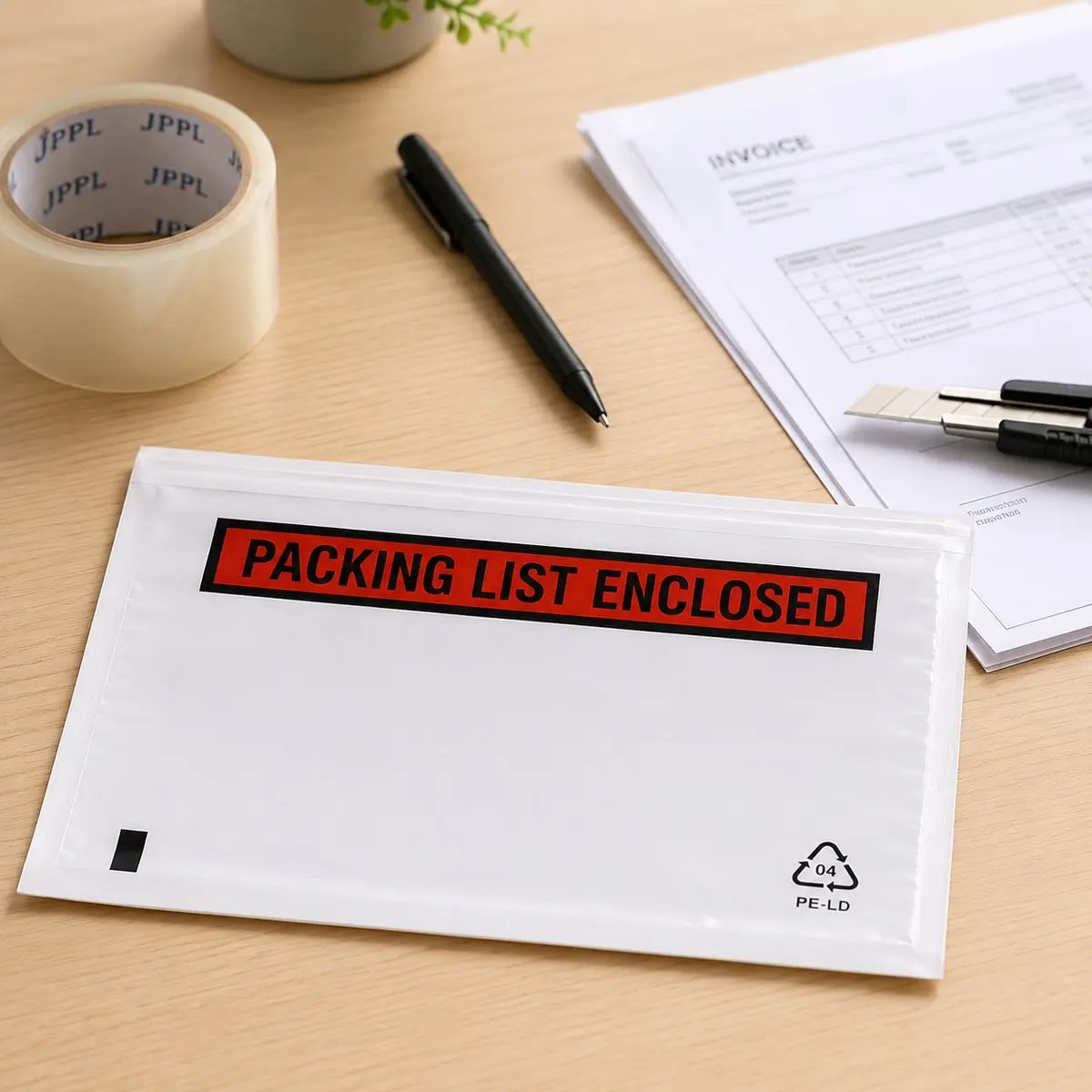
A dangerous goods document pouch holds the declaration and, where required, the safety data sheet (SDS). It keeps them visible, attached and protected, so the right papers stay with the right package and can be read at a glance.
I should be clear about one thing first. I am a packaging maker, not a dangerous goods adviser.
This is general guidance only. Which documents you need, what they say and where they go is set by the regulations for your mode of transport and by your carrier. Always confirm with them. They have the final word.
What is a dangerous-goods documentation pouch?
It is a document wallet whose job is to keep hazmat paperwork readable and in place. It sits on the package, or travels with the load. In build it is close to the export document wallets we make, with a clear face and an adhesive back.
A pouch does not make a shipment compliant on its own.
It looks after documents only. It does not replace UN-specification packaging, hazard class labels, the UN number, the proper shipping name or any other required mark. It is one part of a correctly prepared shipment, the part that protects and presents the paperwork.
Why must DG paperwork stay visible and protected?
Because the documents only help if people can find and read them.
Handling, inspection and emergency response all depend on papers that are attached, uncovered and legible.
A good pouch helps in four ways.
- A clear window lets carriers and inspectors read the declaration without opening anything, so the package is handled less.
- A folded declaration inside a strong adhesive pouch is far less likely to fall off or get separated from the goods.
- A water-resistant film keeps the paperwork readable through rain, ports, cold stores and long road legs.
- Keeping the declaration physically on its own package cuts the risk of papers being matched to the wrong load.
Placement is where most mistakes happen. It is common practice to put the folded declaration in a clear adhesive pouch on the outside of the package, placed so it covers no label or mark. Whether an SDS or written emergency information travels with it depends on the mode and route.
What must the pouch never cover?
It must never cover a required hazard label or marking.
This is the one rule that decides where the pouch goes.
| Element | Role | Pouch interaction |
|---|---|---|
| Hazard class label(s) | Shows the hazard at a glance | Must stay fully visible, never cover |
| UN number and proper shipping name | Identifies the substance | Must stay fully visible, never cover |
| Handling and orientation marks | Directs safe handling | Must stay fully visible, never cover |
| Declaration and SDS | Details the shipment for carriers and responders | Goes inside the pouch, kept legible |
Here is the rule of the trade I would follow. Plan the package face first. Labels get their space before anything else is stuck on. The pouch goes in whatever clear area is left.
If no clear area is left, the box is too small for its paperwork. I would use a larger carton, or drop from an A5 pouch to an A6, rather than overlap a label by even 1 cm.
That is not a place to save space.
What makes a good hazmat document wallet?
It should be durable, clearly printed, the right size and easy to read through. Five points matter.
- Durable, water-resistant film, so the declaration and SDS survive weather and rough handling.
- A clear window, so the declaration can be read and scanned without opening the pouch.
- A closure and adhesive that hold for the whole trip. Our note on how packing list envelope adhesive works explains the basics.
- A clear printed legend such as “Dangerous Goods Documents Enclosed” or “Documents Enclosed”. Printing in more than one language helps on export lanes.
- The right size, big enough for a folded declaration plus any SDS without forcing or creasing the sheets. An SDS can run to many A4 pages, so size up for it. Our guide to packing list envelope size for customs sets covers thicker bundles.
I would pick a printed pouch over a plain generic bag for this job, because the legend makes its purpose obvious to every handler in the chain. A plain bag can get mistaken for packing waste.
A printed one rarely does.
We can print your own wording, in your language and size, through custom print. We make sizes from A7 to A4, so we can usually match the pouch to the paperwork you actually carry.
How do these differ from a standard packing list envelope?
The product is similar, but the stakes are higher and placement needs more care. A standard packing list envelope and a DG document pouch are both documents-enclosed wallets. The difference is how you specify and use them.
On a normal parcel the slip is a convenience. On a hazmat package the paperwork is central to safe handling and inspection. So the pouch must be placed carefully, away from every label. The long, harsh transport legs make water resistance and a strong closure worth more. And clear printing, sometimes in two languages, helps a longer chain of handlers spot the papers.
Think of it like a dabba going on a long train journey instead of a short walk to school. It is the same tiffin box, but you check the lid twice.
We have made packaging in Jaipur since 1997 and export to 20+ countries. Document-enclosed wallets have been a long-running export product for us.
One last point, and I mean it. The pouch supports a compliant shipment, but the rules that apply to your goods are what define one. You can see our range on the products page.
Shipping hazmat and need pouches that stay attached and readable? Tell us your document size, route and the wording you need, and we will send printed samples to try.
Frequently asked questions
What is a dangerous goods document pouch?
It is a document wallet fixed to the outside of a hazmat package, or carried with the load, that holds papers such as the dangerous goods declaration and any safety data sheet. Its job is to keep them visible, attached and protected so carriers, handlers and inspectors can read them quickly. It carries documents only and does not replace any required mark or label.
Where should the dangerous goods declaration be placed on a package?
Common practice is to fold the declaration into a clear adhesive pouch on the outside of the package, on an open area. The pouch must not cover any hazard label, marking or handling mark. The exact placement rules come from the regulations for your mode of transport and from your carrier, so confirm with them.
Does a dangerous goods document pouch need to be transparent?
A clear pouch is the usual choice, because handlers and inspectors can read the declaration without opening it. That means faster checks and less handling of a sensitive package. Whether it is mandatory depends on the rules and carrier that govern your shipment.
Should the safety data sheet (SDS) go in the document pouch?
That depends on the mode, the route and the carrier. Some shipments are expected to carry written emergency information or an SDS with the transport documents, and a pouch keeps it attached and legible. Check with the applicable regulations and your carrier whether it is needed, and where.
Can a document pouch cover the hazard labels or markings?
No, never. Hazard labels, the UN number, the proper shipping name and other required marks must stay fully visible, not hidden under tape, stickers or pouches. Put the pouch on a clear area of the package.
Do dangerous goods document pouches need to be weatherproof?
It is a practical need more than a rule. Hazmat freight moves through rain, ports, cold stores and long road legs, and a smeared declaration slows inspection. A durable, water-resistant pouch keeps the paperwork readable from start to end.
Is a document pouch a replacement for proper hazmat packaging and labelling?
No. The pouch only looks after the paperwork. UN-specification packaging, hazard labels, marks, declarations and procedures are all still required, as set by the regulations that apply to your goods.
Sourcing these in volume?
We make packing list envelopes in Jaipur for importers and distributors. Factory-direct, private label welcome.