
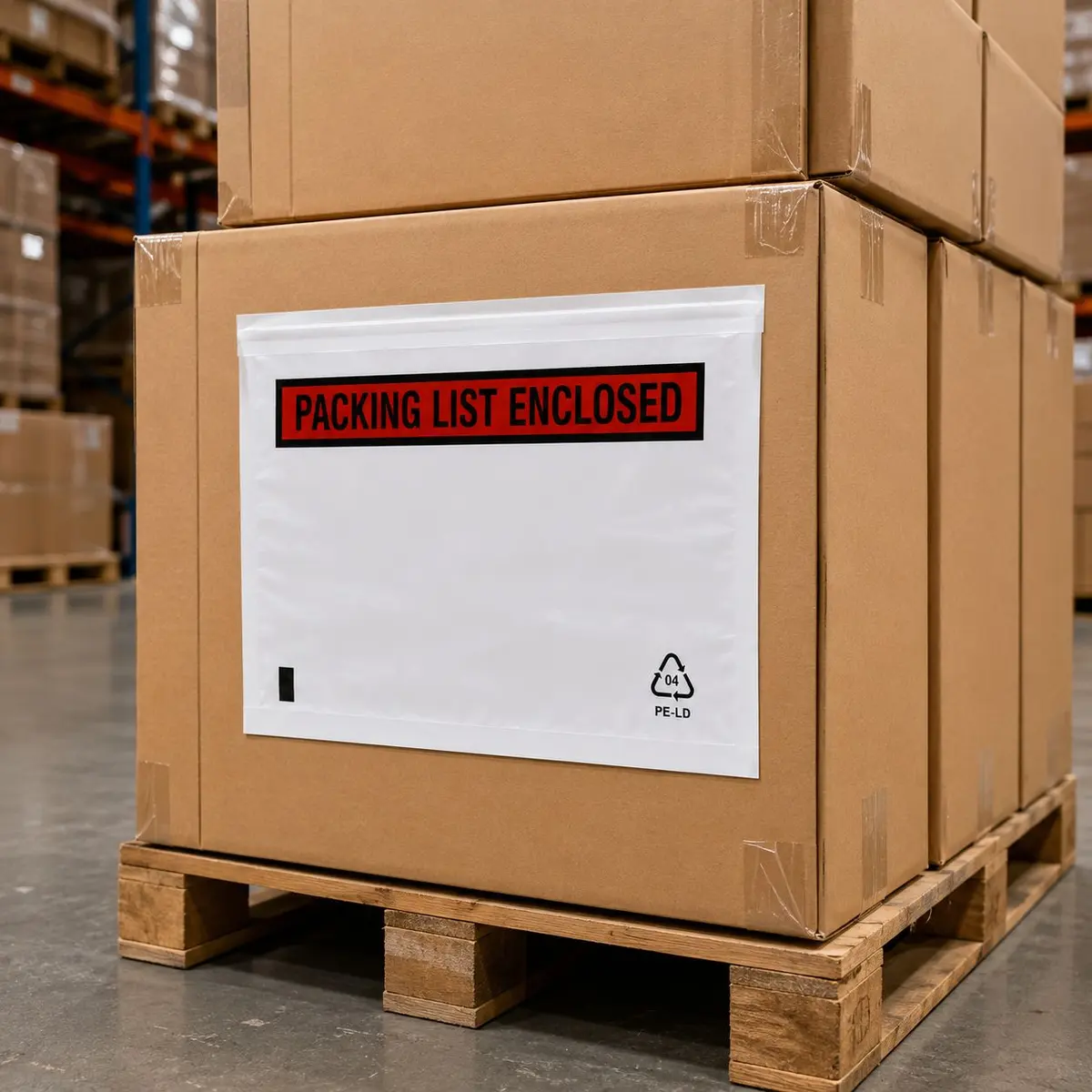
Packing List Envelopes for Food and Beverage Distribution
Food and beverage paperwork has a hard life.
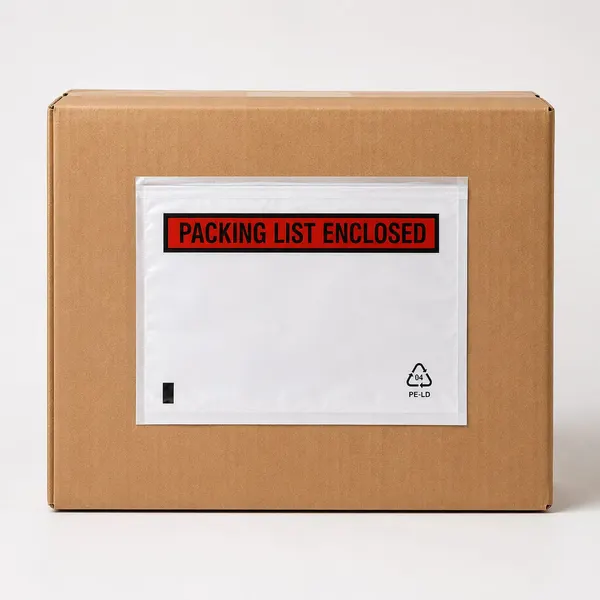
A chilled carton sweats the moment it reaches a warm dock. Freezer cold makes adhesives brittle. Goods-in areas are humid, and an FMCG line does not slow down for a loose piece of paper. A packing list envelope, the clear self-adhesive pouch on the outside of the load, keeps the delivery note dry, readable and with the goods through all of it.
I will cover 4 things: cold-store adhesion, water, fast lines, and the documents a retail DC expects to find. Where I have a firm view, I will say so.
Why do packing list envelopes matter in food and beverage distribution?
They keep the delivery note and the batch paperwork dry and visible on the outside of the load. That lets goods-in book chilled and ambient stock into a retail DC without opening the carton or pallet.
Food supply chains also run on traceability. That means tracing product one step forward to the customer and one step back to the supplier. The delivery note and its lot or batch references are part of that chain, and they only help if they arrive in one piece. An FMCG packing slip pouch protects exactly the papers that goods-in staff scan and file.
Do the adhesives work in cold stores and freezers?
Only if you specify the right adhesive. A standard pressure-sensitive glue stiffens and loses tack in the cold, so a pouch put on warm and then chilled can lift or fall off.
This is the most common failure in chilled and frozen distribution, and it has two separate causes:
- The adhesive goes stiff. As the temperature drops, it loses the softness it needs to hold a bond. The pouch lifts at the edges first, then drops.
- Condensation blocks the bond. When a cold carton meets warm, humid air, a thin film of water forms on the surface almost at once. Stick a pouch to a damp or frosted carton and it will not hold, whatever glue you use.
Think of butter straight from the fridge. It will not spread on bread, however hard you press. A standard adhesive in a freezer behaves the same way.
So the fix has 2 parts, and I would not skip either. Choose a cold-store document wallet with a cold-temperature or high-tack adhesive. Then apply it to a clean, dry, frost-free carton before the carton is chilled, not after. The grades are compared in high-tack vs standard adhesive.
| Condition | What happens to a standard pouch | What to specify |
|---|---|---|
| Cold store or chiller (0 to 8 °C) | Tack drops, edges may lift | Cold-temperature adhesive, applied before chilling |
| Freezer (−18 °C and below) | Adhesive goes brittle, pouch can drop | Freezer-grade or high-tack adhesive |
| Cold-to-warm transfer | Condensation stops a re-stick | Apply dry, the poly film sheds the run-off |
| Humid dock or wash-down area | A paper wallet pulps, poly is fine | Poly film, sealed edges |
Will condensation and humidity ruin the documents inside?
No. Polyethylene film does not absorb water, so condensation and humidity run off the outside while the document stays dry. This is the main reason I would choose poly over paper for any temperature-controlled route.
When a carton moves from a cold store to a warm dock, every surface gets wet. A paper documents-enclosed wallet softens and pulps once it is soaked. A poly pouch sheds the water and keeps the delivery note legible and the barcodes scannable, swing after swing.
The sealed edges and the pressed-down adhesive lip keep the water out. So press the full border flat, with no lifted corners. More on this in are packing list envelopes waterproof.
A quick word on food contact. We make these pouches for the outer transit packaging, never for a surface that touches the food. They carry documents outside the load, so they sit outside food-contact rules.
How do they keep up with high-throughput FMCG lines?
A peel-and-seal pouch in one standard size lets pickers move fast, with no loose paper, tape or staples. On a busy line, every extra second per case adds up across a shift.
Here is what helps most:
- One motion to apply. Peel, place, press. No tape gun, no stapler, no separate label.
- One size per packaging type. We would suggest A5 or A4-flat (an A4 pouch is around 328 x 230 mm) for pallet and case paperwork that has to scan cleanly. DL takes an A4 delivery note folded in three for smaller cases and totes.
- Barcodes on a single panel. If a code never sits across a fold, it reads first time at goods-in.
- Paperwork sealed to the right load. When the note travels sealed to its own carton, it cannot drift onto the wrong pallet.
The rule of the trade I would pass on is simple: standardise before you speed up.
A line with 3 pouch sizes mixed together is slower than a line with one, and we can help you pick that one.
What documents do retail DCs expect?
Many retail and grocery DCs want the delivery note and proof-of-delivery paperwork on the outside of the pallet or carton. Then goods-in can scan and book the load without breaking it down. A clear food distribution document pouch is the usual way to do it.
A typical food and beverage delivery pouch carries:
- The delivery note or packing slip, so goods-in can check it against the booking.
- Proof of delivery, signed or scanned at receipt.
- Lot or batch references, which are the traceability link.
- Temperature and use-by details for chilled and frozen loads.
- Returns or credit notes, for rejected or short-dated stock.
A printed “delivery documents enclosed” legend makes the pouch easy to spot on the load, in one language or several for export. You can print a handling note like “keep refrigerated” next to your brand through our custom print service.
What is the quick checklist for food and beverage?
If you only keep one list, keep this one:
- Use poly, not paper, wherever there is condensation, wash-down or humidity.
- Specify a cold-grade or high-tack adhesive for chillers and freezers.
- Apply to a clean, dry, frost-free carton before chilling. Never stick it to a damp or frosted surface.
- Press the full adhesive border flat, so no edge can lift in the cold.
- Keep one size per packaging type.
- Keep barcodes on a single panel.
- Print the documents-enclosed legend so goods-in finds the paperwork at once.
I should be honest about one limit. A cold-grade adhesive costs more than a standard one, and on an ambient-only route you do not need it. We make both grades at our factory in Jaipur, where we have made packaging since 1997. We export to 20+ countries, from cold climates to hot, humid ports, and we would rather tell you which grade your route really needs than sell you the dearer one. The formats are on our products page.
Shipping chilled, frozen or ambient food? Tell us your temperatures, carton type and document size, and we will suggest the adhesive grade and send samples to try.
Frequently asked questions
Do packing list envelope adhesives work in cold stores and freezers?
Only if you pick the right grade. A standard pressure-sensitive adhesive stiffens and loses tack as it gets colder, so a pouch applied warm and then chilled can lift. Specify a cold-temperature or high-tack adhesive and apply it to a clean, dry, frost-free carton before chilling.
Will condensation ruin the documents inside a food distribution pouch?
No. Polyethylene film does not absorb water, so condensation runs off the outside while the delivery note stays dry. Press the full adhesive border flat, because a lifted edge is the one way moisture gets in.
Why do labels and pouches fall off in cold storage?
There are two reasons. The adhesive goes stiff in the cold and loses grip, and condensation leaves a thin film of water on the carton that stops the bond forming at all. A cold-grade adhesive, applied to a dry surface before chilling, fixes both.
Are poly packing list envelopes better than paper for food distribution?
Yes, clearly, in chilled and humid areas. Film does not swell or pulp when it meets condensation or wash-down spray, while a paper wallet softens once it is wet. For cold stores, chillers and humid docks, poly is the reliable choice.
What documents go in a food and beverage delivery pouch?
Usually the delivery note or packing slip, plus what the receiving DC asks for: proof of delivery, lot or batch references for traceability, temperature or use-by details, and sometimes a returns or credit note. Carrying them outside lets goods-in check the load without opening it.
Are these pouches safe to use on food packaging?
They go on the outer transit packaging, such as the carton, case, shrink-wrapped tray or pallet. They do not touch the food itself, so they sit outside food-contact rules while keeping the paperwork with the goods.
Can food distribution pouches be custom printed?
Yes. You can print your branding, a 'delivery documents enclosed' legend in one or more languages, or a handling note like 'keep refrigerated'. Contact us for print options and timelines.
Sourcing these in volume?
We make packing list envelopes in Jaipur for importers and distributors. Factory-direct, private label welcome.