
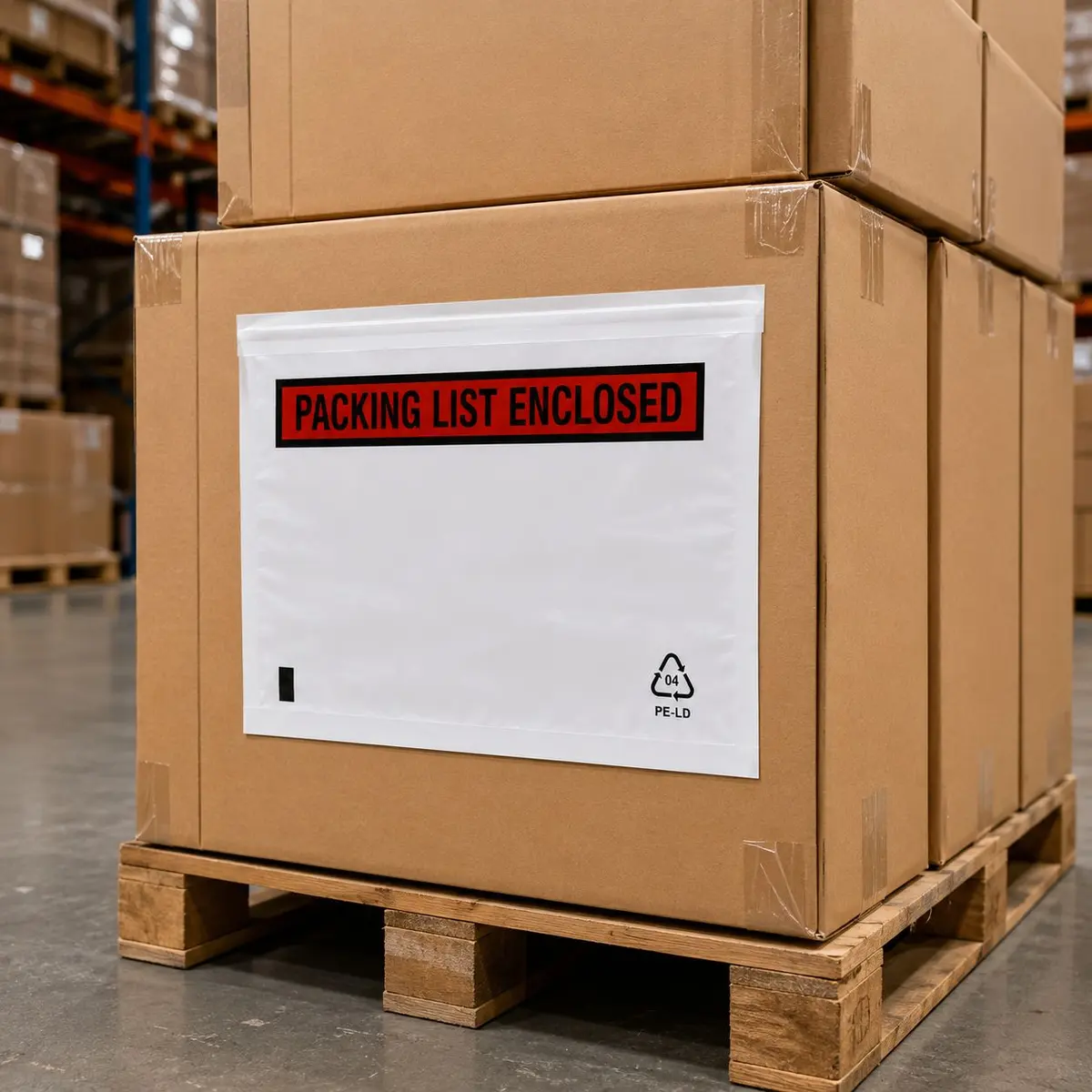
Storing Packing List Envelopes: Shelf Life and Conditions
How you store packing list envelopes decides whether they still stick when you need them.
Stored well, i.e. cool, dry, dark, sealed and rotated, self-adhesive pouches stay reliable for around a year and often longer. Stored badly, the adhesive weakens long before the film looks any different, and pouches lift off cartons in transit.
We make these pouches in Jaipur, where summer storerooms get very hot and the monsoon brings heavy humidity. So I take storage seriously, and I would ask you to do the same. This article covers shelf life, the conditions that matter and a simple stock routine.
Do packing list envelopes expire?
They have no hard expiry date, but they do have a working life. The clear film and the printed legend stay stable for years. The adhesive is the weak point, because it slowly loses tack as it ages.
I think of it like garam masala in an open jar. It looks the same for months, but it has lost its strength long before you notice.
Because the decline is slow and invisible, we would suggest you manage stock by age and spot-check older batches before a big run. Do not assume a pouch is fine just because the box is unopened.
What is the shelf life of a packing list envelope?
As a general guide, pouches kept in good conditions stay dependable for roughly 9 to 12 months, and often beyond.
I would be careful with anyone who promises a fixed duration, because real life depends on the adhesive grade and the storeroom. The same pouch that lasts well over a year in a stable, air-conditioned store can fade within a few hot, humid months in an uninsulated shed.
| Storage condition | Effect on shelf life |
|---|---|
| Cool, dry, dark, sealed | Longest, often well past a year |
| Warm but stable | Shorter, the adhesive softens and ages faster |
| Humid or damp | Shorter, liner release and bond suffer |
| Direct sunlight / UV | Much shorter, adhesive and film break down |
| Wide temperature swings | Shorter, repeated stress on adhesive and film |
If you need a firmer figure for one of our grades in your climate, tell us your conditions and we will advise on a realistic working life.
What temperature and humidity are best for storing document pouches?
Aim for a stable, room-temperature store. A sensible target is roughly 15 to 25°C, with relative humidity around 40 to 60%.
The most important word there is stable.
I really mean that. Big swings in temperature or humidity stress the adhesive and film more than any single reading does.
Each extreme causes its own problem, and our pouches travel to climates with all four:
- Too hot. The adhesive softens, can creep or ooze at the edges, and ages faster. Keep boxes away from heaters, machinery and closed lofts.
- Too cold. The adhesive stiffens and loses tack, and condensation forms when stock moves to a warm packing line. Let cold stock settle to room temperature before use.
- Too humid. Moisture can attack the join between adhesive and liner, and paper parts can warp. Keep pouches off damp concrete floors and away from dock doors.
- Too dry. Very low humidity can make a paper liner brittle.
Why does the adhesive degrade if pouches are stored badly?
The back of the pouch carries a pressure-sensitive adhesive. It is a permanently tacky layer that must stay soft enough to flow into the surface of a carton, and poor storage attacks exactly that.
Heat softens it so it creeps or oozes, and it speeds up ageing. Cold stiffens it so it cannot grab on contact. Humidity can break down the adhesive-to-liner join, which causes patchy release. UV light breaks the chemistry and can yellow the film or make it brittle.
The result is always the same.
The pouch loses tack, and the bond gets weaker. A badly stored pouch can look normal and still peel off in transit, which is exactly when a missing document causes a customs or delivery problem. For more on the bond, read how a packing list envelope’s adhesive works.
Why keep the release liner on until use?
Because the liner is the protection. It shields the adhesive from dust, fibres, moisture and fingerprints, and each of those weakens a bond for good.
A few handling rules follow from that, and I would put them on the storeroom wall:
- Leave pouches in their original sealed packaging until you need them. The box and inner wrap keep out light, dust and moisture.
- Open only what you will use that day. Do not open several boxes “to get ahead”.
- Store boxes flat and without heavy loads on top. Weight can press the adhesive into the liner over time, especially in heat.
- Keep the packing bench clean, because exposed adhesive collects dirt fast.
How do I rotate stock with FIFO?
Use FIFO, first-in first-out, so the oldest pouches always go first. Of everything in this article, this is the step we would ask you not to skip, because it is the simplest protection against shelf-life trouble and it costs nothing at all.
- Write the delivery date on every box as it arrives.
- Shelve new stock behind or under existing stock, so pickers reach the oldest first.
- Pick from the oldest box every time, never the newest one on top.
- Spot-check older batches before a big run. Peel one pouch, press it to a clean carton and confirm it grabs firmly with no edge lift.
Here is a rule of the trade we like to share with our buyers. The pouch that fails is almost never the one from last week’s delivery. It is the forgotten box at the back of the shelf. Retire any batch that is yellow, dry, gummy, oozing or brittle.
Quick storage checklist
- Keep stock cool, dry and dark, out of direct sun and away from heat.
- Hold temperature near 15 to 25°C and humidity near 40 to 60%, and keep both steady.
- Keep boxes sealed and the liner on until the point of use.
- Store flat, off damp floors and not crushed under heavy loads.
- Date every box, rotate FIFO and spot-check older stock before big runs.
We make pouch types and adhesive grades for different climates and storage conditions, and you can see them on our products page.
Tell us about your warehouse climate and how long stock sits before use, and we will suggest an adhesive grade and send samples to try.
Frequently asked questions
Do packing list envelopes expire?
There is no hard expiry date, but the adhesive does age. Kept cool, dry, dark and sealed with the liner on, pouches typically perform well for around a year and often longer. Heat, humidity and sunlight shorten that, so rotate stock first-in, first-out instead of trusting a date.
What is the shelf life of a packing list envelope?
As a general guide, about 9 to 12 months in good conditions, and often more. There is no single guaranteed figure, because storage matters more than the calendar. A hot, humid or sunny storeroom can cut it sharply.
How should I store packing list envelopes?
Flat, in the original sealed packaging, somewhere cool, dry and dark. Keep them away from radiators, sunny windows, loading-dock drafts and damp floors. Leave the release liner on until use and pick the oldest boxes first.
What temperature and humidity are best for storing document pouches?
A stable room of roughly 15 to 25°C with relative humidity around 40 to 60% is a sensible target. Stable is the key word. Big swings stress the adhesive and film more than any single reading, so avoid freezing storerooms and hot, closed lofts.
Why does the adhesive degrade if pouches are stored badly?
Because the adhesive is a soft, tacky layer that reacts to its surroundings. Heat makes it soften and ooze, cold makes it stiff, humidity can attack the join between adhesive and liner, and UV light breaks down the chemistry. A badly stored pouch can look fine and still lift in transit.
Should I keep the release liner on until use?
Yes, always. The liner keeps dust, fibres, moisture and fingerprints off the adhesive. Peel it only at the moment of application, because exposed adhesive picks up dirt quickly and never gets its full tack back.
Can old packing list envelopes still be used?
Often, yes, if they were stored well and pass a quick test. Peel one, press it to a clean carton and check that it grabs firmly with no edge lift. If the adhesive looks yellow, dry, gummy or oozy, or the film is brittle or hazy, retire that batch.
Sourcing these in volume?
We make packing list envelopes in Jaipur for importers and distributors. Factory-direct, private label welcome.