
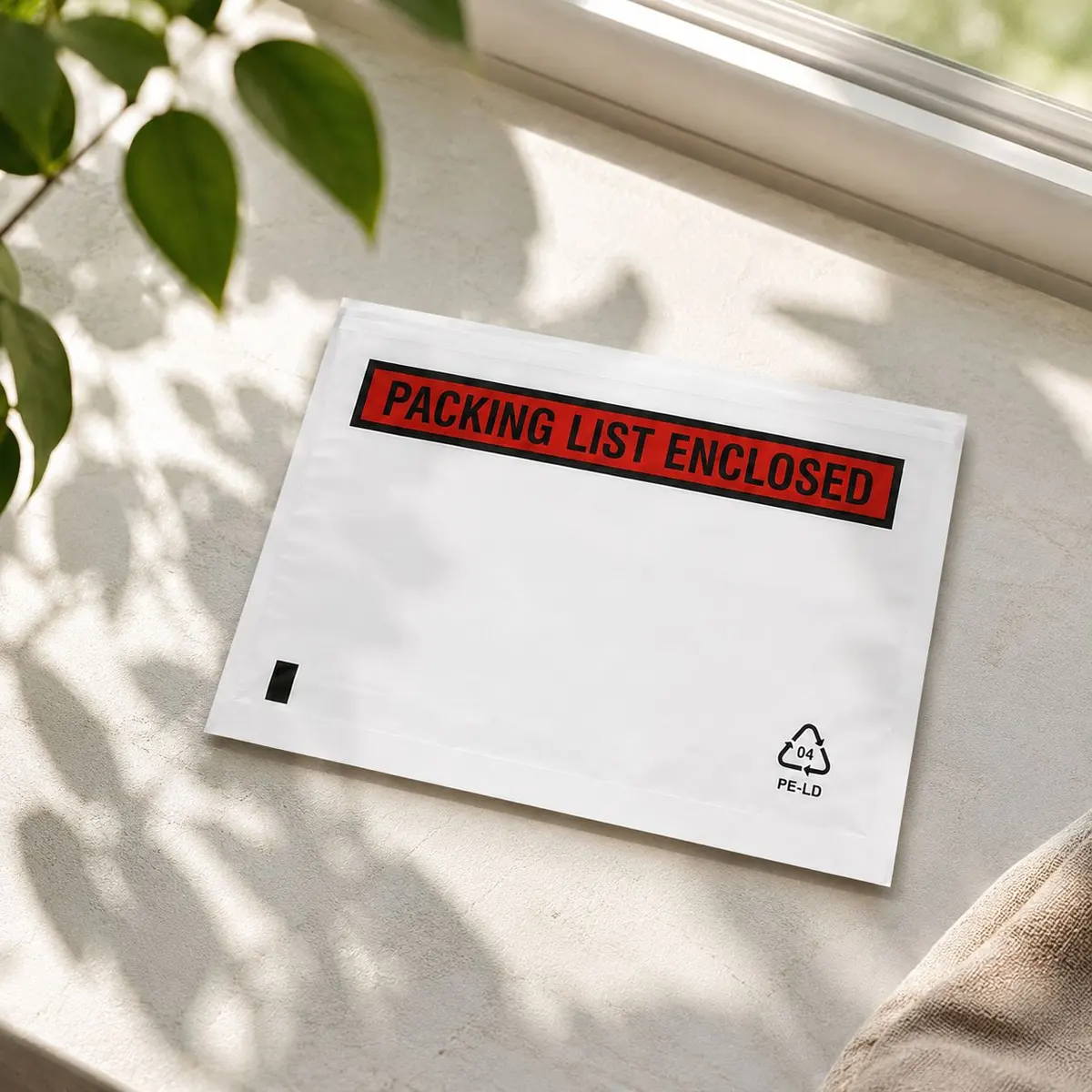
Reducing Plastic in Your Packaging Mix, Starting With the Pouch
Cutting plastic from your packaging mix is rarely one big switch. It is several small levers pulled together.
Move to paper where it works, downgauge to thinner but stronger film, add recycled content, right-size every pouch, and go paperless where the rules allow. The trick is to do all this without losing the protection the pouch exists for.
I will say where I stand first. I do not believe in removing plastic at any cost.
I believe in not wasting it.
Why use 80 microns (about 3 mil) of film for a job that 50 microns (2 mil) can do? We have made packaging in Jaipur since 1997, and I think it is the right question to ask of every pouch we sell.
Document pouches are a small part of total packaging weight, but because they are visible, bought in high volumes and easy to change without touching the rest of your line, we think they are a good place to start.
What are the main levers to reduce plastic in document pouches?
There are 5 practical levers. We would suggest combining several of them, because betting on one rarely gets you far.
- Switch to paper where shipments stay dry and indoors.
- Downgauge the poly film to a thinner grade that still performs.
- Add recycled content to replace virgin resin.
- Right-size the pouch to the document it carries.
- Go paperless on lanes where carriers and customs permit it.
Using less material is usually more effective than relying on recycling at the other end. This is because recycling depends on the receiver putting the pouch in the right stream, and often that does not happen.
When should you switch from plastic to paper?
Switch to paper on dry, indoor, gently handled lanes. Keep poly where shipments face rain, humidity or rough transit.
Paper and glassine pouches are plastic-free and widely recyclable. That helps an ESG story.
The catch is durability.
Paper goes soft, wrinkles or turns to pulp when wet, and one unreadable customs document can cost far more than the pouch. So paper is a good choice for domestic e-commerce and brand-led shipments. It is a poor choice for a monsoon climate, refrigerated freight or a long ocean route.
Many operations run both, i.e. paper for dry domestic flows and poly for wet and export lanes. Our guide to plastic-free paper document pouches covers the full trade-off.
Does thinner film really cut plastic, and can it stay strong?
Yes, if the thinner grade still meets your strength and seal needs. Downgauging cuts virgin resin in every unit and makes loads lighter, so transport emissions drop too.
The maths is simple.
If you take 30% off the thickness, you use about 300 kg less plastic for every tonne of film. Modern co-extruded films also give more strength per micron than older single-layer film, so you can often go thinner without losing tear or puncture resistance.
Here is my rule of the trade for downgauging.
Test the thinner grade on your real lanes before you roll it out. A saving on paper means nothing if pouches start tearing in the warehouse. We would rather you order a thicker pouch than lose a document.
How much does recycled content help?
Recycled content replaces virgin, fossil-based resin, and making film from recycled material generally takes much less energy. For document pouches, a good PCR blend can match virgin film where it matters.
Clarity and adhesion are the two points to watch. Recycled blends can be slightly less clear than virgin film, which matters on a window pouch that customs has to read through, and the adhesive still has to hold on cartons and shrink wrap. The right PCR share balances footprint, looks and performance.
It also pairs well with downgauging, because the two levers stack on each other. For how eco-grades fit with other options, see reducing packaging waste and spend.
Plastic-reduction levers compared
We have put the five levers side by side, with the honest downside of each.
| Lever | Plastic reduction | Protection impact | Best for |
|---|---|---|---|
| Switch to paper | High (removes plastic) | Lower, softens when wet | Dry, indoor, brand-led lanes |
| Downgauge film | Medium, less resin per unit | Neutral if the grade is right | Almost all poly lanes |
| Recycled content | Medium, replaces virgin | Neutral with the right blend | ESG-driven poly users |
| Right-size pouch | Medium, less film per unit | Neutral | High-volume, small documents |
| Go paperless | High (removes the pouch) | None if the lane allows it | Domestic / EDI-enabled lanes |
How does right-sizing reduce plastic?
Right-sizing means matching the pouch to the document, so you stop paying for film you do not need. An A4 pocket holding a folded slip wastes material on every shipment. A DL or A6 pouch carries the same slip with far less film.
At high volumes the saving adds up in less plastic, less waste and lower shipping weight. Check which documents actually go into each pouch, then standardise on the smallest size that keeps the paperwork readable.
We make pouches from A4 down to DL and A6, and our products page shows the full list. For more on choosing, see packing list envelope sizes.
Can you go paperless and skip the pouch entirely?
On some lanes, yes. Where carriers and customs accept EDI or digital invoices, you can remove the physical pouch altogether.
That is the strongest reduction possible.
Nothing is left to recycle. As a pouch maker, I will still tell you to do it where you can.
We would rather keep a customer than sell a pouch nobody needs.
The limit is regulation. Many export and customs routes still need visible, physical paperwork, and removing it risks delays or holds. So treat paperless as a lane-by-lane decision. Digitise domestic and EDI-enabled flows, and keep durable, visible pouches where documents must travel with the goods.
How do you balance protection against plastic reduction?
Aim for the lowest plastic footprint that still gets readable paperwork to its destination. A ruined document undoes the sustainability gain and adds rework, returns and the emissions of a re-shipment.
The order I would follow is this.
First remove pouches where they are not required. Then right-size and downgauge what remains, add recycled content, and switch to paper only on lanes that stay dry.
Send us your document sizes and the lanes you ship on, and we will suggest a lower-plastic pouch spec and send samples to try.
Frequently asked questions
How can I reduce plastic in my packaging mix?
Use several levers together. Move dry, indoor lanes to paper pouches, downgauge poly to a thinner but stronger film, add recycled content, right-size each pouch, and go paperless where carriers and customs allow it. Using less material usually does more than hoping the pouch gets recycled.
Does using thinner plastic film actually reduce environmental impact?
Yes, as long as the thinner film still does the job. Downgauging cuts resin in every unit, and lighter loads trim transport emissions too. The arithmetic is simple: take 30% off the thickness and you use about 300 kg less plastic per tonne of film.
Is paper packaging always better for the environment than plastic?
No, not always. Paper is plastic-free and widely recyclable, but it is heavier and it goes soft when wet. A ruined document and a re-shipped order can wipe out the benefit, so use paper on dry lanes and keep poly where rain or rough handling is likely.
What is right-sizing in packaging?
It means matching the pouch to the document it carries. A folded slip fits a DL or A6 pouch, so an A4 pocket for it wastes film on every shipment. At high volumes, smaller pouches save real material and weight.
Does recycled content weaken a poly pouch?
Not necessarily. A good post-consumer recycled (PCR) blend can match virgin film for document pouches. Clarity and adhesion are the two things to check, so test a sample before you switch at scale.
Can I stop using document pouches entirely?
On some lanes, yes. Where carriers and customs accept EDI or digital invoices, domestic and some cross-border shipments can go paperless. Many export routes still need physical, visible paperwork, so check each lane before you remove the pouch.
What is the single biggest lever for cutting packaging plastic?
Using less material in the first place. Remove pouches where they are not required, then right-size and downgauge what is left. That saving is certain, while recycling depends on the person at the other end using the right bin.
Sourcing these in volume?
We make packing list envelopes in Jaipur for importers and distributors. Factory-direct, private label welcome.