
Plastic-Free and Paper Document Pouches: When to Switch
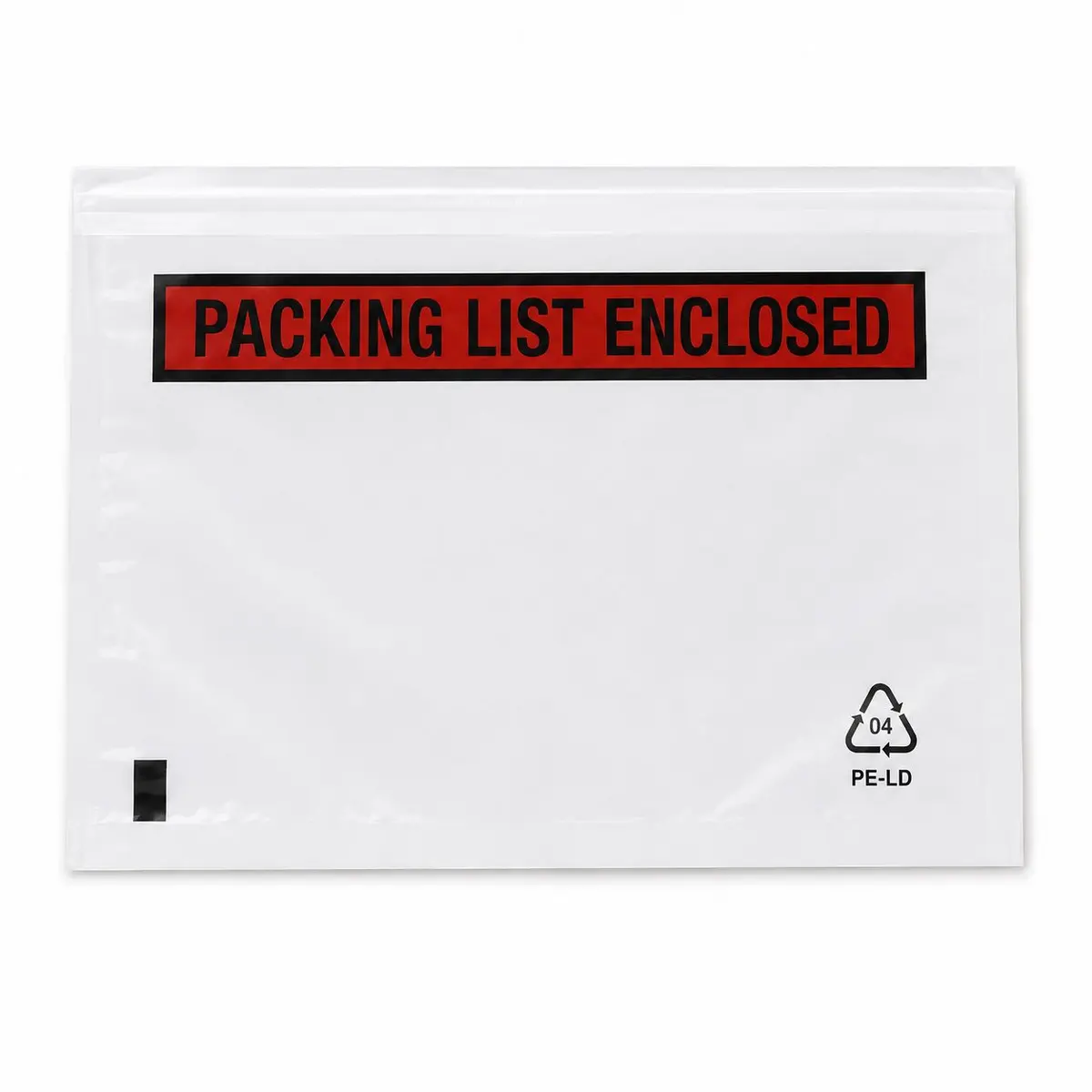
A plastic-free document pouch is a packing list envelope made entirely of paper, including the window. The whole pouch is one material, and it goes in the kerbside paper bin at the end of its life.
It does the same job as a poly pouch. It holds an invoice, packing slip or customs papers in a self-adhesive pocket on the outside of a carton.
The difference is the material.
That one difference decides whether the pouch survives a wet dock, and whether it passes an EU customer’s ESG audit.
We have made packaging in Jaipur since 1997. My honest view is that neither material wins everywhere.
Here is what a paper wallet is, when to switch, the water trade-off you accept, and why Europe is pushing the change.
What is a plastic-free document pouch?
It is an all-paper packing list envelope. It has a kraft or paper body, a self-adhesive or gummed back, and a glassine window in place of film. Because every layer is paper, it is truly single-material.
- The body is kraft or paper stock that takes print well and feels premium.
- The window is glassine, a naturally translucent paper, so the documents stay readable without plastic.
- The adhesive back sticks to the carton, just like on a poly pouch.
This is what separates a true plastic free packing slip pouch from a “hybrid” with a plastic face on a paper back. Hybrids add a little moisture protection. They are not kerbside-recyclable, though, because the 2 materials must be separated first. For the wider picture, see paper vs plastic document pouches.
When should you switch from poly to paper?
Switch where shipments stay dry and indoors, where a customer or market asks for plastic-free packaging, or where kerbside paper recycling is strong. Keep poly wherever protection cannot be compromised.
Here is the rule of thumb I would use.
- Switch to paper when goods travel dry, domestic or short-haul, when your brand sells on plastic-free packaging, when a retailer or EU buyer wants single-material packaging, or when a premium unboxing matters.
- Stay on poly when shipments face rain, humidity, refrigeration or rough handling, when routes are long or international, when pallets are shrink-wrapped and dragged, or when the documents simply must survive.
- Run both when your lanes are mixed. Use paper for domestic and brand-led parcels and poly for export and wet routes.
The switch is rarely all or nothing.
I would match the material to the lane, not to the whole operation.
What is the water-resistance trade-off?
Paper buys you recyclability, and you pay for it in water resistance.
A paper pouch is water-resistant at best. It is never waterproof.
Poly film does not soak up water, so a poly pouch shrugs off rain, condensation and spills for the whole trip. Paper cannot match that.
I say this as someone who wants you to buy the right pouch, not the trendy one.
A good paper wallet copes with light splashes and brief damp. Under steady rain, a leaking carton or a humid container, it softens, wrinkles and slowly turns to pulp, like a paper boat left out in the monsoon. Once the document inside cannot be read, you risk delays, returns and customs holds. Water-resistant kraft grades do exist, but they protect against splashes, not soaking.
Paper also tears and punctures more easily than poly when pallets are stacked or wrapped. If your goods go through ports, monsoon climates or multi-leg export lanes, that protection matters more than the recycling story. Our note on whether packing list envelopes are waterproof covers durability in full.
Plastic-free vs poly: side by side
| Factor | Paper / plastic-free pouch | Plastic (poly) pouch |
|---|---|---|
| Water resistance | Water-resistant only, softens when wet | Fully water-repellent |
| Tear / puncture resistance | Moderate | High |
| Kerbside recyclable | Yes, paper / cardboard bin | No, needs film drop-off |
| Recycle stuck to carton? | Yes, single-material | No, separate first |
| Print / branding | Excellent, premium feel | Good |
| Best transit | Dry, indoor, short-haul | Wet, heavy, long export |
| EU / ESG positioning | Strongest | Improving with eco-grades |
| Typical unit cost | Modest premium | Often lowest at volume |
How recyclable are paper document pouches at kerbside?
Very recyclable. That is the whole point. An all-paper wallet, glassine window included, is widely accepted in kerbside paper and cardboard collections, often without peeling it off the box.
- All-paper wallets go in the household paper or cardboard bin. Because they are one material, the recipient can usually recycle them still stuck to the carton.
- Poly (LDPE) pouches are recyclable too, but through store drop-off points for soft plastic or commercial film streams, not standard kerbside bins. In practice, many end up in general waste.
- Hybrid paper-and-plastic pouches are usually not kerbside-recyclable, because the layers must be separated.
There is a middle path if you want plastic durability with a better end of life. Recyclable mono-material and biodegradable options fill that gap, and they are covered in our guide to recyclable and biodegradable document pouches.
Why are EU markets pushing the switch?
Regulation and corporate reporting are driving it, more than consumer mood. The pull towards plastic-free is strongest in Europe, and it is becoming a buying rule rather than a nice extra.
The EU Packaging and Packaging Waste Regulation (PPWR) pushes all packaging towards being recyclable by 2030. It also limits where compostable packaging is allowed, and it wants environmental claims to be specific and backed by evidence. Vague “eco-friendly” wording will face questions. A single-material paper wallet is easy to defend.
Large EU importers and retailers also ask suppliers for kerbside-recyclable packaging that fits their own sustainability reports. A paper wallet with a clear recycling route is easy to audit. A poly pouch with no named stream becomes a problem in their reporting.
We export to 20+ countries, so we see both sides of this. We are ISO 9001 certified, and we can quote both materials side by side for you. The formats we make are on our products page, and printed legends on either material go through custom print.
So which one should you pick?
I would decide lane by lane. Use paper wallets where parcels stay dry and recyclability is the priority. Use poly where the paperwork must survive wet or rough transit.
Most buyers get this wrong in 1 of 2 directions. Some switch everything to paper and then lose documents on a rainy dock. Others keep everything in poly and then fail a European customer’s packaging review.
Deciding where paper fits and where poly still earns its place? Tell us your lanes and destination markets, and we will suggest plastic-free or poly pouches in your sizes and send samples to test.
Frequently asked questions
What is a plastic-free document pouch?
It is a packing list envelope made entirely of paper, with a glassine window in place of plastic film. The whole pouch is one material. It holds an invoice or packing slip on the outside of a carton just like a poly pouch, but it goes in the kerbside paper bin at the end.
Are paper documents enclosed wallets recyclable?
Yes. An all-paper wallet, glassine window included, is widely accepted in kerbside paper and cardboard recycling, and it can usually go in still stuck to the carton. That is the main reason buyers switch, because poly needs a separate soft-plastic stream.
Are paper packing list envelopes waterproof?
No, they are water-resistant at best. They cope with light splashes and brief damp, but sustained rain, condensation or a wet carton will soften and wrinkle them. For wet docks, monsoon climates or long sea routes, a poly pouch protects the documents far better.
When should I switch from poly to paper document pouches?
Switch where shipments stay dry and indoors, where a customer or market asks for plastic-free packaging, or where kerbside paper recycling is strong at the destination. Keep poly for wet, heavy, rough or long export lanes. Many shippers end up running both.
Do plastic-free pouches cost more than poly?
Usually they cost a little more per unit at the same size, because paper construction and glassine windows cost more than standard polyethylene film. The final price depends on volume, size and printing, so ask for a quote on your exact specification.
Why are EU markets driving the move to paper pouches?
Regulation and corporate reporting are the main drivers. The EU Packaging and Packaging Waste Regulation (PPWR) pushes all packaging towards recyclability by 2030 and wants environmental claims to be specific and backed by evidence. Many European buyers now ask suppliers for kerbside-recyclable packaging that fits their own ESG reporting.
Do paper pouches meet carrier and customs requirements?
Yes, they do. Carriers and customs care that the documents are visible and firmly attached, not whether the pouch is paper or plastic. A paper wallet gives the same readable, self-adhesive pocket.
Sourcing these in volume?
We make packing list envelopes in Jaipur for importers and distributors. Factory-direct, private label welcome.