
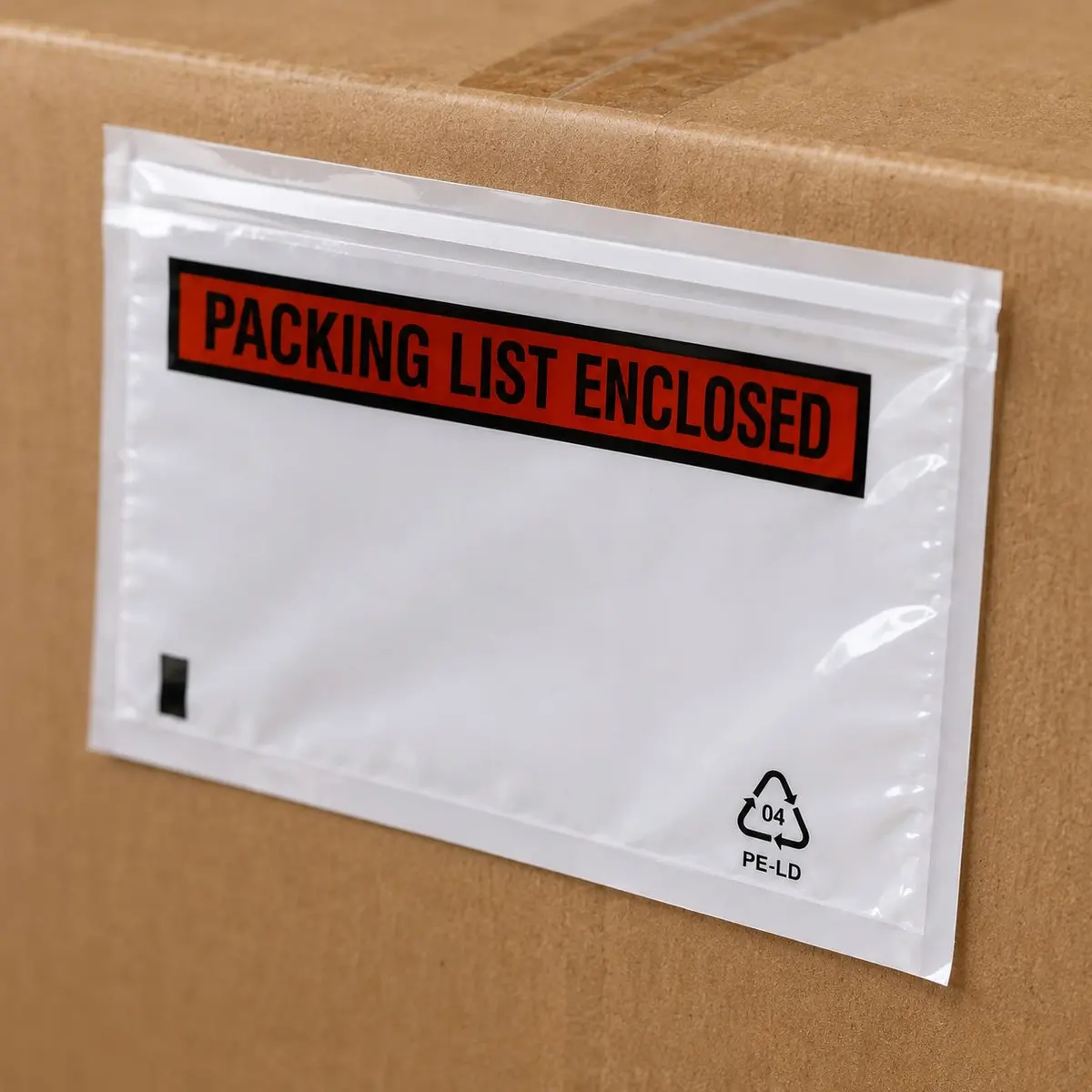
Packing List Envelope Won't Stick to Polybags or Stretch Wrap?
If a packing list envelope will not stay on your polybags or stretch wrap, the glue is rarely the only problem.
Plastic film fights the bond in 2 ways at once. The film itself is a low-surface-energy material, and it is usually loose or wrinkled when the pouch goes on. The fix is a combination of 3 things: a high-tack adhesive, a taut surface, and as much contact area as the bag allows.
We have made packaging in Jaipur since 1997, and our pouches go out to 20+ countries on cartons, mailers and wrapped pallets. Film is the surface that causes the most complaints, by a distance.
I will explain why film behaves like this, and then how to make a pouch hold.
Why won’t a pouch stick to plastic film?
Polybag and stretch-wrap film is low-surface-energy, and it is almost never flat when you apply the pouch. Both problems hit the bond together.
Untreated polyethylene (PE) and polypropylene (PP) sit around 29 to 31 dyne/cm. An adhesive has to “wet out”, i.e. spread and flow into the surface, before it can grip. On low-energy film it beads up instead, like water on a non-stick pan. Less wet-out means less actual contact, and that means a weaker bond. This is exactly the problem our high-tack grades are designed for. Cardboard is high-energy, so the same glue flows into it and holds.
The second problem is the physical shape of the package. A polybag drapes and stretch wrap flexes. Press a pouch onto a slack surface and only the high points touch. Every wrinkle traps air, and trapped air at a corner is exactly where peeling starts.
If you want the full mechanism of tack and wet-out, read how a packing list envelope’s adhesive works.
Which surfaces are the hardest?
Stretch wrap is the hardest, and a flat carton is the easiest. Here is how the common surfaces rank.
| Surface | Why it behaves this way | Difficulty |
|---|---|---|
| Corrugated carton | High surface energy, rigid and porous, so glue flows in and grips | Easy |
| Flat poly mailer (filled, smooth) | Low energy, but fairly taut and stable | Moderate |
| Apparel polybag (soft, slack) | Low energy and loose, with little flat area | Hard |
| Stretch or shrink wrap | Made to cling to itself, and it flexes and shifts in transit | Hardest |
Stretch wrap is the worst case because it adds constant movement to low surface energy. The moment a pallet is lifted, the film stretches and the pouch corners peel.
I would treat any pouch stuck straight onto stretch film as temporary.
How do I make a pouch stick to a polybag?
Use a high-tack pouch, put it on a taut and clean surface, and give it the largest contact area you can. These three together fix most failures.
The grade matters most. A high-tack permanent adhesive has a heavier coat weight and added tackifiers, so it bites into low-energy film far better than a standard grade. Our note on high-tack vs standard adhesive covers when each one earns its cost.
Then fix the surface. Here is the order I would follow on a packing bench, and it is the same advice we would give our own packing team.
- Apply before filling. An empty, flattened polybag is smoother and tauter than a full one.
- Tension the film by hand so the whole back of the pouch meets a flat plane.
- Keep clear of heat seals, folds and the bag lip. Place the pouch on the flat face.
- Smooth from the centre outward so no air is left under the edges.
- Press firmly across the whole pad, because a pressure-sensitive adhesive only bonds under real pressure.
- Keep the film dry and free of dust, powder and oil. Even a high-tack grade loses to a dirty surface.
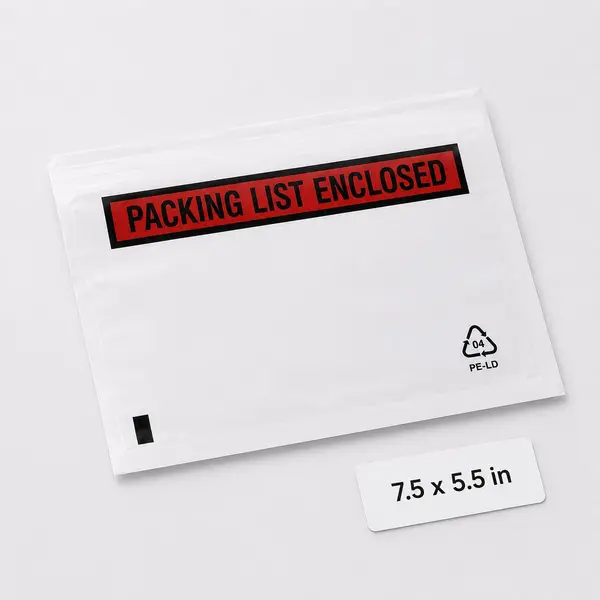
Size is the last lever. A larger pouch has more total bond and resists peel better. Do not let it overhang a seam, though, or it will lift at that edge. For mailer sizing, see small packing list envelopes for polybags.
I have to admit one honest limit here. On a very soft, slack apparel bag, even the right grade applied well can lift in rough transit.
That is the nature of the surface, and no adhesive we make can fully change it.
What is the best fix for stretch-wrapped pallets?
Stick the pouch to a carton first, then wrap over it. This is a rule of the trade I would pass to any exporter: do not fight the film when you can make the film work for you.
The carton is rigid and high-energy, so a documents pouch bonds to it reliably. The stretch wrap then runs over the top and holds the pouch captive. The paperwork stays visible through the clear face, and it cannot peel off because the film traps it in place.
Sometimes the documents must sit outside the wrap for customs or carrier scanning. In that case, use a high-tack pouch on a tight panel with several layers of film, and accept that it is the harder job. Another option is to fix the pouch to a corner board or edge protector, which the wrap then secures.
Quick checklist when a pouch is lifting
Work down this list before you blame the product. We would run the same checks on any sample you send us.
- Is it a high-tack grade? Standard permanent is unreliable on film.
- Was the surface taut? Re-apply to a stretched panel, or before filling.
- Did air get trapped? Smooth from the centre and redo any bubbled corners.
- Did you press hard enough across the whole back?
- Was the film clean and dry? Dust, moisture and oil all kill adhesion.
- Is the pouch overhanging a seam? Move it to the flat face or size down.
- Is it stuck straight onto stretch wrap? Move it to the carton and wrap over it.
With the right grade and the right technique, a pouch holds on plastic almost as well as it does on a box. We make both standard and high-tack grades, and you can see our adhesive options and formats on the products page.
Still seeing pouches peel off your polybags or wrapped pallets? Tell us your film type and how you apply them, and we will suggest a high-tack grade and send samples to test.
Frequently asked questions
Why won't my packing list envelope stick to a polybag?
Two problems usually act together. Polyethylene and polypropylene are low-surface-energy plastics, so the adhesive cannot spread and grip the way it does on a carton. The bag is also rarely taut, so the pouch has no flat surface to hold. Use a high-tack grade and press it onto a stretched, smooth area.
Why won't a pouch stick to stretch wrap?
Stretch and shrink film is made to cling to itself, not to take an adhesive. It also flexes and shifts once the pallet moves, so the corners of the pouch lift almost at once. Stick the pouch to the carton before wrapping and run the film over it. If it must go on the outside, use a high-tack pouch on a tight, multi-layer panel.
What is low surface energy and why does it matter?
Surface energy tells you how easily a liquid or an adhesive spreads across a surface. Cardboard is high-energy, so glue flows into it. Untreated PE and PP sit around 29 to 31 dyne/cm, which is low enough that adhesive beads up instead of spreading. Less spread means less real contact and a weaker bond.
What adhesive works best for sticking pouches to plastic bags?
A high-tack permanent pressure-sensitive adhesive is the one to use. It has a heavier coat of glue and added tackifiers, so it grips low-energy film far better than a standard grade. On polybags and stretch wrap, this one change does more than anything else.
Should I apply the pouch before or after filling the bag?
Before, wherever you can. An empty, flat polybag gives a smooth and tensioned surface. Press the pouch on from the centre outward, then fill the bag. A bulging filled bag traps air under the pouch and pulls at its corners as the contents move.
Will a bigger pouch stick better than a small one?
Often it will, because more contact area gives more total bond. The limit is the flat area on the bag. A pouch that hangs over a seam or fold will lift at that edge, so pick the largest size that fits on the flattest panel.
Can the film be treated to hold adhesive better?
Some films are corona or flame treated at the film plant to raise surface energy for printing and adhesives. You cannot do that reliably in a warehouse. The practical route is a high-tack pouch, applied properly.
Sourcing these in volume?
We make packing list envelopes in Jaipur for importers and distributors. Factory-direct, private label welcome.