
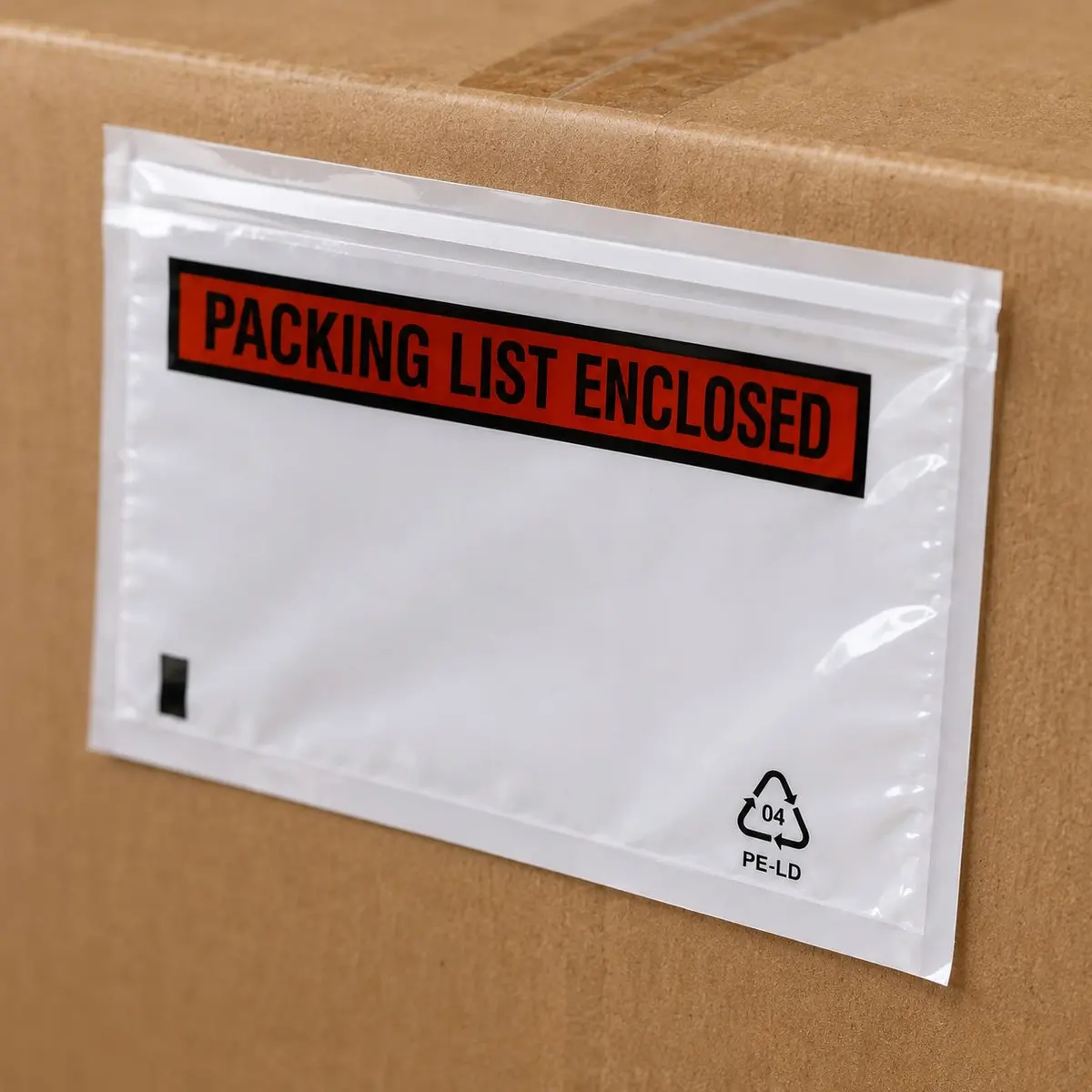
Why Packing List Envelopes Peel Off in Transit, and the Fix
A packing list envelope that peels off in transit is one of the most common complaints in shipping.
It is also one of the easiest to avoid.
I am saying this as a manufacturer, so take it with a pinch of salt, but it is almost never a manufacturing fault. It is a bond problem, and bonds are something you can control at the packing bench.
We have made packaging in Jaipur since 1997. Below are the real reasons pouches fall off and what I would do about each one.
Why does my packing list envelope peel off in transit?
Either the adhesive never formed a full bond, or handling and weather broke it later. There are five usual culprits:
- Edge lift.
- Vibration and rubbing in transit.
- Temperature swings.
- Sticking over seams or tape.
- Too little dwell time before handling.
Most failures come from 2 or 3 of these together.
The good part is that all five are in your hands. Fix the surface and the method, and most peel-off problems go away.
What is edge lift and how do I stop it?
Edge lift is when a corner of the pouch comes off the carton while the middle still sticks. It is the number-one trigger for a pouch falling off completely.
That raised corner becomes a flap. In a sorting centre it catches on a conveyor roller, the next parcel or a handler’s glove. Once one corner goes, the rest unzips fast, a bit like a loose thread on a sweater.
To stop it:
- Press from the centre out to every edge, then run your thumb or a roller along all four edges.
- Choose round-cornered or sealed-edge pouches, because they catch less than sharp square corners.
- Check that the adhesive runs right to the edge. A pouch with glue only in the middle will always lift.
How do vibration and rubbing peel pouches off?
Transit means hours of small, constant movement. Trucks and conveyors shake the carton, and neighbouring boxes rub against it.
This works slowly at any weak point. Usually that is a lifted edge or a patch that never bonded.
A full bond with no lifted edge shrugs it off. A partial bond does not.
This is why pressing the edges and waiting before handling matter so much. They remove the starting points that vibration needs.
Do temperature swings make document pouches fall off?
Yes, and I think temperature is the most underestimated cause of all. The same physics applies in every climate we export to, hot or cold. Pressure-sensitive adhesives are made to work within a temperature range.
- Applied cold, below about 10°C (50°F), the adhesive is stiff and low in tack, so it never flows into the surface. Cartons straight off a chilled dock are the classic failure.
- In transit heat, a soft adhesive can creep, and the carton itself may sweat and break the bond.
- Swings between cold and hot put the bond under stress again and again.
Apply pouches in a warm, dry area.
Let chilled cartons reach room temperature before you apply them and before they ship.
Why does applying over seams or tape cause peeling?
It happens because the pouch cannot lie flat.
Tape ridges, carton seams, staples and flap overlaps create raised lines, and tape itself is a hard surface for another adhesive to grip.
The pouch tents over the gap, traps air and peels from that point. Always place it flat on one clean panel, away from seams, tape and varnished print where you can.
How long is “enough” dwell time?
Dwell time is how long the adhesive sits undisturbed before the carton is handled. It has a big effect on final strength.
A pressure-sensitive adhesive does not reach full grip the moment it touches down. It needs time to flow into the surface, push out trapped air and build strength. On smooth board this is quick. On rough, recycled or textured board it can take many hours.
| Surface | Suggested minimum dwell before shipping |
|---|---|
| Smooth coated carton | A few hours |
| Standard kraft corrugated | 6 to 12 hours |
| Rough, recycled or textured board | Up to 24 hours |
| Poly mailer or film | Several hours plus firm pressure |
The rule of the trade is short.
Press firmly now, ship later.
A pouch stuck on seconds before the carton is stacked, dropped or loaded has had no chance to bond. I know a busy dispatch line does not like waiting, so if you cannot wait, at least apply pouches at the start of packing rather than the end.
Which surfaces and adhesive grades matter most?
Some surfaces simply fight the adhesive. Rough recycled kraft, dusty or waxed corrugated, shrink film and poly mailers are the hard ones. New poly mailers often carry an oily film from manufacturing.
For these, I would wipe the spot clean and dry first. Match the adhesive grade to the surface, which usually means a strong permanent adhesive for film and rough board instead of a light general-purpose one. Then add more pressure and more dwell time.
Here I will admit the limit of good technique, because we would rather sell you the right grade than the cheap one. A light removable adhesive on rough board in a cold chain will fail however carefully your team applies it. In that case the grade has to change. We make standard and high-tack grades at our factory in Jaipur, and we have exported pouches to 20+ countries with very different climates, so we can help you choose.
More help is in what to do when the adhesive won’t stick and the step-by-step application method. You can see our range on the products page.
A quick prevention checklist
- Apply to one clean, dry, room-temperature panel, never over tape or seams.
- Press firmly across the whole face, then press all four edges and corners again.
- Give it dwell time before stacking or shipping.
- Match the adhesive grade to your surface and climate.
- Pick a pouch with adhesive right to the edges. We can check this on a sample for you before you order.
Still seeing pouches come off in transit? Tell us your carton type, climate and lanes, and we will suggest an adhesive grade and send samples to test on your own boxes.
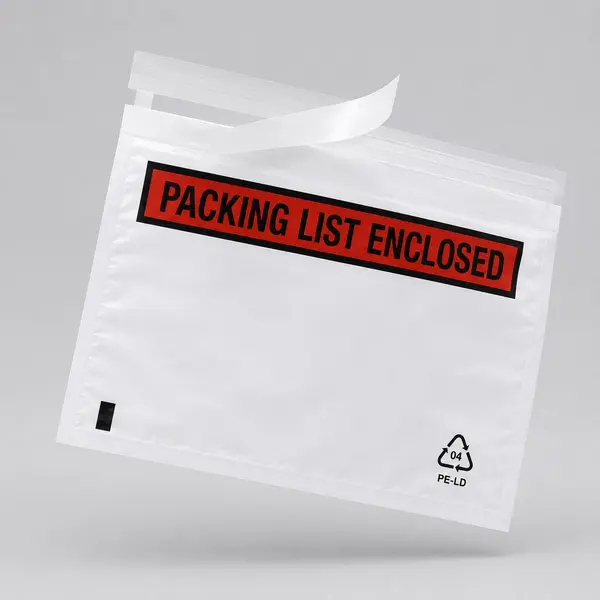
Frequently asked questions
Why does my packing list envelope peel off in transit?
It is almost always a bond problem, not a faulty pouch. The usual causes are a corner that was never pressed down, vibration and rubbing in transit, temperature swings, sticking over a seam or tape, and handling the carton too soon. Fix the surface and the method first.
What is edge lift and why does it matter?
Edge lift is when one corner or edge comes away from the carton while the middle still holds. That raised corner becomes a flap that catches on rollers, other parcels and gloves, and then the whole pouch peels. Pressing firmly from corner to corner is the best defence.
Does cold weather make packing list pouches fall off?
Yes. Most pressure-sensitive adhesives lose tack when applied below about 10°C (50°F), so they never grip the surface properly. Cartons straight from a chilled dock are the worst case. Apply pouches in a warm area and let the carton reach room temperature first.
How long should I press a packing list envelope before shipping?
Press the whole pouch firmly for a few seconds, with extra care on the edges and corners. Then give it time. Several hours is good, and rough or recycled board can need up to 24 hours before the carton is stacked or shipped.
Can I stick a pouch over box tape or a seam?
Better not. Tape, seams, staples and flap overlaps make ridges the adhesive cannot grip evenly, so the pouch tents over the gap and peels from there. Put it flat on one clean panel instead.
How do I keep a packing slip pouch attached to a poly mailer?
Wipe the spot clean and dry first, because new mailers often carry an oily film. Use a pouch with an adhesive made for film, press hard across the whole face and give it time. On very slick film, a strong permanent grade beats a general-purpose one.
Is it the envelope quality or my process?
Usually the process. Surface, technique, temperature and dwell time explain most failures. Still, the adhesive grade matters, and a light removable adhesive on rough recycled board in a cold chain will fail however carefully you apply it.
Sourcing these in volume?
We make packing list envelopes in Jaipur for importers and distributors. Factory-direct, private label welcome.